Home School Parents Make Case To School Board

A large group of supporters turned out Tuesday evening for the Wabash District #348 School Board meeting, urging the board to allow homeschooled students to participate in district extracurricular activities, including athletics.

Speaking on behalf of the group was Michelle Musgrave, a parent, taxpayer, and District 348 graduate who also previously taught in the district. Musgrave emphasized her respect for the district’s educators and said her family’s decision to homeschool is based on religious conviction, an option permitted under Illinois law.

Musgrave told the board that homeschool families contribute to the school district through property taxes and community involvement, and she argued that allowing homeschooled and private school students to participate in extracurricular activities would strengthen community ties rather than weaken them. She said such a policy could also benefit the district by expanding the pool of student-athletes, building school pride, and potentially increasing enrollment and funding.

Musgrave cited Illinois State Board of Education policy that allows homeschool students to attend public schools part-time under certain conditions and noted that, in some cases, part-time students may already participate in extracurricular activities tied to their coursework. She asked the board to go further by adopting IHSA guidelines, which would allow homeschool students to participate in all extracurricular activities if eligibility requirements are met.

Those requirements include enrollment in at least one credit-bearing class at the public school, meeting weekly academic standards, complying with IHSA bylaws, and paying required tuition and fees. Musgrave also noted that several nearby districts, including Grayville, Robinson, and Vienna, have already adopted similar policies.

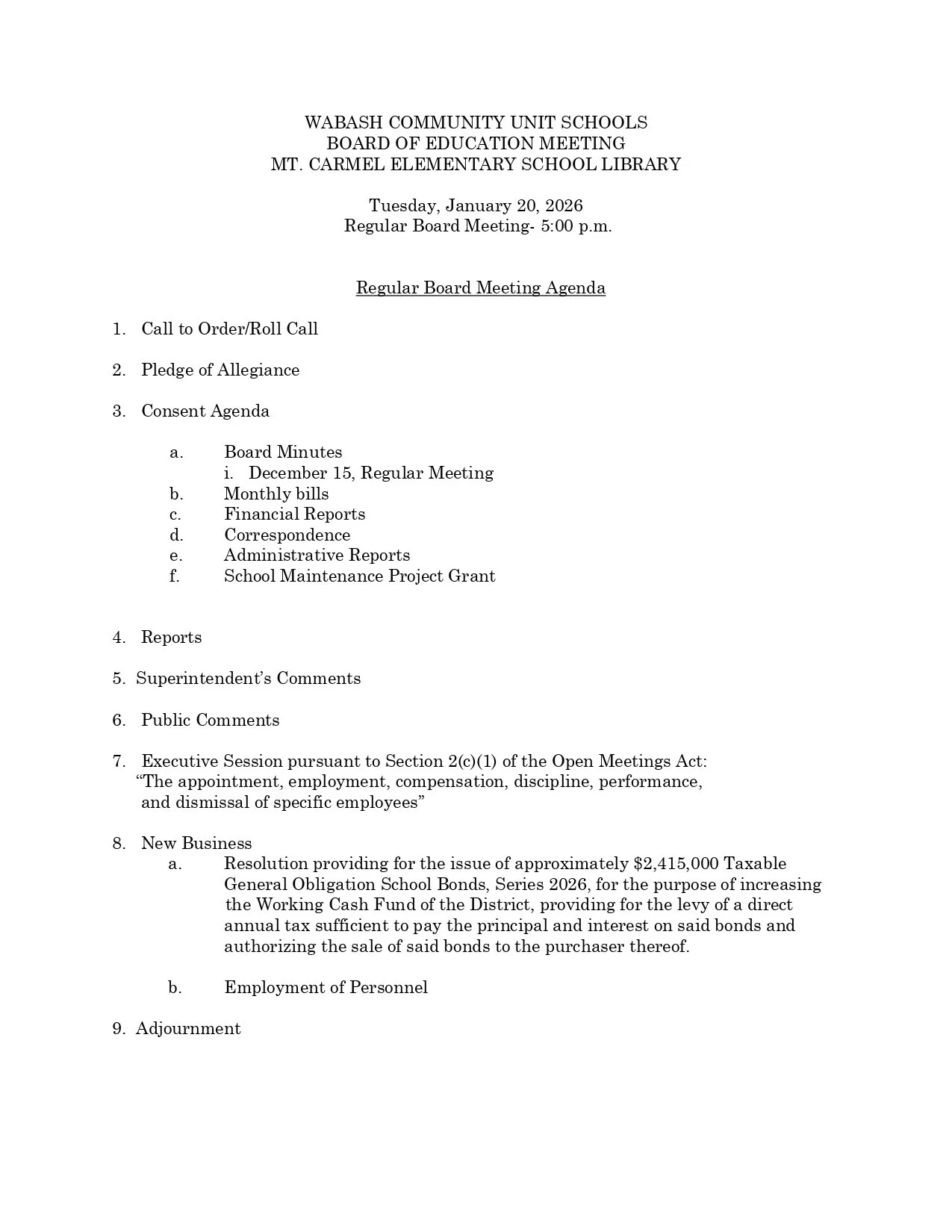
The board did not take action Tuesday night, as the issue was not listed on the meeting agenda.

IECC Board Summary

The Board of Trustees of the Illinois Eastern Community College District No. 529 met Tuesday, January 20, 2026 at Lincoln Trail College, Robinson, Illinois.

Program Director of Institutional Assessment & Effectiveness Brandon Weger introduced a governance-focused Key Performance Indicator framework that organizes Board-level questions around IECC’s four institutional pillars and connects those questions to clear performance areas and initial metrics to guide accountability and planning.

The Board approved the minutes of the Board of Trustees regular and special meetings held on December 9, 2025.

An agreement between Southern Illinois University (SIU) and IECC for continuation of the Motorcycle Rider Program was approved by the Board.

Affiliation agreements were approved by the Board with Crawford County Cares & Middle Tennessee School of Anesthesia.

The Board waived a second reading and approved the following policies:

• Employee Code of Conduct Policy 400.38 is a new policy to strengthen governance, promote consistent expectations across the District, and support IECC’s mission and values.

• Employee Disciplinary Policy 400.39 is a new policy to support employee corrective action when appropriate, while also protecting the rights of employees and interests of the institution.

The Board approved proposed transfer pathways as a key step in the district’s transition to a Guided Pathways model, providing clearer routes and stronger support for students beginning Fall 2026.

Approval of employment was given for Ronald Banta as Maintenance Worker/O&M Team Lead, OCC effective January 26, 2026.

Resignation ratifications were approved for Avery Miller, Custodian, OCC effective December 11, 2025 and Cori Stringfellow as Nursing Instructor, WVC effective January 6, 2026.

The next regular meeting of the Board of Trustees will be Tuesday, February 17, 2026, at 6:15 p.m. at Olney Central College, Olney, IL.

Latest Jobless Rates Mixed In SE Illinois

Unemployment rates for November show mixed results across southeastern Illinois, with job losses reported in the Mt. Carmel–Olney labor market region.

According to the latest figures, total nonfarm payrolls in the region declined by 375 jobs in November 2025 compared to November of last year. Employment gains were reported in Private Education and Health Services, which added 100 jobs.

Year over year, payroll totals were unchanged in the Information and Professional-Business Services sectors. However, job losses were recorded across several industries, including Trade, Transportation and Utilities, down 100 jobs. Financial Activities fell by 75 jobs, while Leisure and Hospitality, Manufacturing, and Other Services each lost 50 jobs. Construction and Government were each down 25 jobs, along with Natural Resources and Mining.

Looking at county unemployment rates for November, Wabash County reported a rate of 4.1 percent, up from 3.2 percent a year ago. Edwards County’s rate increased to 4 percent from 3.4 percent. White County rose to 4.7 percent, compared to 4 percent last November. Lawrence County posted a 5 percent unemployment rate, up from 4.2 percent, while Wayne County increased to 4.6 percent from 3.8 percent. Richland County’s rate climbed to 4 percent, compared to 3.3 percent a year earlier.

State labor officials note that while some sectors continue to add jobs, overall employment challenges remain across the region.

Oakland City woman arrested

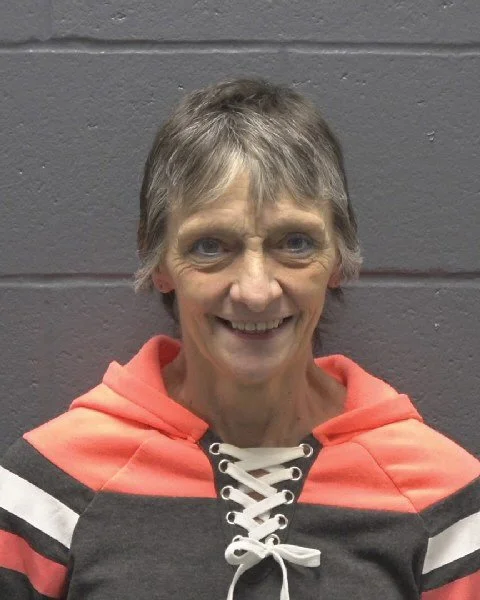
On January 16, 2026, at 9:52 p.m. law enforcement went to 695 South State Road 57 near Oakland City to serve an arrest warrant on 57-year-old Diane Moade.  Law enforcement surrounded the residence and gave multiple loud and clear orders for Ms. Moade to come out and comply with law enforcement.  Ultimately law enforcement entered the residence and took her into custody. She was transported to the Gibson County Detention Center where she was booked in on the arrest warrant as well as a new charge of resisting law enforcement.
 
Deputies Wes Baumgart, U.B. Smith and Shawn Holmes assisted Deputy Wyatt Lashbrook in the investigation of this incident. 
 
All criminal defendants are to be presumed innocent until and unless proven guilty beyond a reasonable doubt in a court of law.

Evansville man arrested for traveling 114 mph on US 41

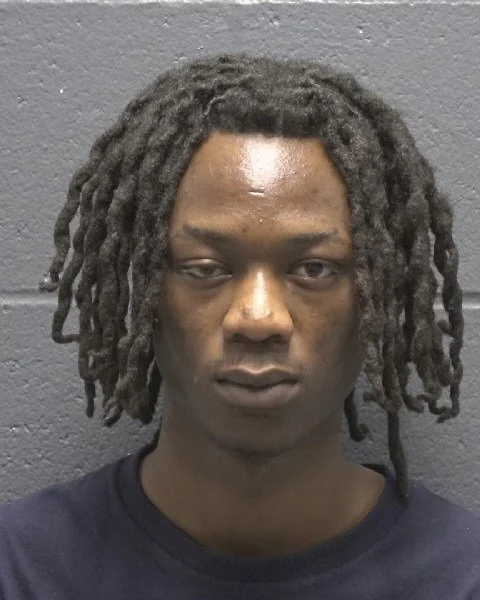
On January 16, 2026, at 10:39 p.m. Gibson County Deputy Erick Powell clocked a vehicle traveling at 114 mph on US 41 near County Road 650 South.  Upon catching up to the vehicle, an Orange 2012 Ford Mustang Deputy Powell and Fort Branch Officer Darrell Parker conducted a Felony Traffic stop.  Upon placing the driver 19-year-old Wensley Demosthenes into custody Deputy Powell transported him to the Gibson County Detention Center after observing clues that the driver may be under the influence to conduct an OWI investigation.  Once the investigation was completed Mr. Demosthenes was booked in on charges of Reckless Driving and Operating a Vehicle While Intoxicated.   
 
All criminal defendants are to be presumed innocent until and unless proven guilty beyond a reasonable doubt in a court of law.

Newburgh man arrested for OWI

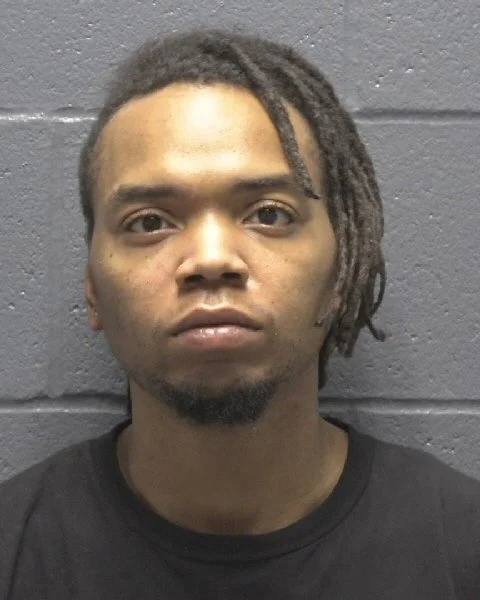
On January 16, 2026, at 11:19 p.m.  Gibson County Deputy Michael Bates observed a Silver 2004 GMC Envoy traveling 45 mph in a 30-mph zone on South Main Street in Princeton.  Upon stopping the vehicle near Illinois Street Deputy Bates approached the vehicle and immediately detected the odor of burnt Marijuana. At that point he began a roadside OWI investigation that resulted in the driver, 33-year-old Terry Ealum of Newburgh being taken into custody and transported to the Gibson County Detention Center.  Once Mr. Ealum arrived at the detention center, he was charged with Operating a Vehicle While Intoxicated and Possession of Marijuana. 
 
Princeton Officers Jackie Wood and Lincoln Edwards assisted Deputy Bates in his investigation.     
 
All criminal defendants are to be presumed innocent until and unless proven guilty beyond a reasonable doubt in a court of law.
 

Recent postal service changes could disrupt mail-in voting, county clerks warn

Thousands of votes could be invalidated if not received in time

By JENNA SCHWEIKERT
& NIKOEL HYTREK
Capitol News Illinois 
jschweikert@capitolnewsillinois.com 
 nhytrek@capitolnewsillinois.com

Article Summary

  • New USPS rules may disrupt vote-by-mail processes in the 2026 election, Illinois county clerks warned.

  • The rules change the postmarking and transportation processes, potentially disenfranchising voters who follow previous guidelines.

  • County clerks recommend that voters mail their ballots no later than a week before Election Day.

This summary was written by the reporters and editors who worked on this story.

EAST PEORIA — New postal service changes to postmarking and transportation rules could disrupt mail-in voting in the 2026 election, Illinois county clerks warn.

Ahead of the March primary election, county clerks are telling voters not to rely on past processes and to mail their ballots as early as possible, no later than one week before Election Day.  

Clerks from around the state discussed how to educate voters at the annual Illinois Association of County Clerks and Recorders Conference on Thursday in East Peoria.

One new rule, which took effect Dec. 24, states that the date a postmark is applied to a piece of mail may not reflect the day it was received by the Postal Service.

Currently, 14 states, including Illinois, will accept mail-in ballots if they are received within a certain period after Election Day if they are postmarked on or before Election Day. 

Clerks warned that uncertainty about when ballots will now be postmarked necessitates voters to act earlier. The way postmarks are applied is not changing, the USPS says. Mail is only postmarked at distribution centers, and that will remain the same.

But in an effort to improve mail delivery efficiency, some localities’ mail may be sent to a different distribution center than in the past, which can increase the amount of time it takes for the USPS to receive and then postmark mail at these centers.

“It’s a question mark of when will it actually get through a distribution center. So I’m advising my voters to make sure that they get their vote-by-mail ballot in the mail no less than a week before Election Day,” John Ackerman, the Tazewell County clerk, said. 

In the city of Peoria, for example, the distribution center is in Peoria. Tazewell County’s center, Ackerman said, is in Champaign, although Peoria is geographically closer. 

To educate voters about the change, he said, his office will include yellow index cards with the recommendation in the vote-by-mail packets se


nt to voters. 

Voters can also request a manual postmark from their local post office or drop off their ballot at the election official’s office. 

But if election officials can’t rely on postmarks to reflect accurate dates, a number of mail-in ballots that were mailed prior to Election Day may not be counted at all clerks said. 

Ballots also will no longer be automatically considered priority mail, increasing the amount of time it will take to deliver the mail.

“We've utilized that successfully over the years to make sure that all those ballots not only are delivered, but they are received in time. Changing that status dramatically changes how that will impact us as well,” Ackerman said.

These changes will be most felt during the recount process, when candidates are “scrambling,” Ackerman said. 

The clerks generally agreed this could change the outcome of a race. 

Clerks also said they are concerned about changes impacting voter trust in elections, especially because voter guidance is now going to be different depending on the county’s location and distribution center.  

“We’ve told all of our voters, get your vote-by-mail ballot in your box by Election Day to be postmarked for Election Day, we will process it now. We're ripping the rug out from underneath that,” Ackerman said. “That leads to distrust. When you can't give a solid date, you can't give a solid answer, when you can't reply back to them with facts, when it's left for interpretation. That erodes the trust that we've been trying to rebuild.”

In the past, when this potential change was proposed, the clerks said they were able to speak to federal lawmakers to advocate for its reversal.

In late September 2025, a delegation of clerks traveled to Washington, D.C., to meet with lawmakers and staff about changes to federal funding for election infrastructure and learned lawmakers didn’t know about the potential changes, Ackerman said. 

“They were all unaware that this change was going to take effect. They were unaware, in my opinion, of the impacts it would have on vote by mail,” he said. 

This time, however, clerks didn’t know the changes were proposed until days before they were implemented.

“It is our goal to get to the public being 100% trusting of our system, but that's something we've strived diligently to do to repair that relationship, and I think this hurts that,” Ackerman said.

To be sure your vote has been counted, voters can call their county clerk’s office, or some counties offer ballot tracking online.

County clerks emphasized that voting by mail is still safe and secure, but it might take more work and planning.

Kathy Michael, the McLean County clerk, said voters can request to have their ballot manually postmarked at the post office when they return it. 

“Just mail it early or go into the post office. I don't want to say it's that simple. I don't want to make it simple, but that's all you have to do,” she said. “Don't be discouraged and not do it and not vote. … Get it postmarked, and you can go off on your vacation and not worry about it.”

Capitol News Illinois is a nonprofit, nonpartisan news service that distributes state government coverage to hundreds of news outlets statewide. It is funded primarily by the Illinois Press Foundation and the Robert R. McCormick Foundation. 


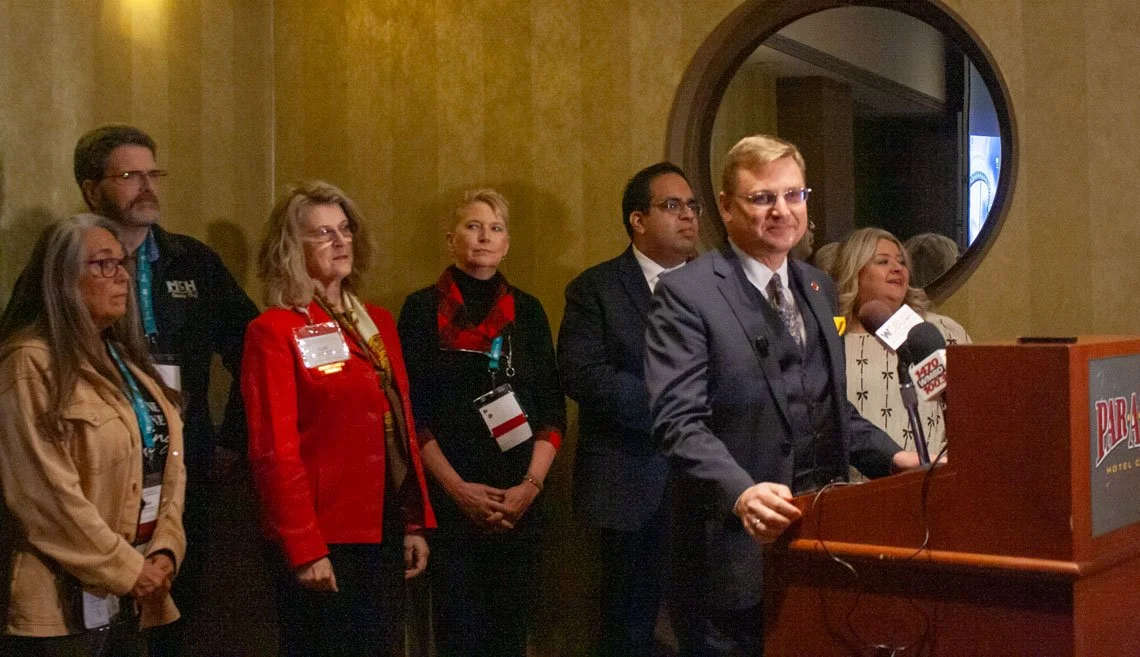
Tazewell County Clerk John Ackerman speaks at a news conference in Peoria. Tazewell traveled to Washington, D.C., with three other clerks in September 2025 to meet with federal lawmakers to advocate against the USPS changes. (Capitol News Illinois photo by Jenna Schweikert)