Lawsuit puts Illinois on offensive against ‘menacing’ immigration raids

State claims federal agents used military-style tactics in attempt to coerce Illinois into changing its immigration policies

By BRENDEN MOORE
Capitol News Illinois 
bmoore@capitolnewsillinois.com  

Article Summary  

  • Illinois filed a 103-page lawsuit that seeks to severely limit federal immigration agents’ authority to execute the types of aggressive raids that began in Chicago last September. 

  • The state and city of Chicago asked a court to prevent the feds from using “roving patrol” tactics used by immigration agents, as well as face scans and crowd control tactics such as tear gas. 

  • State and city leaders say the feds have used such aggressive tactics to try to coerce them into changing their immigration policies.

This summary was written by the reporters and editors who worked on this story.  

SPRINGFIELD — Illinois and Chicago sued the Trump administration Monday, seeking to severely limit immigration agents’ authority in the state after accusing the feds of unleashing an “organized bombardment” to coerce state and local officials to change their immigration policies.

State and city leaders want to end the feds’ “roving patrol” policy of interrogating people they encounter on the street about their citizenship and immigration status without any probable cause. They’re also seeking to limit crowd control tactics such as using tear gas to disperse nonviolent crowds and to prevent the feds from scanning the biometric information of state residents. 

“Border Patrol agents and ICE (Immigration and Customs Enforcement) officers have acted as occupiers rather than officers of the law,” Illinois Attorney General Kwame Raoul said in a statement. “They randomly, and often violently, question residents. Without warrants or probable cause, they brutally detain citizens and non-citizens alike. They use tear gas and other chemical weapons against bystanders, injuring dozens, including children, the elderly and local police officers.”

Raoul, along with the city of Chicago, filed the 103-page lawsuit in the U.S. District Court for the Northern District of Illinois. It accused the federal government of applying pressure over policy differences through means such as withholding federal funds, attempting to deploy the National Guard and, most disruptively, executing an immigration enforcement operation described by state officials as “causing turmoil and imposing a climate of fear.”

It also seeks to prevent immigration enforcement at “sensitive locations” without “appropriate reasoning,” including courthouses, schools, social service organizations and medical facilities. And it seeks to bar immigration agents from “trespassing” on private property to make arrests, in violation of the 4th Amendment. The suit argues immigration agents only have the authority to do so within 25 miles of a U.S. Border to prevent illegal entry to the country.  

The state is asking the court to find that the federal government’s “menacing, violent, and unlawful incursion” violates the 10th Amendment, and to order federal agents to stop using tactics that exceed their statutory authority.

‘Unlawful tactics, unnecessary escalations’

Gov. JB Pritzker released a statement in support of the lawsuit, writing that “in the face of the Trump Administration’s cruelty and intimidation, Illinois is standing up against the attacks on our people.”

“Today, Illinois is once again taking Donald Trump to court to hold his administration accountable for their unlawful tactics, unnecessary escalations, and flagrant abuses of power,” Pritzker said. 

The lawsuit names, among others, Department of Homeland Security Secretary Kristi Noem, Immigration and Customs Enforcement Director Todd Lyons, and Border Patrol Commander Gregory Bovino — the public face of DHS’ Operation Midway Blitz immigration enforcement campaign — as defendants.

Much of the lawsuit pulls from claims brought in an earlier suit by media organizations and protestors who challenged the feds’ use-of-force tactics. The plaintiffs motioned for the case to be reassigned to the same judge in that challenge, U.S. District Judge Sara Ellis, according to reporting by the Chicago Tribune and Sun-Times. Previously, she issued an injunction against use of force in that case, but the 7th Circuit Court of Appeals later stayed it. 

Read more: 7th Circuit stays judge’s order restricting immigration agents’ use of riot control weapons | Judge hesitant to grant dismissal of lawsuit over immigration agents’ use-of-force tactics in Chicago

DHS spokeswoman Tricia McLaughlin told Capitol News Illinois in a statement the latest suit was “baseless.”

“The fact is that sanctuary politicians in Illinois and Chicago released violent criminals including murderers, rapists, drug dealers, pedophiles, gang members, and terrorists, onto its streets and their dereliction of duty cost lives—just ask Katie Abraham’s father,” McLaughlin said, referring to a 20-year-old Glenview woman who was killed in a hit-and-run crash last year allegedly by a Guatemalan in the country without legal authorization. “This is a baseless lawsuit, and we look forward to proving that in court.”

Minnesota, along with the cities of Minneapolis and St. Paul, filed a similar lawsuit Monday seeking to block a surge of immigration enforcement in that state. It comes less than a week after an ICE agent shot 37-year-old American citizen Renee Nicole Good at close range while she was apparently attempting to flee a traffic stop.

‘Campaign of coercion’

The Illinois lawsuit claims that Midway Blitz is part of a “campaign of coercion” by the Trump administration attempting to force state and local governments, including Illinois and the city of Chicago, to change their sanctuary immigration policies.

The state’s TRUST Act, signed by then-Gov. Bruce Rauner in 2017, generally prohibits state and local law enforcement from assisting the federal government with immigration enforcement unless a federal criminal warrant is presented. 

Chicago has had “sanctuary city” status since 1985.

The state and federal policies are meant to foster trust between immigrant communities and law enforcement by ensuring that interactions do not result in immigration detention or deportation. But these policies, which predominate in the nation’s blue states and blue cities, have been the target of ire from the Trump administration, which has accused state and local jurisdictions of impeding their mass deportation goals.

Trump sued Illinois, Chicago and Cook County last year seeking to invalidate the state and local policies, but the challenge was dismissed by a federal judge in July, who found that they were protected under the 10th Amendment. 

Federal ‘occupation’

Just six weeks after losing in court, DHS began its sweeping immigration enforcement campaign targeting the Chicago region. The department claims that it has resulted in the arrests of more than 4,500 immigrants in the country without legal authorization. 

But the raids often led to violent confrontations between masked federal agents and protestors during various operations in the city and suburbs, including near an Immigration and Customs Enforcement processing facility in suburban Broadview. 

Confrontations initiated by immigration officers resulted in two shootings, including one with deadly consequences,  during the height of Midway Blitz. An ICE agent shot and killed Silverio Villegas González in Franklin Park in September after he attempted to flee a traffic stop. In October, a federal agent shot Marimar Martinez five times in Chicago’s Brighton Park neighborhood. She survived and the U.S. attorney’s office in Chicago has dropped all charges against her.

Characterizing it as a federal “occupation” of a sovereign state, the suit accuses the feds of sending armed immigration agents to roam city streets to question people about their citizenship status, capture and retain biometric data without consent, arrest people without a warrant or probable cause and deploy tear gas and other chemical agents in residential neighborhoods and trespass on private property — all while concealing their identities with face masks and covering up license plates.

The suit includes a laundry list of documentation, alleging, for instance that federal agents deployed tear gas and other chemicals without warning at least 49 times in 18 separate incidents in Chicago over a 90-day period in 2025.

And following the launch of a “plate watch” hotline in late October, at least thirty-five distinct license plates were reported being swapped or used on more than one federal vehicle operated by Border Patrol or ICE, according to the Illinois Secretary of State’s office, which sent a “cease and desist” letter to DHS in October over the practice.

Return of Midway blitz?

While Midway Blitz has wound down in recent weeks, federal officials have been teasing a return with even larger numbers of agents in March. The filing includes Bovino stating, “Don’t call it a comeback; we’re gonna be here for years.”

The state is asking the court to bar Border Patrol agents from conducting civil immigration enforcement in Illinois, arguing that they are “not authorized or trained for large-scale removal enforcement in the interior of the United States.”

It’s also asking a judge to declare that tactics such as roving patrols, warrantless arrests, deploying tear gas and swapping plates, at least in this context, are in violation of federal law. The plaintiffs want those tactics barred in the future. 

The lawsuit is just the latest in a litany of litigation between the state and federal government. Raoul has filed or joined in more than four-dozen lawsuits against the Trump administration over the past year, challenging everything from cuts to congressionally appropriated state funding to Trump’s now-aborted push to deploy National Guard troops to Chicago over the strenuous objections of Illinois’ elected leaders.

Actions like those, Raoul alleged in the latest lawsuit, are part of the Trump administration’s “coercion” campaign.

The U.S. Supreme Court last month denied an emergency appeal from the Trump administration seeking to lift a temporary restraining order put in place by a lower court preventing the deployment of troops in Illinois. The underlying case Is still working through the courts, though Trump late last month dropped plans to deploy troops to American cities.

The federal government filed a lawsuit earlier this month challenging a new state law that allows Illinois residents to sue federal immigration agents who arrest them in or near courthouses or if they believe their constitutional rights were violated. Like the latest lawsuit, the case largely rests on the 10th Amendment. 

Capitol News Illinois is a nonprofit, nonpartisan news service that distributes state government coverage to hundreds of news outlets statewide. It is funded primarily by the Illinois Press Foundation and the Robert R. McCormick Foundation. 
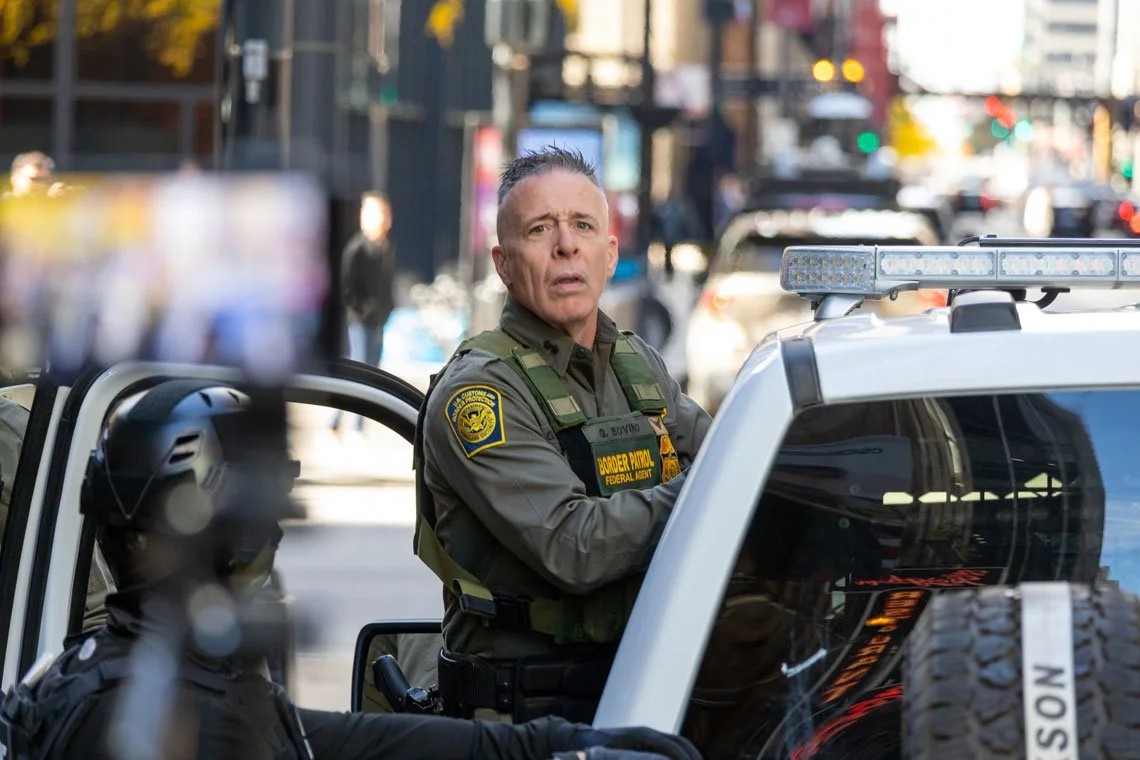


Border Patrol Commander Gregory Bovino gets into a truck after he was called to testify in a hearing in Chicago in October. (Capitol News Illinois photo by Andrew Adams) 

Illinois Supreme Court Justice Mary Jane Theis announces retirement

Court appoints Chicago appellate court justice as her replacement

By BEN SZALINSKI
Capitol News Illinois
bszalinski@capitolnewsillinois.com

Article Summary

  • Illinois Supreme Court Justice Mary Jane Theis announced she will retire from the court at the end of January following 15 years as a justice.

  • Theis, a Democrat, served three years as chief justice, with her term as the head of the court ending in October 2025.

  • Theis authored the majority opinion in the 2023 case that upheld the SAFE-T Act and allowed Illinois to eliminate cash bail. 

  • Cook County Appellate Court Justice Sanjay Tailor was appointed to replace Theis on the court. 

This summary was written by the reporters and editors who worked on this story. 

SPRINGFIELD — Illinois Supreme Court Justice Mary Jane Theis announced she will retire from the state’s high court later this month. 

Theis, a Democrat from Chicago who represents the Cook County district on the court, said in a statement Monday she will vacate the bench Jan. 29 after first being appointed to the court in 2010. 

“I am deeply grateful to have had the opportunity to serve,” Theis said in a statement. “It has been my foremost goal to further the Court’s mission of providing access to equal justice, ensuring judicial integrity and upholding the rule of law.”

Theis was elected to a full term in 2012 and appointed chief justice in 2022. Her term as head of the court ended last October when Chief Justice P. Scott Neville was appointed the new leader of the court.

Read more: P. Scott Neville Jr. chosen as next chief justice on Illinois Supreme Court

Theis played a role in several impactful decisions, including the Democratic-majority court’s ruling allowing Illinois to abolish cash bail in 2023.

Theis authored the majority opinion in favor of the controversial and pioneering law, which many opponents said violates the constitutional requirement that people charged with a crime receive bail. Theis wrote the state constitution does not require bail to be monetary and is not the only mechanism that can be used to ensure a person returns to court for trial. She noted the General Assembly amended the state’s bail laws many times over the years. 

Read more: Cash bail will end in Illinois as justices rule SAFE-T Act provisions constitutional

“If the legislature could reconsider bail over the course of so many years, it could do so again in 2021 without offending separation of powers principles,” Theis wrote of the SAFE-T Act, which lawmakers passed in early 2021. 

She argued the law creates a “presumption” in favor of pretrial release, meaning “the state bears the burden of establishing a defendant’s eligibility for pretrial detention.”

During Theis’ tenure as chief justice, the Supreme Court guided the implementation of the new cashless bail pretrial procedure in Illinois. The Supreme Court oversees the administration of the entire Illinois court system. 

New justice to join the court

First District Appellate Court Justice Sanjay Tailor was appointed by the court to fill Theis’ vacancy on the seven-justice court beginning at the end of the month. Tailor will serve until at least December 2028, when Cook County voters will decide who will be given a full 10-year term on the bench. 

Tailor has been a Cook County judge since 2003 and became an appellate court judge in 2022, according to a news release from the Supreme Court. 

He previously worked as an assistant state’s attorney in Cook County and as a private attorney. Tailor will be the first Asian American on the Illinois Supreme Court. 

Capitol News Illinois is a nonprofit, nonpartisan news service that distributes state government coverage to hundreds of news outlets statewide. It is funded primarily by the Illinois Press Foundation and the Robert R. McCormick Foundation.  

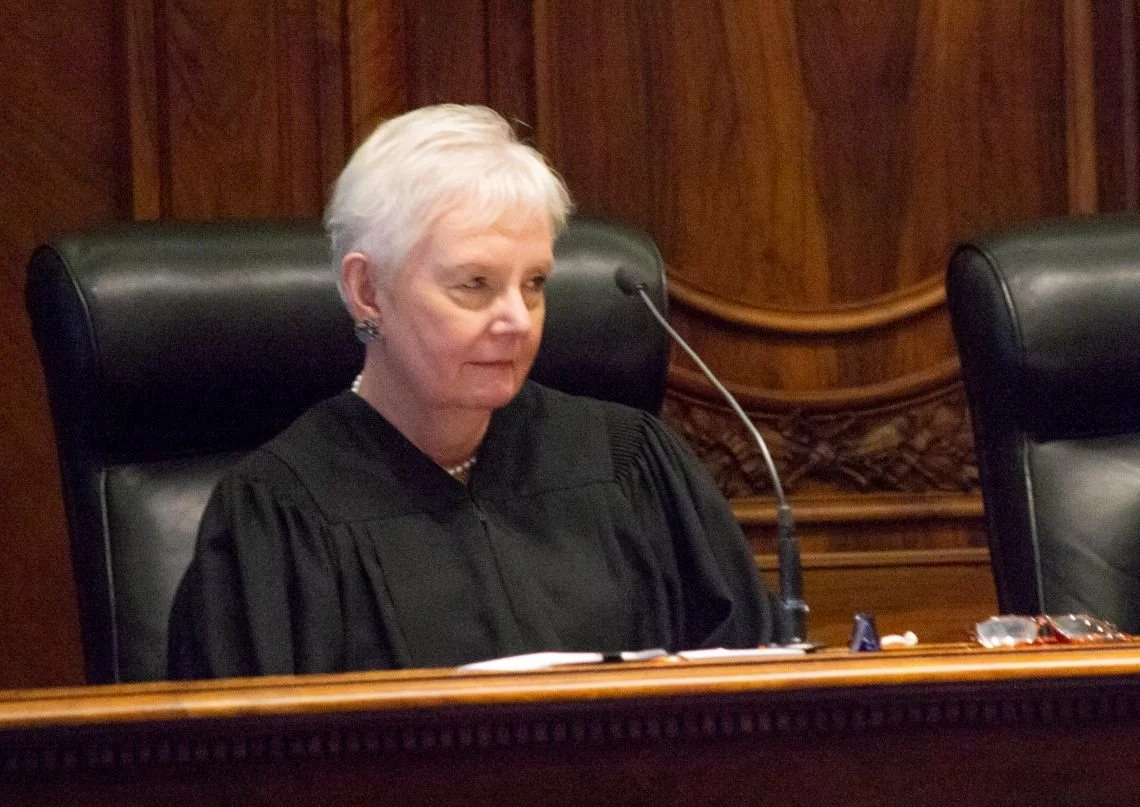
Supreme Court Justice Mary Jane Theis listens to remarks from the bench at the Illinois Supreme Court in Springfield. (Capitol News Illinois file photo)

Mt. Carmel Man Pleads Not Guilty To Domestic Violence Charges

A Mt. Carmel man facing multiple domestic violence charges will remain behind bars as his case moves toward trial.

Thirty-four-year-old Jeremy Birkla was in court Thursday, where he waived his preliminary hearing and entered a plea of not guilty to all charges. A motion for pre-trial release was denied, with the court finding that Birkla’s continued detention is necessary to avoid a real and present threat to the safety of individuals or the community, based on the specific, articulable facts of the case.

Birkla remains lodged in the Wabash County Jail.

According to court records, Birkla is charged with aggravated domestic battery, a Class 2 felony, after he allegedly choked his girlfriend during an incident on November 23rd. He also faces charges of unlawful restraint for allegedly preventing the woman from leaving the residence, domestic battery for reportedly striking her in the face, and interference with the reporting of domestic violence after allegedly taking her phone to keep her from calling police or medical personnel.

Prosecutors have also filed a separate domestic battery charge related to an incident on November 21st, along with criminal damage to property for allegedly breaking the victim’s vehicle window on November 10th.

Pre-trial conferences are scheduled for January 22nd and February 19th, with a jury trial set for March 2nd.

Court records also show Birkla previously pled guilty to involuntary manslaughter in the 2012 death of Billy Gunzel and was sentenced to probation and periodic imprisonment.

Former Deputy Enters Not Guilty Plea After Probable Cause Found

The long-delayed preliminary hearing for former Wabash County Sheriff’s Deputy Chase Cheadle was finally held Thursday, where a judge found probable cause in the case. Cheadle entered a plea of not guilty to the remaining charges. A pretrial hearing has been scheduled for February 19th.

Cheadle’s preliminary hearing had been postponed multiple times, with delays dating back to November of 2024.

The former sheriff’s department canine handler was originally charged with eight counts, including four counts of official misconduct, one count of theft, one count of cruelty to animals, and two counts of animal owner duties violations. Five of those charges were felonies.

However, in June, Special Prosecutor Brian Towne requested dismissal of two felony counts, the theft charge and one count of official misconduct , which were granted by the court.

According to investigators, the 30-year-old Cheadle found his K-9 partner, Kiki, unresponsive in July of 2024. He was later arrested following the investigation and resigned from the Wabash County Sheriff’s Department one month later.

Following Profane Posts, Dean Ditches Facebook

Wabash County Commissioner Rob Dean says he has stepped away from Facebook following controversy over profane posts made after the county board approved a large-scale solar farm last month.

During last week’s county board meeting, Dean told fellow commissioners and the public that he is no longer on the social media platform, saying the decision has reduced stress. Dean said, “The good news is I’m not on Facebook anymore. So I haven’t had any stress or anything. So it’s been good. That was by my choosing, and it took me a long time to smarten up and do that.”

Dean’s comments follow backlash after he used profanity in Facebook posts aimed at residents who questioned the county’s approval of a solar project covering more than 3,000 acres near the former Friendsville Mine.

Tensions escalated during a recent county board meeting when Dean criticized Mount Carmel Mayor Joe Judge for liking a Facebook post opposing the solar farm. Judge later said the “like” was simply to acknowledge being tagged, not an endorsement of the post.

Dean later returned to Facebook, again using profane language to challenge opponents of the project, telling them to run for office. Those posts have since been deleted.

Five candidates are currently seeking the county commissioner seat held by Scott West, who is not seeking re-election in 2026. Dean’s seat on the county board will not be up for election until 2028.

Commissioners Hear Update On Water Quality

“MT. CARMEL WATER PLANT IS NOW PRODUCINJG BETTER QUALITY WATER THAN IT EVER HAS” SAID WATER PLANT SUPERINTENDENT KEITH REED, PROVIDING AN UPDATE ON A RECENT TAG BY THE STATE, FOR T.O.C. RATES. THE CITY PROVIDED A MASS-MAILING INFORMING CUSTOMERS OF THE NOTICE. AT MONDAY’S CITY COUNCIL MEETING, REED EMPHASIZED THE WATER HAS ALWAYS BEEN SAFE TO DRINK, ALL DURING 2025…INCLUDING DURING THE JULY THRU SEPTEMBER VIOLATION PERIOD. REED SAID, ALTHOUGH THE T.O.C. REMOVAL RATE WAS SLIGHTLY HIGHER IN 2025…THE AMOUNT OF T. O.C. IN THE WATER WAS LESS IN 2025. NEW SAMPLES WERE SENT IN MONDAY.

Evansville Man Found Guilty On 5 Of 7 Counts

The jury trial of 33-year-old Devin Brittain of Evansville concluded last night in Wabash County Circuit Court with mixed verdicts returned after several hours of deliberation.

Brittain appeared in court in street clothes and without restraints, accompanied by his attorney, Anthony Cervantez. All jurors and an alternate were present as the state completed its case-in-chief and rested. The defense moved for a directed verdict, but the court ruled that, when viewed in the light most favorable to the state, a reasonable jury could find Brittain guilty beyond a reasonable doubt on all counts.

Following closing arguments and jury instructions, the jury began deliberations at 3:45 Wednesday afternoon. Jurors submitted a question to the court shortly before 6 p.m., which was answered by the judge after consultation with counsel. Deliberations continued into the evening.

At 7:01 p.m., the jury returned verdicts finding Brittain guilty on Counts One through Three which are aggravated domestic battery, aggravated battery on a peace officer, aggravated battery causing great bodily harm, , not guilty on Counts Four and Five aggravated battery on a nurse and criminal damage to property, and guilty on Counts Six and Seven which were two charges of criminal damage to property over $500.

A pre-sentence investigation was ordered, and a sentencing hearing has been scheduled for February 9th at 1 p.m. Brittain was ordered detained until sentencing under Illinois law.


Serious bodily injury accident on State Road 65 north of Princeton

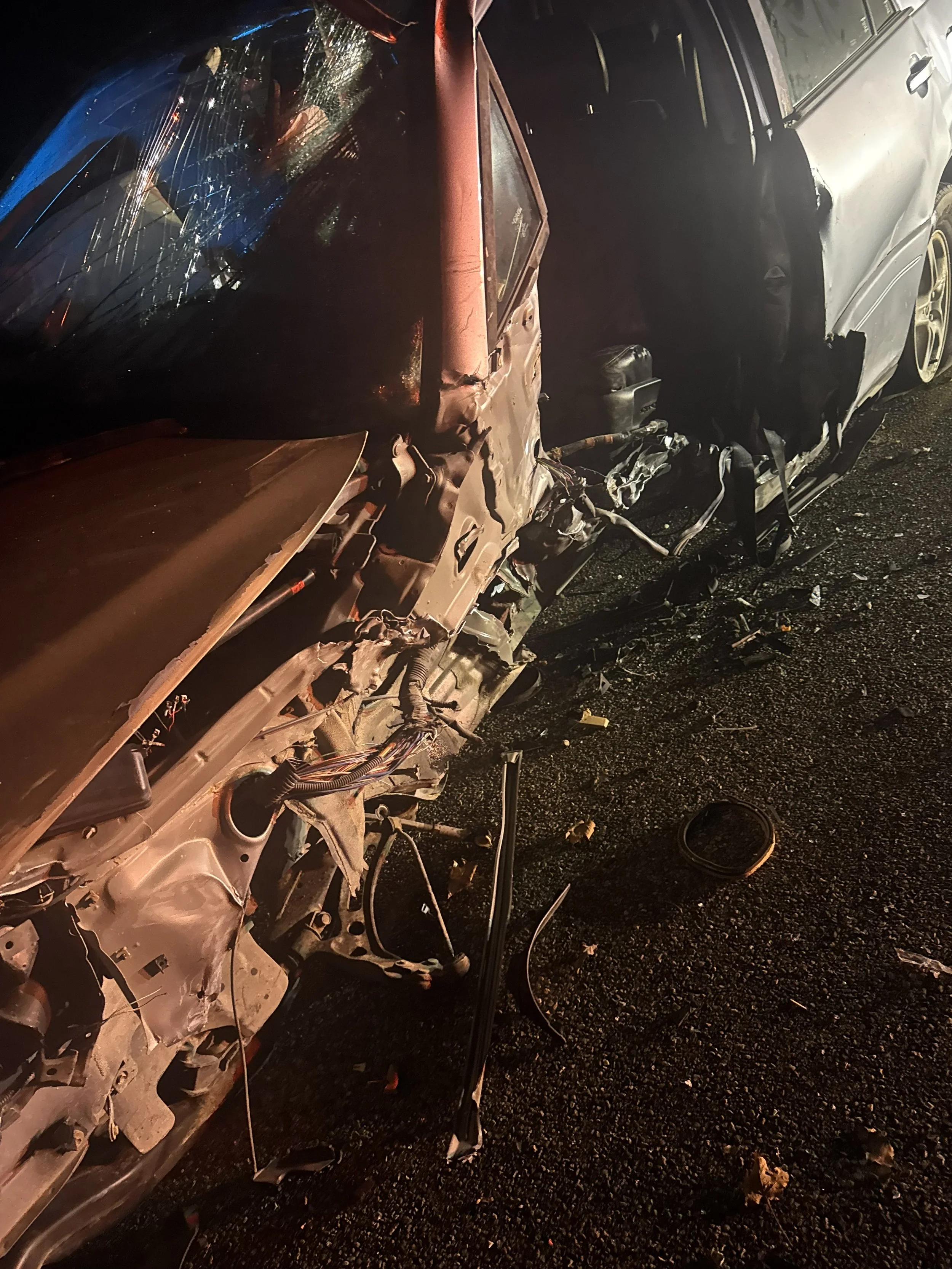
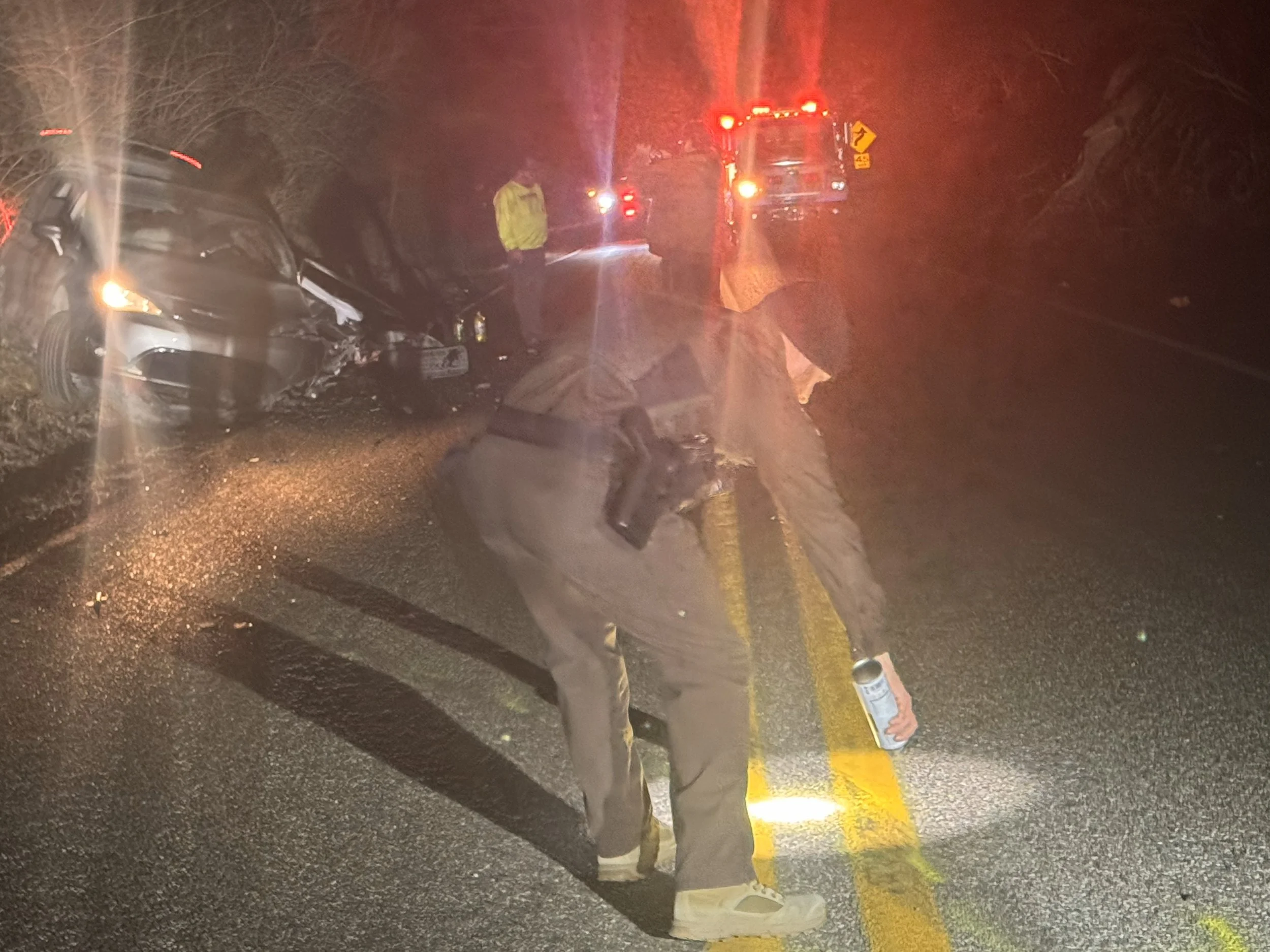
On January 5, 2026, at 5:13 p.m. Gibson County Central Dispatch received a 911 report of a head on crash on State Road 65 approximately one half a mile south of County Road 400 North in the rural Patoka area.  Emergency service personnel were dispatched to the scene where they found a Silver 2002 Lexus RX3 was Southbound on State Road 65 and reportedly crossed the center of the roadway and struck a Tan 2017 Chrysler Pacifica that was Northbound. 
 
Patoka Township Fire and Union Fire worked together to extricate injured passengers from their vehicles and the Gibson County Ambulance Service transported injured parties to area hospitals for further treatment.  At the time of this report one person was critically injured in this accident and at least two suffered non-life-threatening injuries.
 
This accident was investigated by the Gibson County Sheriff’s Office and Gibson County Sheriff’s Office D.A.R.T (Drone Ariel Response Team.)  The Princeton Police also assisted in securing this accident scene. 
 
This is an active and open serious bodily injury accident. 
 

Third time isn't a charm for homeless dine and dash thief.

On January 3, 2025, at approximately 1: 37 p.m. Gibson County Central Dispatch received a report from Denny’s Restaurant located at 1989 South State Road 57 outside of Oakland City that a man had ordered food and left the establishment without paying the $31.67 balance.  Deputy Jim Tucker arrived on scene and showed a picture of the suspect from the Lupe’s and Applebee’s dine and dash incidents from the day before to the employees and they positively identified the suspect as the same person.  Further they gave a description of the male as wearing a black sock hat, gray hoodie, and dark pants and began a search of the area.  After a brief search, 44-year-old Derek Scott Jones was located and taken into custody behind a dumpster at ProRehab an establishment which is across the street.
 
After a brief investigation Mr. Jones was taken into custody and charged with two counts of Theft.  Mr. Jones has an extensive criminal history and currently has 9 non-extraditable warrants out of Illinois. 
 
Deputy Tucker was assisted in his investigation by Deputy Michael Owens and Oakland City Police Chief Tim Gaines.  The Princeton Police Department also aided in the investigation and charges on Mr. Jones.    
 
All criminal defendants are to be presumed innocent until and unless proven guilty beyond a reasonable doubt in a court of law.

New laws: Illinois education measures focus on immigrant rights, AI in the classroom

Measures that provide legal protections for students, guidelines for schools take effect Jan. 1

By PETER HANCOCK
Capitol News Illinois
phancock@capitolnewsillinois.com

Story Summary

  • Illinois lawmakers responded to President Trump’s crackdown on immigrant communities with new legal protections for students and guidelines for schools that will take effect Jan. 1.

  • Community colleges will be barred from using AI bots to teach classes in lieu of human faculty.

  • The Illinois State Board of Education will begin drafting guidelines on the use of AI in K-12 settings.

This summary was written by the reporters and editors who worked on this story.

SPRINGFIELD — Immigrant rights and artificial intelligence were two of the hot-button issues that influenced public education in 2025. They are also the subject of new education-related laws that will take effect at the start of the new year.

The rights of noncitizen students, including those who are not lawfully present in the U.S., rose to the top of the education agenda as soon as President Donald Trump was sworn in to his second term in January. 

The day Trump was inaugurated, the Department of Homeland Security rescinded a Biden administration policy that had limited immigration enforcement actions in or near “sensitive locations” such as schools, playgrounds, child care centers and school bus stops.

Two days later, Illinois Superintendent of Education Tony Sanders issued what he called “non-regulatory guidance” to local school officials, urging them to adopt policies spelling out how and when their staff should cooperate with federal immigration officials carrying out enforcement actions or seeking information from school officials.

At the Statehouse, the Democratic-controlled General Assembly also took action, passing bills intended to extend more legal protections to noncitizens living in Illinois. 

School program participation

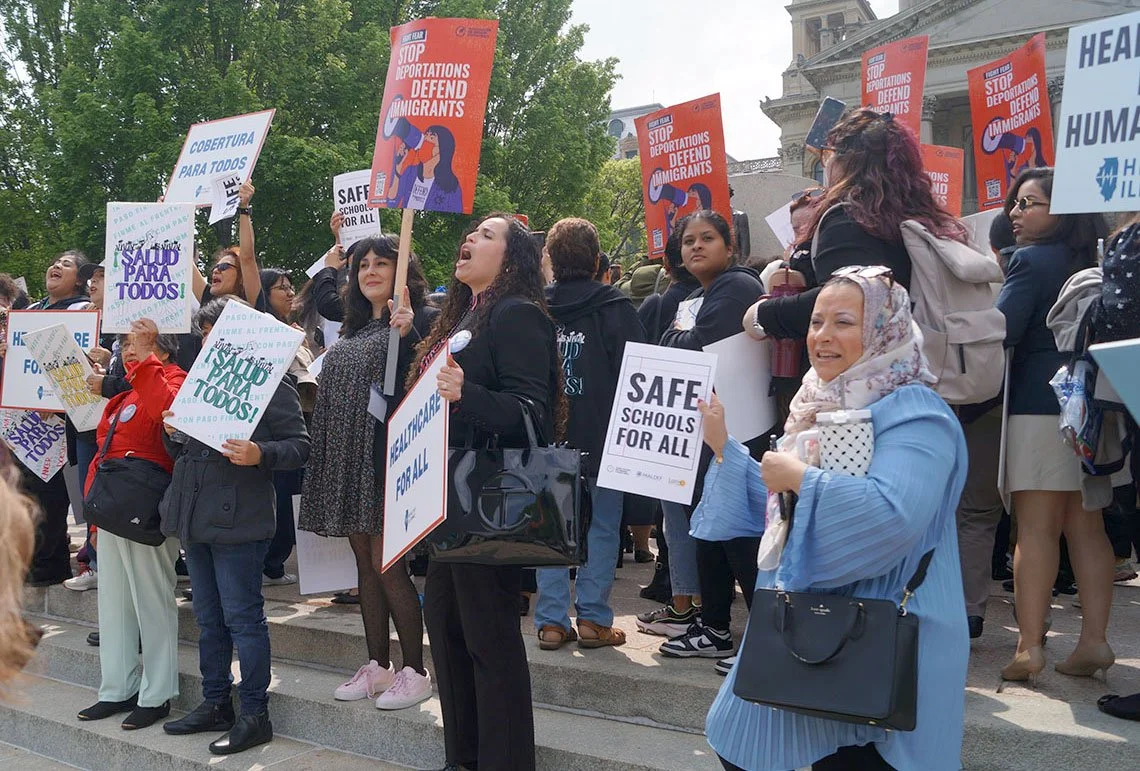
Among those was House Bill 3247, which passed the General Assembly in the final days of the spring session in May and was signed into law Aug. 15. It prohibits schools from excluding or discouraging students from attending school or taking part in school programs based on their immigration status or that of their parents or guardians.

“In the face of federal threats to our schools and students, our communities came together and organized to demand that our state leaders stand up for education for all Illinois children,” Lawrence Benito, executive director of the Illinois Coalition for Immigrant and Refugee Rights, said in a statement after the bill’s final approval.

“While the right to safe and free public education remains under attack from Trump and leaders in other states, Illinois has the opportunity to continue to uphold our values.”

The law specifically prohibits schools from requesting or collecting information from a student, their parents or guardians about their citizenship or immigration status unless the information is required by state or federal law. 

It also prohibits schools from disclosing information about their immigration or citizenship status to any other person or entity, including immigration and law enforcement agencies, unless required to do so under federal law.

In addition, starting July 1, schools that violate those prohibitions can be sued in civil court for actual damages.

Scholarships and immigration status

Another new law expands the types of publicly funded scholarships students can qualify for regardless of their citizenship or immigration status.

Illinois law already extends eligibility for state-funded student financial aid such as the Monetary Award Program, or MAP grants, to any student who meets Illinois residency requirements. House Bill 460, which was signed into law in August, expands that to include programs administered by local units of government.

Artificial Intelligence in college

The rapid deployment in recent years of new technologies like ChatGPT, Copilot and Gemeni has raised a host of new questions for educators. Should students be allowed to use them in lieu of doing their own reading and writing? And should schools themselves be allowed to use them in lieu of human instructors to lead classes?

Illinois lawmakers addressed some of those questions.

House Bill 1859 requires community colleges to ensure that faculty members who teach courses must be actual people who meet the qualifications to hold their positions. It also provides that colleges may not, in lieu of a faculty member, use AI programs “as the sole source of instruction.” It does, however, allow faculty members to use AI as a teaching tool in their classrooms.

“Artificial intelligence is a powerful tool that can enhance both students’ and teachers’ capability to learn and teach, but it cannot replace an instructor,” Rep. Abdelnasser Rashid, D-Bridgeview, the bill’s lead House sponsor, said in a statement. “This legislation clarifies that college courses must be taught by real people, not AI.”

AI at elementary and secondary schools

Lawmakers were less specific about how AI should be handled at the elementary and secondary education levels. Instead, they directed the Illinois State Board of Education to develop broad guidelines.

Senate Bill 1920 directs ISBE to develop statewide guidance for districts and educators on the use of AI in K-12 settings. That includes a basic explanation of what AI is and how it works as well as descriptions of how it can be used in the classroom “to inform teaching and learning practices while preserving the human relationships essential to effective teaching and learning.”

The law also directs ISBE to include guidance on the impact AI systems and applications could have on student data privacy, on best practices for teaching students about responsible and ethical uses of AI, and the dangers of “unintentional and disparate biases against special populations inherent within artificial intelligence products.”

The law directs ISBE to publish those guidelines by July 1.

Other education laws

Also beginning Jan. 1, students in seventh and eighth grade will be able to get an early jump on earning high school credits. 

House Bill 3039 authorizes districts to award credits to seventh and eighth graders who enroll in high school classes as long as they pass both the course and the end-of-course examination demonstrating they have achieved high school-level proficiency.

House Bill 1366 requires districts to notify the parents or guardians of students with special needs that they have a right to bring a third-party advocate with them to meetings about their student’s Individual Education Plan, or IEP meetings.


Capitol News Illinois is a nonprofit, nonpartisan news service that distributes state government coverage to hundreds of news outlets statewide. It is funded primarily by the Illinois Press Foundation and the Robert R. McCormick Foundation. 


Immigrant rights advocates demonstrate outside the Illinois Statehouse in Springfield in May, urging passage of legislation to guarantee all children the right to a free public education regardless of their immigration or citizenship status. (Capitol News Illinois photo by Peter Hancock)