Camera System Approved By City Council

The Mount Carmel City Council has approved moving forward with installing a new Flock Safety camera system to help monitor traffic coming in and out of the city.

City Clerk Ryan Turner said the city’s TIF advisors confirmed the cameras are an eligible expense under the program.

The system will include three cameras, positioned at the main entrances to Mount Carmel, and will capture both incoming and outgoing vehicle license plates.

The first-year cost of the project will be $23,900, which includes installation and setup. After that, the annual renewal cost will be $10,000.

The Flock camera system is designed to help law enforcement identify vehicles involved in crimes, track stolen cars, and enhance overall community safety.

Police Chief Mike McWilliams and city officials discussed a proposal to install a Flock Safety camera system — high-tech license plate readers that can detect stolen vehicles and alert officers in real time.

“Flock Systems put cameras at the entrance of town that would recognize stolen vehicles and a number of other things.”

The cameras would be placed at three main entry points into Mount Carmel. Officials say they could help investigators quickly identify suspects in break-ins, car thefts, or other crimes — and provide valuable leads when time matters most.

“If something comes through stolen or wanted, it’s going to flag that and send it to the officers that are working.”

Supporters say the system could have made a difference in past cases, including car thefts from local dealerships. Mount Carmel will join other communities across southern Illinois already using the technology.

More than 51,000 deer harvested during first weekend of Illinois firearm deer season

SPRINGFIELD – Hunters in Illinois harvested a preliminary total of 51,409 deer during the first weekend of the Illinois firearm deer season between Nov. 21-23. Comparatively, hunters took 54,661 and 53,348 deer during the first firearm weekends in 2024 and 2023.

Illinois’ seven-day firearm deer season will conclude December 4-7. Youth hunters with an unfilled, valid youth deer permit may hunt with the permit during the upcoming firearm deer season, December 4-7. This is the first year that unfilled youth permits are valid for both segments of firearm season.

Other deer hunting opportunities in the weeks ahead include:

  • Muzzleloader-only deer season Dec. 12-14.

  • Late-winter antlerless-only and chronic wasting disease deer seasons in select counties only, Jan. 1-4 and Jan. 16-18.

  • Archery deer season continues through Jan. 18. Please note that archery deer hunting is closed Dec. 4-7 in counties open for firearm deer season.

Visit the Illinois Department of Natural Resources online for more details about deer hunting.

A table of preliminary Illinois firearm deer harvest totals by county for the first weekend of the 2025 season, and comparable totals for 2024 and 2023 follows.

COUNTY

2023

2024

2025

Adams

1423

1414

1232

Alexander

199

225

220

Bond

562

594

533

Boone

74

80

81

Brown

591

629

528

Bureau

695

628

592

Calhoun

476

499

406

Carroll

389

387

416

Cass

448

434

391

Champaign

144

165

154

Christian

417

412

380

Clark

721

783

677

Clay

1007

1118

988

Clinton

588

735

571

Coles

415

523

411

Crawford

729

788

645

Cumberland

511

575

526

Dekalb

83

97

98

Dewitt

220

261

231

Douglas

121

129

131

Edgar

413

407

411

Edwards

283

309

304

Effingham

696

763

699

Fayette

1166

1298

1275

Ford

85

86

108

Franklin

888

879

761

Fulton

1296

1317

1228

Gallatin

306

301

241

Greene

624

660

587

Grundy

217

204

205

Hamilton

750

838

763

Hancock

992

1102

964

Hardin

467

366

347

Henderson

320

318

317

Henry

321

300

371

Iroquois

344

338

428

Jackson

1371

1355

1266

Jasper

784

851

787

Jefferson

1286

1406

1356

Jersey

435

475

409

Jo daviess

967

936

909

Johnson

749

759

750

Kane

27

24

22

Kankakee

138

139

189

Kendall

49

34

51

Knox

821

715

685

Lake

4

7

4

Lasalle

499

392

445

Lawrence

426

476

407

Lee

385

424

405

Livingston

310

323

284

Logan

215

252

238

Macon

135

156

144

Macoupin

1077

1200

1110

Madison

484

549

520

Marion

1202

1272

1164

Marshall

429

462

412

Mason

280

239

249

Massac

247

235

185

Mcdonough

528

530

476

Mchenry

204

152

178

Mclean

432

407

397

Menard

262

260

240

Mercer

600

542

627

Monroe

821

798

828

Montgomery

592

707

685

Morgan

432

435

381

Moultrie

156

182

164

Ogle

503

418

446

Peoria

581

554

586

Perry

941

918

926

Piatt

84

100

95

Pike

1189

1136

960

Pope

994

895

808

Pulaski

208

206

172

Putnam

244

229

227

Randolph

1506

1565

1363

Richland

480

533

492

Rock island

526

480

501

Saline

611

605

577

Sangamon

357

358

356

Schuyler

875

914

792

Scott

254

216

187

Shelby

895

921

838

St. Clair

560

595

595

Stark

150

131

160

Stephenson

375

307

335

Tazewell

377

371

330

Union

813

798

755

Vermilion

419

392

453

Wabash

126

156

144

Warren

337

352

337

Washington

747

802

795

Wayne

938

1113

1097

White

542

532

535

Whiteside

402

391

461

Will

167

150

151

Williamson

1163

1165

1060

Winnebago

181

174

162

Woodford

475

528

526

TOTALS

53348

54661

51409


WGH Board Reappointments Forwarded To County Commissioners

Three members of the Wabash General Hospital board of directors are looking to be reappointed for new terms. At Monday’s monthly hospital board meeting, chairperson Toni Brines said the terms of Janet Storey, Zed Moore, and Dr. David Miller expire at the end of this year. The board voted to recommend the trio be reappointed to the county commissioners which have the final say-so on hospital board appointments.

On the WGH Foundation board, David Messman was reappointed to a three year term. Foundation executive director Danielle Stevens said Brandon Hodgson has requested he not be reappointed to another term on the foundation board. Stevens said Foundation by-laws call for 7 to 12 members and Hodgson’s resignation will bring the board to 10 and he will not immediately be replaced.

BBB: Don't Fall Victim To Shopping Scams

Between Black Friday, Small Business Saturday, and Cyber Monday, mixed with the holidays, the Better Business Bureau is noticing an uptick in scams. While these dates are considered the most essential retail days of the year, the Better Business Bureau says it's a prime opportunity for scammers to attack those looking for a deal. Don O'Brien, a scam investigator at the B-B-B, says watch out for those deals that are too good to be true.

According to the B-B-B, nearly 80 percent of holiday shoppers turn to online methods to find the best deal, which is a prime opportunity for scammers. The best tips to beat the fraudsters are to review the return policy and warranty information. Oftentimes, scammers leave out that information, leaving you stuck with the item and no return policy.

Commisioners Consider Opioid Settlement Funding Request

The Wabash County Board discussed a funding request involving the county’s opioid settlement dollars. The Wabash Community Health Center is seeking $10,497 to help establish a new medication-assisted treatment program for individuals battling opioid addiction.

Health Department administrator Judy Wissel explained that patients receiving their first dose of treatment must remain on-site for several hours so medical staff can monitor their response and determine the correct dosage. To accommodate that, the Health Center hopes to convert one of its rooms into a private, comfortable waiting area. The proposal includes installing hospital-style curtain tracks, adding privacy dividers, providing a comfortable chair, and supplying an iPad for patient use.

Hospital staff, including Dr. Patel and the nurse practitioners, are prepared to begin the program immediately, and county leaders were told clients are already waiting to enroll.

However, board members questioned whether the requested items qualify under the state’s strict guidelines for opioid settlement spending. Detailed reports must be filed to verify all expenditures meet state requirements.

County officials agreed the program is important, but without full confirmation they chose to proceed cautiously. The board voted to table the request until the next meeting while additional documentation is gathered and reviewed by the State’s Attorney.

The motion to table passed unanimously.

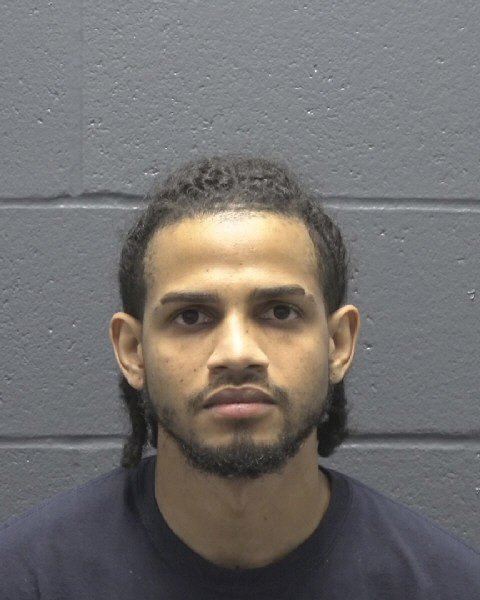
Evansville man arrested for driving while never having receiving a valid operator's license

On November 22, 2025, at 3:22 a.m. Gibson County Deputy Levi Sims conducted a welfare check on a Red 2012 Chevy Equinox in the parking lot of FastBreak Convenience store located at 805 E. Park Street.  Upon approaching the vehicle Deputy Sims identified the driver of the vehicle as 25-year-old Jorsiri Medina of Evansville.  During a roadside investigation Deputy Sims ran Mr. Medina through the Indiana Bureau of Motor Vehicles and discovered that Mr. Medina never had been issued a valid operator’s license. 
 
Sgt. John Fischer assisted Deputy Sims in his investigation.   
 
All criminal defendants are to be presumed innocent until and unless proven guilty beyond a reasonable doubt in a court of law.

Tax Bills Mailed Out This Morning

Wabash County Treasurer, Angela L. Broster, would like to announce that the 2024 Payable 2025 Real Estate Tax Bills were mailed out this morning, Monday, November 24, 2025. Due dates for first installment is Friday, January 9, 2026 and second installment is Monday, February 9, 2026. Note it is the same DATE (the 9th in January & February), but different days of the week.

You can make payments in person, in the drop box out front of the courthouse, by mail, at the banks; First National Bank, First Bank and First-Mid. Credit Card payments can be made by using www.govtechtaxpro.com and the credit card company charges a fee for processing payments.

Before Paying your Taxes, please make sure you are receiving your appropriate exemptions. Any questions regarding your exemptions on your tax bill, please contact the Supervisor of Assessments office at 618-262-4463.

Any questions regarding your tax bills please call the Treasurer's office at 618-262-5262. After your 2024 Payable 2025 Real Estate Taxes are paid in full, you can sign up for our Prepayment plan for the 2025 Payable 2026 Real Estate Taxes. Deadline for 2025 Payable 2026 Prepayments is June 30, 2026.

9 months after federal bribery conviction, former Speaker Madigan disbarred

Longtime Illinois Democratic power broker now in a West Virginia prison

By HANNAH MEISEL
Capitol News Illinois
hmeisel@capitolnewsillinois.com 

Article Summary 

  • Former Illinois House Speaker Michael Madigan is no longer a lawyer after the Illinois Supreme Court officially disbarred him this week 

  • The disbarment stems from Madigan’s conviction in February on 10 federal corruption charges, including bribery.

  • The former speaker has already served more than a month in a West Virginia federal prison — with 89 more to go on his term, though he’ll likely serve less than that.


This summary was written by the reporters and editors who worked on this story. 

CHICAGO — Nearly six decades after becoming a lawyer, former Illinois House Speaker Michael Madigan has been disbarred following his convictions on federal corruption charges — including bribery — earlier this year.

The longtime Democratic power broker, known for his fastidiousness, even beat the Illinois Supreme Court to the punch. 

Two months before he reported to a West Virginia prison in October, Madigan filed a motion with the high court to have his name stricken from the roll of attorneys admitted to the state bar, according to court records. An administrator for the Supreme Court’s Attorney Registration and Disciplinary Commission wrote that “on the date" Madigan filed his Aug. 19 motion, she was investigating Madigan’s criminal conduct.

Read more: Ex-Speaker Madigan reports to West Virginia prison to begin 7 ½-year sentence

“Had Movant’s (Madigan’s) conduct been the subject of a hearing, the Administrator would have introduced the evidence described below, and that evidence would have clearly and convincingly established the misconduct set forth below,” ARDC Administrator Lea Gutierrez wrote before spending the next four pages explaining Madigan’s convictions.

She then concluded that the former speaker deserved to be disbarred for having “committed criminal acts that reflect adversely on his honesty, trustworthiness or fitness as a lawyer” due to his February convictions on bribery and wire fraud. 

On Wednesday, the Supreme Court approved Madigan’s motion, although the official order mistakenly listed his middle name as “James” two of the five times it appeared on the document. The others correctly stated it as Joseph.

Read more: Madigan guilty of bribery as split verdict punctuates ex-speaker’s fall | Ex-Speaker Madigan sentenced to 7 ½ years in prison for bribery, corruption

It’s not uncommon for lawyers under threat of disbarment to just file for their own removal instead of waiting out a hearing; ARDC records indicate that since the 1970s, nearly 60% of the nearly 1,300 attorneys who were ultimately expelled from the Illinois bar opted for “disbarment on consent” by asking the court to strike their names from it. 

But that statistic doesn’t include two of Madigan’s allies convicted in 2023 of bribing the former speaker in the related “ComEd Four” trial. Anne Pramaggiore, the former CEO of electric utility Commonwealth Edison, and longtime Springfield lobbyist and Madigan confidant Mike McClain, saw Gutierrez file complaints to disbar them 10 days after the former speaker made his motion. Both of their law licenses have been suspended since their convictions.

Read more: ‘You preferred secrecy and lies’: Madigan confidant gets 2 years for role in ComEd bribery scheme | Former ComEd CEO sentenced to 2 years for bribery scheme targeted at Madigan

Madigan’s law career began in 1967

Madigan has been a lawyer since shortly after his 1967 graduation from “Loyola University, here in Chicago,” as he put it during his high-stakes run on the witness stand during the end of his trial in January. In law school, he met Vincent “Bud” Getzendanner, who would eventually become his longtime law partner in a practice focused on real estate tax appeals.

In his turn testifying at trial, Getzendanner agreed with a government’s lawyer’s characterization that Madigan “was the rainmaker for the firm” and was more “focused on client acquisition and business development” made possible by his wide network built over a career in public life.

It was the former speaker’s pursuit of new clients in the form of high-powered real estate developers that ultimately gave the feds — who’d investigated Madigan before but came up short on charges — a fresh angle to probe him.

In 2017, Madigan called then-Chicago Ald. Danny Solis, who had connections with all the city’s most powerful developers due to his chairmanship of the city council’s influential zoning committee. Unbeknownst to the speaker, Solis was a year into his cooperation with the feds and the FBI was listening in. Eventually the alderman’s handlers would instruct him to seek Madigan’s help getting appointed to a lucrative state board position in exchange for introducing more potential clients.

Read more: Madigan leaves witness stand expressing regret for ‘any time spent with Danny Solis’ | Madigan takes witness stand, denying he traded ‘public office’ for ‘private gain’ | ‘You shouldn’t be talking like that’: Madigan scolded alderman-turned-FBI mole for bringing up ‘quid pro quo’

Though the jury in Madigan’s case ultimately deadlocked or voted to acquit on the majority of charges related to his pursuit of law clients, the feds were able to parlay Solis’ access to the speaker into a full-blown investigation that encompassed allegations that had nothing to do with Madigan’s tax appeals practice.

The former speaker reported to a federal prison camp in Morgantown, West Virginia, last month after losing the fight to remain free while his newly hired high-profile team of appellate lawyers work on overturning his conviction. In a 73-page brief filed earlier this month, Madigan’s attorneys alleged “the prosecution improperly criminalizes the rough-and-tumble business of state politics”

Read more: 7th Circuit denies Madigan’s bid to stay out of prison while he appeals corruption conviction | Judge denies ex-Speaker Madigan’s request to remain out of prison during appeal


Capitol News Illinois is a nonprofit, nonpartisan news service that distributes state government coverage to hundreds of news outlets statewide. It is funded primarily by the Illinois Press Foundation and the Robert R. McCormick Foundation.
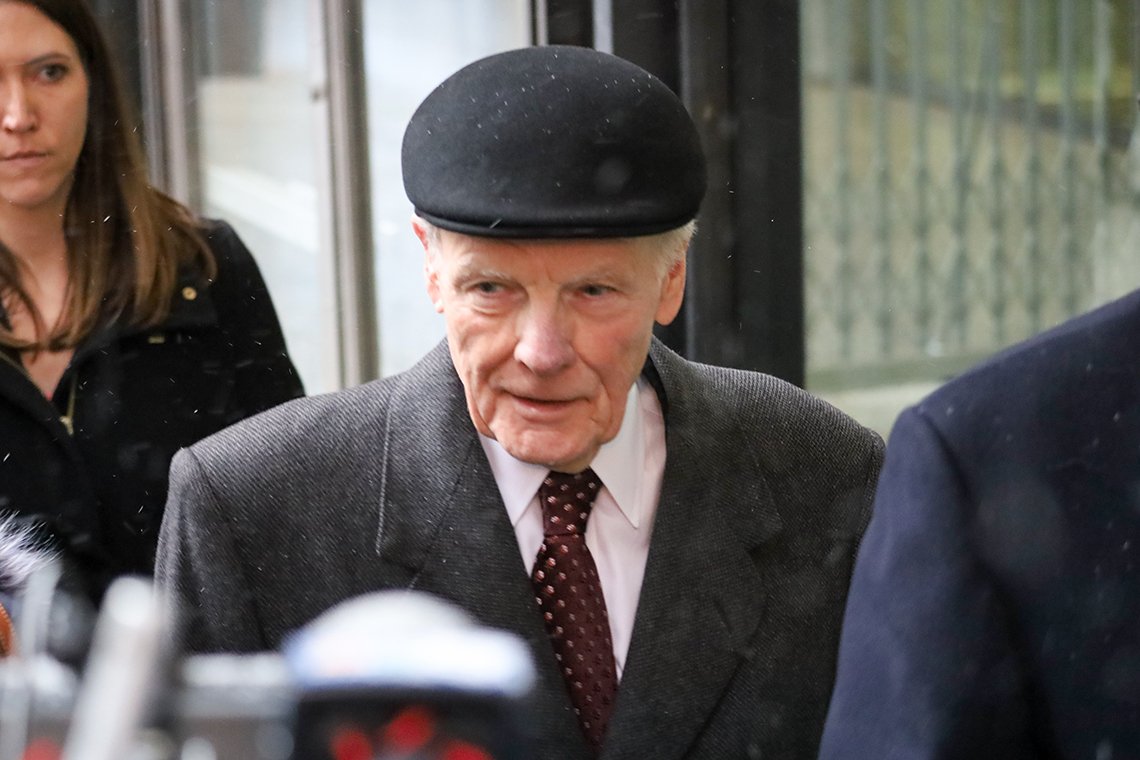
 Former Illinois House Speaker Michael Madigan leaves Chicago’s Dirksen Federal Courthouse on Feb. 12 after a jury convicted him on 10 corruption counts, including bribery. (Capitol News Illinois photo by Andrew Adams)

Requests for new K-12 funding in Illinois likely to outstrip available resources

At public hearings, ISBE hears requests totaling $748M

By PETER HANCOCK
Capitol News Illinois
phancock@capitolnewsillinois.com

Story Summary

  • School officials and education advocates have requested funding increases totaling $747.99 million for the upcoming fiscal year, which begins July 1.

  • The biggest items on the list include the statutory $350 million increase in Evidence-Based Funding, and a $100 million increase for “mandatory categorical programs,” including transportation and certain special education costs.

  • The Illinois State Board of Education is expected to finalize its budget request in January and submit it to the General Assembly for consideration as the legislature puts together a state budget for the next fiscal year.

This summary was written by the reporters and editors who worked on this story.

SPRINGFIELD — If advocates, stakeholders and members of the public were granted all their requests for public school funding next year, lawmakers would have to increase the state’s K-12 education budget by nearly three-quarters of a billion dollars.

That’s the approximate total of all the requests that Illinois State Board of Education officials received online and in-person during a recent series of public hearings about a proposed budget for the next fiscal year.

The total is considerably smaller than last year’s requests, which added up to more than $2.2 billion in new funding. But it is still more than what is likely to be available, given that Gov. JB Pritzker is asking most state agencies to make plans for reducing spending by 4% in the current fiscal year in light of fiscal uncertainty at the federal level.

ISBE board members were briefed on the funding requests during their monthly meeting Thursday in Chicago. 

Full EBF, categorial boost

The requests included continued funding of the statutory $350 million increase in the Evidence-Based Funding formula, or EBF. That’s a formula that lawmakers first approved in 2017 that directs new money to the most underfunded districts in the state. It also directs money for property tax relief for certain high-tax districts.

The EBF formula, however, does not include all areas of education spending. It focuses primarily on classroom expenses directly related to improving student outcomes, taking into account the special needs of certain groups such as low-income households and English language learners.

But schools also incur other costs, known as “mandated categorical programs,” that are not covered by the EBF formula. Those include costs associated with special education, transportation and school meals, to name a few, and they are typically shared on a prorated scale between the state and local districts.

The list of funding increases requested for next year included a $100 million increase in state funding for those costs.

Matthew Seaton, ISBE’s chief financial officer, said the requested increase in that category, sometimes referred to as MCATs, was the most frequently mentioned funding request that officials heard about this year.

“I think this is the first time, at least since I've been at the agency, that our most requested budget item was in the MCAT line item,” he said. “Usually, it's EBF. Everybody wants EBF. So I think that’s very telling to where the field’s perception is of needs, that they're really emphasizing mandated (categoricals) this year.”

New literacy plan, more

The request list also included $68.5 million for implementation of ISBE’s new literacy plan, a program the board approved in 2024 to improve literacy instruction throughout the state. 

Other requests included an additional $30 million to hire more special education teachers to relieve staff shortages; a $30 million increase for multilingual education, and a $60 million increase in early childhood block grants.

The list of requests included 51 categories of school spending, with increases totaling $747.9 million.

Receiving public input for funding requests is one of the first steps in developing a budget proposal for the upcoming year. In December, the board will receive another briefing about the state’s financial condition from the Commission on Government Forecasting and Accountability, the fiscal staff of the General Assembly.

The board is expected to approve its official budget request at its Jan. 14 meeting in Springfield.

Capitol News Illinois is a nonprofit, nonpartisan news service that distributes state government coverage to hundreds of news outlets statewide. It is funded primarily by the Illinois Press Foundation and the Robert R. McCormick Foundation. 
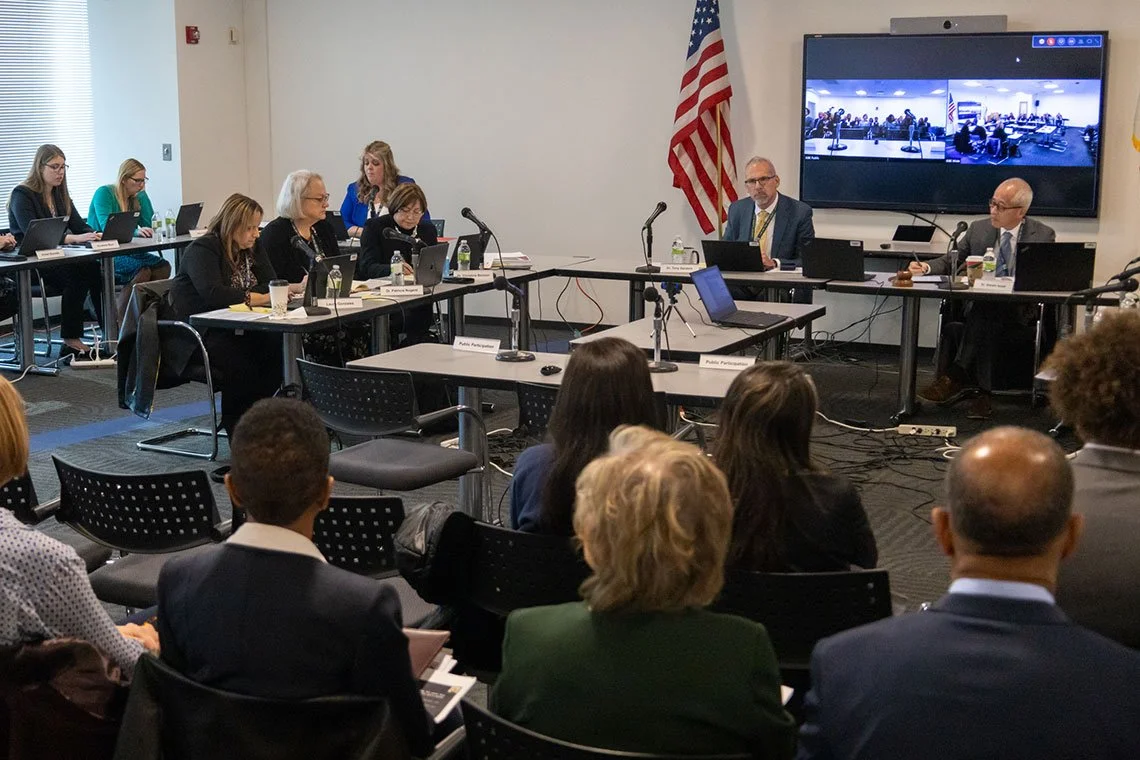
Members of the Illinois State Board of Education and Superintendent Tony Sanders are pictured at a 2023 board meeting. (Capitol News Illinois photo by Andrew Adams)