Illinois to roll out direct admissions program for most state universities

Governor signs new state requirements for dual credit programs, financial aid assistance

By ANDREW ADAMS
Capitol News Illinois
aadams@capitolnewsillinois.com

CHICAGO — Illinois students won’t need to fill out applications for most state universities to be admitted — if they have high enough grades. 

With his signature, Gov. JB Pritzker on Monday approved a bill creating the direct admissions program. Along with it, he approved bills that implement new state standards for programs offering college credits to high school students, and new requirements for financial aid application assistance. 

“These bills streamline the application process for college-bound seniors in Illinois, enhance support for applicants, and open up new horizons for prospective students,” Pritzker said in a statement. “Enacting these laws is what all government work should be about — making life easier for our people.”

Pritzker had said college admissions and higher education accessibility would be a priority of his during this year’s legislative season, which ended May 31. But one of his signature initiatives — allowing community colleges to offer four-year degrees — failed earlier this year

Direct college admissions 

Illinois will implement a direct admissions program so that students hoping to go to a state school will be automatically admitted — if they have a high enough grade point average. 

“For eligible seniors and community college transfer students, you will receive offers from the schools that you are admitted to without raising a finger. That’s huge,” Sen. Christopher Belt, D-Swansea, said. “It takes away the anxiety, it takes away the angst of that whole process.” 

The bill outlining the direct admissions program, House Bill 3522, passed unanimously in the Senate and with broad bipartisan support in the House in late May. 

Read more: House approves new abortion protection, plan to ease college admissions | Senate Democrats champion program to streamline Illinois college applications

The program will begin in the 2027-28 school year, with nine of the state’s 11 public universities participating: 

  • University of Illinois Springfield 

  • Southern Illinois University 

  • Chicago State University 

  • Eastern Illinois University 

  • Governors State University

  • Illinois State University

  • Northeastern Illinois University 

  • Northern Illinois University 

  • Western Illinois University

High school students and community college students hoping to transfer to a state school must opt-in to the program to receive offers. Community colleges already admit all students interested in attending but will still participate in the direct admissions program. 

The University of Illinois Urbana-Champaign and University of Illinois Chicago will not participate in the direct admission program. The state will, however, provide information about traditional applications to qualifying students through an “access and outreach campaign.”  

The criteria for the direct admissions program and outreach campaign will be set by individual schools. 

“This new, statewide direct admissions program will make a college degree more accessible for students and will motivate them to continue in their life-changing college journey by ensuring them a spot at their community college or at one of the state's public universities,” Illinois Board of Higher Education Executive Director Ginger Ostro said in a Monday statement. 

Financial aid application assistance 

Two more bills signed by Pritzker on Monday, House Bills 3096 and 3097, aim to make it easier for students to navigate the financial aid process. 

HB 3096 requires high schools in Illinois to designate at least one staff member as a point-of-contact for information about the Free Application for Federal Student Aid, or FAFSA. HB 3097 requires high schools to offer students time during the school day to fill out FAFSA forms and to receive assistance in doing so.  

The new requirements go into effect in the 2025-26 school year. 

Information collected through FAFSA is used to determine eligibility for federal loans. Many schools use FAFSA for their own aid programs, and the state offers need-based grants based on information submitted through FAFSA. 

“As a father of college students, I just currently went through this fun exercise with my daughter filling out a FAFSA form,” Sen. Javier Cervantes, D-Chicago, said. “I’m being a little sarcastic calling it fun because we had deadlines, we had to make sure we had our documentation together and it wasn’t easy.” 

From the 2010 to 2020 school years, an average of 86% of first-time students at four-year schools and 78% of first-time students at two-year schools received federal financial aid, according to data from the U.S. Department of Education

Dual credit program 

House Bill 2967, another bill approved by Pritzker on Monday, outlines new requirements for high schools and community colleges offering “dual credit” programs, through which students earn high school and college credit for completing a single course. 

It requires teachers teaching dual credit classes to have a master’s degree in the subject they’re teaching or a master’s degree and some graduate coursework in the subject. It also requires high schools and community colleges to designate individuals responsible for negotiating what individual dual credit agreements look like. 

“HB 2967 reinforces the vital role that strong, robust partnerships between community colleges and high schools play in delivering high quality dual credit programs,” Illinois Community College Board Executive Director Brian Durham said in a statement. “These programs help students get a head start on their college education and a path towards career success.”

The bill also requires schools to consider in-state colleges and universities when setting up dual credit programs over out-of-state institutions. 

The bill also creates a committee made up of education officials, representatives from two different statewide teachers’ unions and others to work on improving dual credit programs’ accessibility and quality, as updating a template used by school districts to develop dual credit agreements with community colleges. 

Four-year degrees at community college 

One key proposal didn’t make the cut this spring — a measure allowing community colleges to offer bachelor’s degrees. Despite being backed by Pritzker in his State of the State address earlier this year, it faced pushback in the General Assembly, which did not pass a bill implementing the policy.  

Read more: Pritzker’s community college initiative stalls in House committee

That proposal drew concerns from some lawmakers who worried it could undercut programs to attract local students to state universities. In particular, some lawmakers worried that it could hurt schools like Northeastern Illinois University and Chicago State University, which serve largely minority student populations. 

But Pritzker on Monday said he would continue working on a proposal to allow more schools to offer bachelor’s degrees in “very specific, niche areas” like nursing and advanced manufacturing. 

“You sometimes have to work two, four, six years, maybe longer to get something done,” Pritzker said. 


 The Illinois Community College Board offices sits blocks away from the state Capitol. Under a new law, the ICCB and other state agencies are tasked with improving dual credit programs in the state. (Capitol News Illinois photo by Andrew Adams)
Pritzker selects former Deputy Gov. Christian Mitchell as running mate

Mitchell oversaw clean energy and infrastructure projects for 4 years under Pritzker

By BEN SZALINSKI
Capitol News Illinois
bszalinski@capitolnewsillinois.com 

Gov. JB Pritzker announced Tuesday that former Deputy Gov. Christian Mitchell will be his running mate for the 2026 campaign. 

Pritzker’s selection, made just days after announcing a third campaign for governor, comes from a close circle of trust in Pritzker’s administration. Mitchell previously served in the governor’s office as one of four deputy governors overseeing key projects in Pritzker’s first term.

“Christian Mitchell is a proven leader with deep experience, steady judgment, and an unshakable commitment to the working families of Illinois,” Pritzker said in a statement. “Whether it’s transforming our clean energy future, rebuilding our infrastructure, or keeping our communities safe, Christian has been a force behind so much of our progress. I couldn’t ask for a better partner to continue delivering results for the people of Illinois.”

Mitchell, 38, will replace Lt. Gov. Juliana Stratton on the ticket as she seeks the Democratic nomination for U.S. Senate. 

Mitchell comes in with hefty experience in state government and public policy. A resident of Chicago’s Hyde Park neighborhood, Mitchell served three terms in the Illinois House beginning in 2013 and was executive director of the Democratic Party of Illinois in 2018 before joining the governor’s office in 2019. 


Lieutenant governor role

Mitchell left Pritzker’s administration in early 2023 to become vice president for civic engagement at the University of Chicago where he oversees government relations. Mitchell was appointed by Pritzker last year to an unpaid seat on the Metropolitan Pier and Exposition Authority board, which oversees Navy Pier and McCormick Place. He is also a first lieutenant in the Illinois Air National Guard. 

“The governor has led with courage and compassion, and together we’ve built a foundation that’s moving Illinois forward,” Mitchell said in a statement. “I’m ready to build on that progress — lowering costs, expanding opportunity, and making sure every community has the resources and opportunities they deserve. This is about delivering real results for the people of Illinois, and I’m excited to get to work.”

Read more: ‘I have work to do,’ Pritzker says in launching third-term reelection bid

Though the lieutenant governor has few constitutional responsibilities in Illinois, Pritzker has leveraged the position to task Stratton with leading key legislative initiatives and overseeing the implementation of some of his administration’s top priorities at state agencies. 

If Pritzker is elected to another term, the role will hold greater importance as Pritzker considers running for president in 2028. Pritzker’s election to the presidency would require Mitchell to serve the final two years of his term. 

Read more: National speculation ‘helps get more for the people of Illinois,’ Pritzker says

While keeping Mitchell's selection under wraps, Pritzker told reporters in recent days he was looking for a running mate who was ready to immediately step into the governorship if required. 

“The number one qualification is, ‘can you do the job of being governor because if you’re lieutenant governor, that may come to you,’” Pritzker said Monday.

“The second thing I think about is person who I might choose for lieutenant governor somebody who has a heart for all the people of Illinois, not just some or some specific segment of the population because we have a big, diverse state,” he said. 


Deputy governor role

Deputy governors in Pritzker's administration have a chief of staff-like role, overseeing specific policy areas and state agencies. Mitchell was in charge of environmental policy, infrastructure and public safety. 

In 2020 and 2021, Mitchell oversaw the negotiations of Pritzker’s marquee climate policy — the Climate and Equitable Jobs Act. It massively reformed the utility and energy industry and requires all fossil fuel power plants to close by 2045.  

Mitchell was responsible for representing the governor in negotiations around the bill and was the face of the Pritzker administration as it went through the legislature. 

That law, passed in the wake of a bribery scandal with Chicago’s electric utility that forced former House Speaker Michael Madigan to resign, cemented Pritzker’s reputation as a progressive on climate issues. 

In the years since, energy experts and some lawmakers involved in passing the law have raised concerns that the state is at risk of missing the clean energy targets that Mitchell helped codify. 

Mitchell also oversaw the implementation of the 2019 Rebuild Illinois capital plan – a $45 billion construction project to rebuild roads, bridges and other infrastructure across the state. 

Recreational cannabis regulation was also Mitchell’s responsibility. Pritzker signed legislation in his first year legalizing cannabis for recreational use and setting up a series of regulations for dispensaries and new social equity requirements. 

Other experience

As a state lawmaker, Mitchell was chair of the House Economic Opportunity Committee.

Mitchell also brings heavy political experience to the ticket. Democrats swept races for statewide offices in 2018 and won supermajorities in the Statehouse with Mitchell serving in a top leadership role under former party Chair Mike Madigan. He took over for Tim Mapes, Madigan’s former chief of staff who was accused of sexual harassment and is now serving time in prison for a perjury conviction.

He has also worked as an advisor on several political campaigns in Illinois, including leading Midwest polling for former President Barack Obama’s 2012 campaign. 

Andrew Adams contributed. 


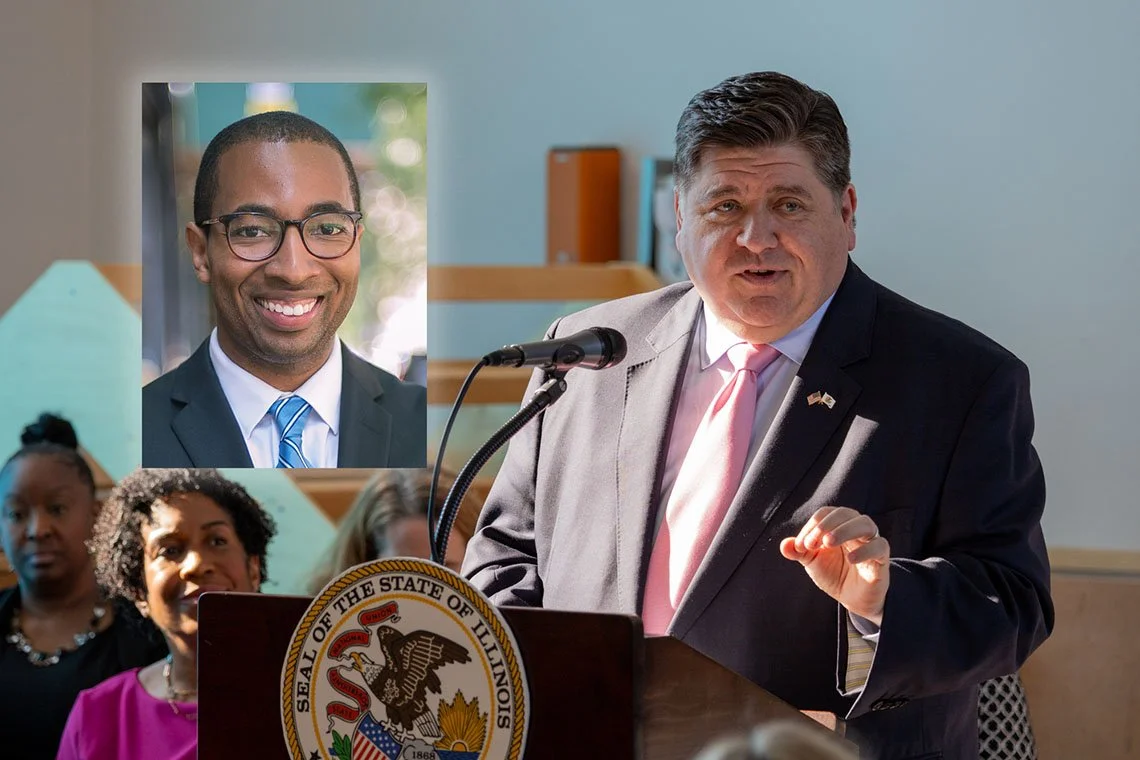
Gov. JB Pritzker has chosen Christian Mitchell to be his running mate in the 2026 gubernatorial election, replacing Lt. Gov. Juliana Stratton, who is running for U.S. Senate. (Capitol News Illinois illustration; Photo by Dun Boyer, Wiki Commons, CC Attribution-Share Alike 4.0 International license)


Pritzker signs health care legislation

Bills aim to rein in pharmacy benefit managers, expand insurance coverage

By PETER HANCOCK
Capitol News Illinois
phancock@capitolnewsillinois.com

Gov. JB Pritzker signed a pair of health care-related bills Tuesday that he said would put more controls on the pricing of pharmaceutical drugs sold through insurance plans while expanding insurance coverage for certain kinds of hospital costs.

“For too long our health care system has been infected by profit-seeking middlemen and predatory actors looking to make an extra dime at the expense of Illinois patients,” Pritzker said at a bill signing ceremony in Peoria. “Seniors have been forced to pay through the nose for life-saving medications. Families have had to delay or decline medically necessary treatments because they can’t afford it anymore. And family businesses like independent pharmacies have had to shut their doors.”

House Bill 1697, known as the Prescription Drug Affordability Act, will impose new restrictions on practices of pharmacy benefit managers, or PBMs, a powerful but little-understood segment of the pharmaceutical industry.

PBMs are companies that act as a kind of middleman between health insurance plans and pharmaceutical companies by negotiating drug prices and designing drug formularies that are intended to steer patients toward lower-cost medications.

But they have come under intense criticism in recent years for steering patients toward their own affiliated retail chain pharmacies, often to the detriment of smaller independent pharmacies, and for operating pricing systems that are designed to maximize profits for the PBMs rather than producing savings for patients.

Under the legislation, PBMs will be prohibited from steering consumers toward large pharmacies in which they have a financial interest. They will also be prohibited from engaging in “spread pricing” – the practice of charging health plans a higher price for a drug than the PBM pays a pharmacy for dispensing the drug.

The bill also establishes a grant program that will distribute $25 million a year in financial support for independent pharmacies, funded through a tax levied on PBMs operating in Illinois.

David Bagot, an independent pharmacist from Petersburg who is also president of the Illinois Pharmacists Association, called the bill “landmark legislation” that he predicted would be studied and replicated in other states.

“This bill represents the most comprehensive reform of pharmacy benefit managers we have seen in Illinois,” he said. “For far too long, these companies have used our nation’s drug supply chain to benefit shareholders and executives while driving up costs for people who rely on medications and driving pharmacies out of business.”

But the Pharmaceutical Care Management Association, the lobbying organization that represents PBMs, called the bill “misguided legislation” and predicted it would have little or no impact on the prices consumers pay for medications.

“Unfortunately, the legislation does nothing to address the fact that Big Pharma sets the price of the prescription drugs – and the price is the problem when it comes to some Illinoisans facing difficulty affording their prescription drugs,” the group said in a statement. “Lawmakers have passed 20 bills regulating and restricting PBMs since 2016, none of which have led to lower drug prices.”

Insurance coverage expansion

Pritzker also signed House Bill 3019, known as the Healthcare Protection Expansion Act.

Among other things, it prohibits state-regulated health plans from requiring prior authorization for outpatient mental health services. Last year, lawmakers imposed a similar prohibition for inpatient and emergency mental health services.

It also requires insurance plans to cover a patient’s travel-related expenses whenever they have to travel long distances to receive in-network care, a problem often faced by patients who live in rural areas of the state.

“Building on protections that make mental health care accessible for all Illinois residents, this law gives people more opportunities and flexibility to receive necessary services,” state Sen. Laura Fine, D-Glenview, a lead sponsor of the bill, said in a statement.


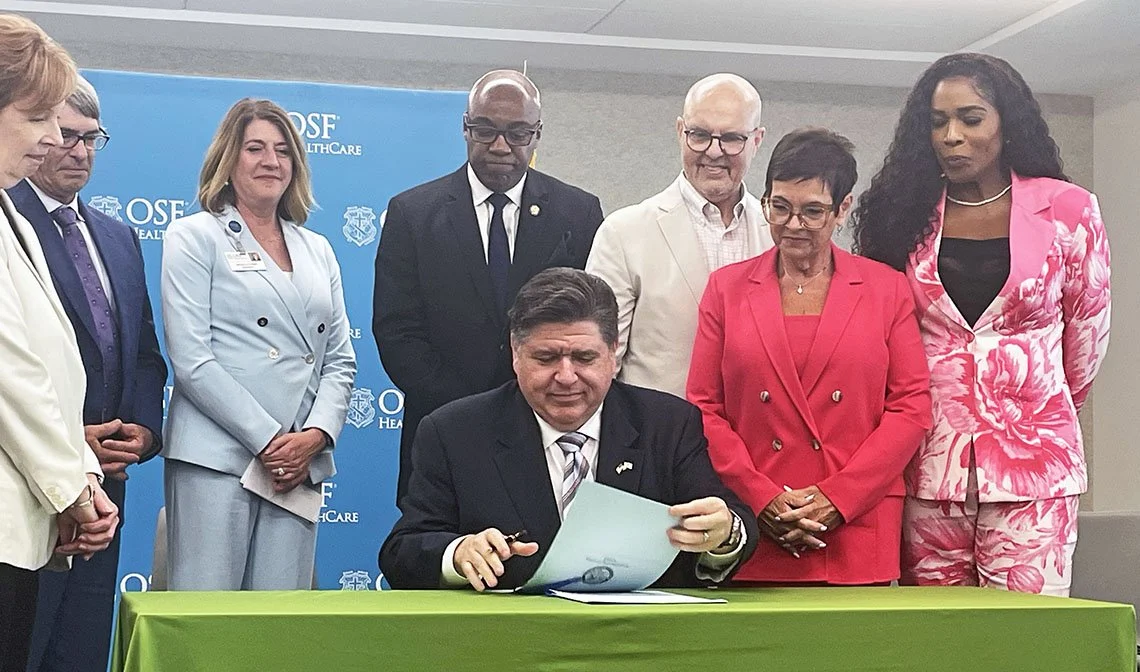
Gov. JB Pritzker signs two bills related to health care costs at a hospital in Peoria, including a bill that puts more controls on pharmacy benefit managers. (Capitol News Illinois photo by Andrew Campbell)


IECC & WGH Partner For New Education Initiative

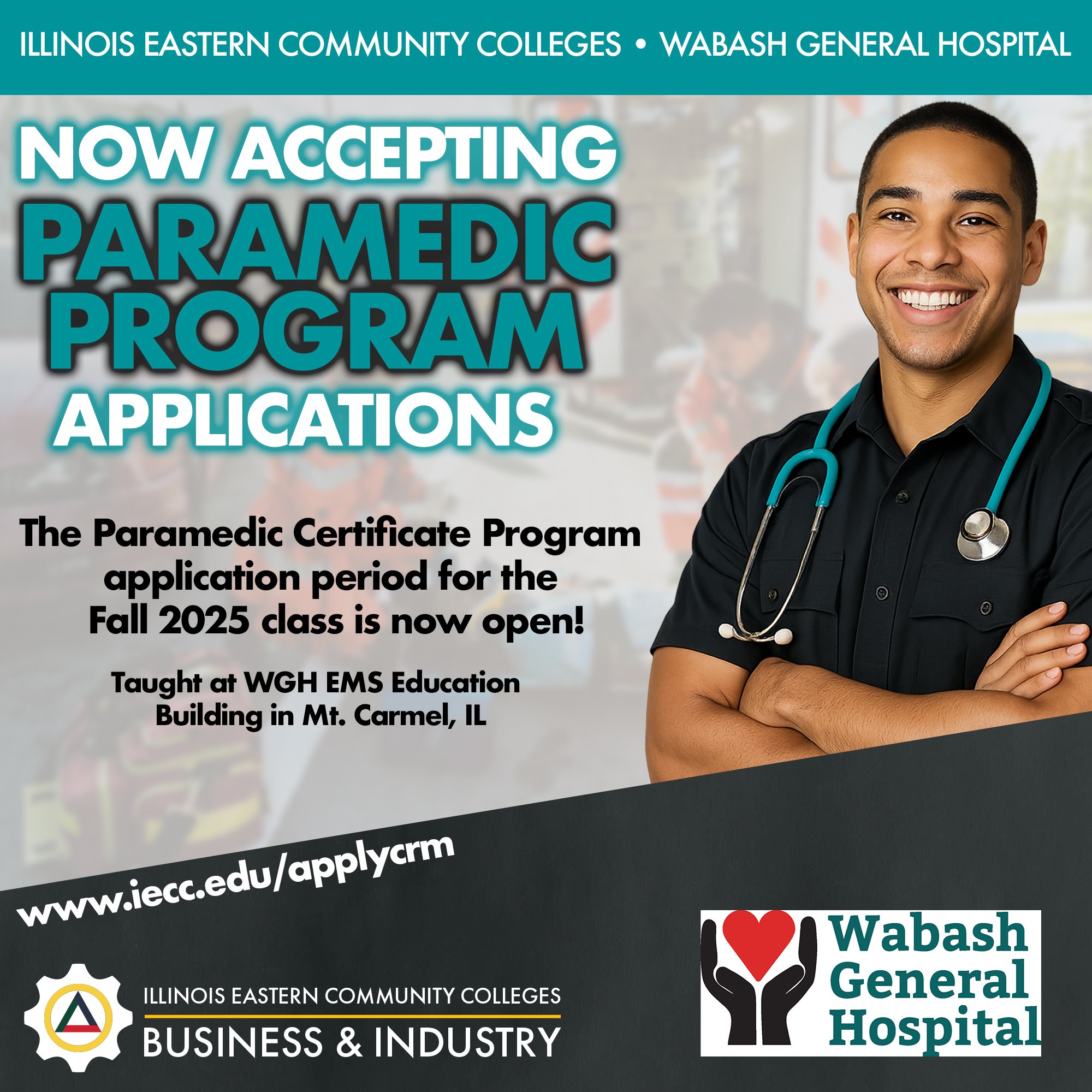
In a major step forward for healthcare education in southeastern Illinois, Illinois Eastern Community Colleges and Wabash General Hospital are excited to announce that their joint paramedic education initiative has received a significant endorsement. The program recently earned a Letter of Review from the Committee on Accreditation of Educational Programs for the Emergency Medical Services Professions, officially greenlighting enrollment for the inaugural class this fall.

Following an intensive and successful site evaluation conducted by CoAEMSP on June 12, the Frontier Community College Paramedic Education Program is now authorized to enroll students, marking over two years of dedicated planning, partnership, and preparation. Classes will be held at the WGH EMS Education Building in Mt. Carmel, IL.

The strategic partnership harnesses IECC's educational excellence and Wabash General Hospital's clinical expertise, ensuring that students gain real-world experience in topnotch facilities, both in classrooms and in clinical settings.

The CoAEMSP Letter of Review indicates the program's substantial compliance with rigorous national standards. While full accreditation remains a future goal, this milestone enables program graduates to sit for the National Registry of Emergency Medical Technicians Paramedic certification examination.

"Our commitment to excellence and graduate readiness is really at the heart of our new Paramedic Certificate Program. This program would not have been possible without the incredible partnership of Wabash General Hospital. By leveraging IECC's academic strength and WGH's healthcare expertise, we've built a program that will truly prepare students to serve their communities with skill, confidence, and compassion from day one." - Sharmilla Kakac, Dean of IECC Business and Industry

Program Highlights Include:

• Extensive classroom instruction paired with comprehensive laboratory, clinical, and field internship experiences

• State-of-the-art simulation labs

• Highly experienced faculty and professional medical oversight

• Clear career pathways in emergency medical services

• Valuable clinical placement opportunities through robust community partnerships

The program will begin accepting applications for its first cohort starting now, with courses set to commence in Fall 2025. After graduating its initial cohort, the program will seek full accreditation from the Commission on Accreditation of Allied Health Education Programs.

"This has been a project we have worked on for a few years to get approved, and we really appreciate IECC working with us. We are very excited to be able to offer a paramedic class in Mt. Carmel to produce highly skilled and highly competent paramedics. Our goal is to have the paramedics completing our program become the best of the best to serve our rural area." - Jeana Trimble, Director of Paramedic Education Program

The Annual Wabash County 4-H Shows begin Friday, July 11

MT. CARMEL, Ill. – It’s an exciting time for 4-H members as they gear up for the annual Wabash County 4-H shows. The 4-H shows kick off with the Dog and Cat Care Shows on Friday, July 11, followed by the General Projects, Food, and Clothing Show on July 12. The food and clothing exhibits will feature homemade projects in sewing, food and nutrition, food preservation, and the like. The General Project Show will highlight 4-H members’ artwork, displays, and projects on topics ranging from crops and drones to photography, robotics, and more. Finally, the livestock shows will showcase each member’s commitment to preparing their show animals and showmanship, while demonstrating it all in front of a judge.

 Illinois Extension and Wabash County 4-H invite the community to attend the 4-H events, held at the Wabash County Fairgrounds, located at 15039 4-H Center Lane, Mt Carmel, IL 62863. Follow 4-H Wabash County, Illinois on Facebook to keep up with each event throughout the Fair.

 The 2025 Wabash County 4-H show schedule is as follows:

 Friday, July 11                             

6 p.m. | 4-H Dog Care Show, followed by 4-H Cat Care Show

 Saturday, July 12       

8:30 a.m. | 4-H General Projects, Food, and Clothing Show

4 p.m. | 4-H Horse Show

 Monday, July 14         

5 p.m. | 4-H Rabbit Show

 Tuesday, July 15        

8 a.m. | 4-H Swine Show, followed by 4-H Sheep Show and 4-H Beef Show

1 p.m. | 4-H Poultry Show

 Wednesday, July 16

12 p.m. | 4-H Dairy Cattle Show, followed by 4-H Goat Show

 Thursday, July 17      

6:15 p.m. | Parade of Champions, followed by Livestock Auction

 Illinois Extension will also be hosting a fair booth on the evening of Wednesday, July 16. Fairgoers are encouraged to stop by to learn more about Illinois Extension’s programs, upcoming events, and 4-H opportunities. For more information about Illinois Extension and Wabash County 4-H, visit extension.illinois.edu/elrww or contact the Wabash County Extension office at 618-262-5725.

 If you need a reasonable accommodation to participate, please contact the Wabash County 4-H Program Coordinator, Tori Thompson, at torit03@illinois.edu. Early requests are strongly encouraged to allow sufficient time to meet your needs.

4-H members and local youth team up at No Limits Livestock Show

ALBION, Ill. – Squealing pigs and smiling kids—all indications of a good time at the second No Limits Livestock Show. The No Limits Livestock Show is an all-inclusive swine show where youth 4-H swine exhibitors and individuals with disabilities team up to show a pig. The show not only introduces local youth to 4-H and livestock but also offers a memorable experience for both the mentors and mentees.

 On June 20, at the Edwards County Fairgrounds swine showring, Edwards County 4-H members introduced two participants from Edwards and Richland counties to showing a pig. Before the show began, participants learned about their pigs and how to prepare them for showtime. They learned basic showmanship techniques and practiced guiding their pigs around the showring.

 During the show, Interim Assistant Dean/Program Leader & Director of Illinois 4-H, Kevin Carey, served as the livestock judge and evaluated each team’s performance. Ribbons were awarded to the participants as they ended their tour around the showring.

 At the conclusion of the show, Carey spoke about the Illinois 4-H program.

 “Every single person across the state, between the ages of 5 and 18, deserves the opportunity to be in 4-H; regardless of ability, regardless of identity, regardless of experience, we want people to feel like they belong with us,” said Carey.

 4-H strives to provide opportunities for all youth, and parents are encouraged to reach out to their local 4-H program for more information. To learn more about Illinois Extension and the Edwards, Lawrence, Richland, Wabash, or Wayne County 4-H programs, visit extension.illinois.edu/elrww.


City Closing River Road For Fireworks

As the 4th of July is now just a little more than a week away, Mt. Carmel Mayor Joe Judge has announced a road closure that will affect some people coming to the river to watch the fireworks…

Judge said the Golden Aces Way will not be impacted by the closure of River Road. In fact, he said that area across from the Stadium will be a focal point on the 4th…

The fireworks are scheduled for 9pm on the 4th.

Wabash County Unemployment Rate Still One Of Lowest In Southern Illinois

Wabash County’s jobless rate last month dropped half a point from May of 2024. According to the latest figures from the State’s Department of Employment Security, Wabash County’s rate went from 3.7% last May to 3.2% last month. The 3.2% figure is just above Richland County’s 3.1% for the lowest in southern Illinois. Other area rates declined in May including Lawrence County dropping to 3.7%; Edwards County down seven tenths of a point to 3.4%; White County to 3.8%; and Wayne County fell to 3.5%. The statewide January rate stood at 4.4%.