
The circus is returning to Mt. Carmel this Spring for four big performances. Wayne Walden of the Mt. Carmel Kiwanis Club received permission from the city council Monday to bring the Culpepper and Merriweather Circus to the Southgate Industrial Park on Saturday and Sunday, May 3rd and 4th with performances at 2 and 4:30 each afternoon. Walden said proceeds from the circus will help the Kiwanis Club build a new shelter house on Park Road at the City Park.

Pritzker wants Illinois to be latest state to ban cellphones in classroom
Limits already are in place in some Illinois school districts
By BEN SZALINSKI
bszalinski@capitolnewsillinois.com
Capitol News Illinois
Are cellphones a useful tool or a distraction in the classroom? According to Gov. JB Pritzker, they’re a distraction, and he has proposed banning them during classroom instruction.
Pritzker proposed legislation during his State of the State speech in February that would call for banning cellphones during classroom learning time. However, his proposal would not ban cellphones in school entirely, meaning students may still be allowed to use their devices between classes. Private schools would not be included in the ban.
“In conversations with educators from around the state, there is one thing most commonly cited as an impediment to classroom learning: cellphones,” Pritzker said at a news conference Thursday in Champaign.
Some of Illinois’ largest school districts already have adopted their own limits on cellphones in their classrooms, including Springfield, Peoria and Champaign.
“We want our students’ phones turned off so their minds can be fully engaged in learning,” Champaign Unit 4 School District Superintendent Sheila Boozer said.
The Champaign district implemented cellphone limits beginning last fall and said the response from parents and teachers has been positive.
“Since every student is provided with a Chromebook for schoolwork, a cellphone is not really necessary for their learning,” Boozer said.
Schools would be required to come up with their own guidelines for securely storing the phones during instructional time. Pritzker’s plan would also prohibit students from being fined or punished by a law enforcement officer for violating a no-cellphone policy.
“Study after study has demonstrated the benefits of a ban in classroom use of cellphones, not just on student performance but on overall health and well-being,” Pritzker said. “Bullying goes down while grade point averages and Advanced Placement test scores goes up.”
Pritzker’s proposal would include several exemptions to such a ban, including in the event of an emergency, when a teacher allows students to use wireless devices for educational purposes or when a doctor requires a student to have or use their phone for medical reasons.
At some recent school shootings, such as in Uvalde, Texas, students made critical 911 calls. Rep. Patrick Sheehan, R-Lockport, who is a Plainfield police officer, told Capitol News Illinois its important students can access a cellphone in emergencies.
“The kids having these devices to be able to call 911 dispatch so that they can get to the police officers, it cuts down on the response time and completely saves lives,” Sheehan said.
Sheehan said it’s important students have a distraction-free environment, but he cautioned against schools enacting a policy that could lock phones away from students.
“Taking away the cellphones and putting them in some sort of lock or away from the student, as a parent I don’t like it,” Sheehan said. “And as a police officer, I definitely don’t like it.”
Eight states enacted some type of limit on cellphones in schools last year, Stateline reported last month. This year, Illinois is one of 13 states where legislation has been proposed to limit cellphones in schools.
A 2023 Pew Research poll of public school teachers found 72% of high school educators believe cellphone distractions are a “major problem” in their classroom. But 60% of high schools teachers said it is also difficult to enforce cellphone policies.
Bans on cellphones during class time are generally popular among U.S. adults. While 53% do not support banning phones in schools for the entire day, 68% support banning them during class, according to a 2024 Pew poll.
Capitol News Illinois is a nonprofit, nonpartisan news service that distributes state government coverage to hundreds of news outlets statewide. It is funded primarily by the Illinois Press Foundation and the Robert R. McCormick Foundation.

Current flag wins state flag redesign vote
Senator behind flag contest has no ‘preconceived notions’ about next Illinois flag
By BRIDGETTE FOX
Capitol News Illinois
bfox@capitolsnewsillinois.com
The Illinois state flag may be around a lot longer, it turns out.
About 43% of the 385,000 votes in an advisory state flag revision contest decided they’d prefer to resist change and keep the current design.
There were 12 other flag choices. Ten were designed by Illinois residents, students and even the great-grandchildren of Civil War veteran and past Illinois Attorney General James McCartney. The remaining two were designed for past state anniversary celebrations.
A flag design depicting the sun on the horizon, designated “Design #2246,” finished in second place with “Design #3679” finishing in third place. That design depicts Abraham Lincoln’s silhouette and the state of Illinois on a dark blue background.
A flag designed for the state’s sesquicentennial celebration in 1968 finished in last place, with about 5,100 votes.
The vote will be used by the Illinois Flag commission to advise the General Assembly on how they should vote regarding a flag change. So, legislators will have the final say on any future flag changes.
Sen. Doris Turner, D-Springfield, introduced the bill that created the Illinois State Flag Commission, the group that conducted the flag vote. She’s also a member of the commission.
Turner said she doesn’t have any preconceived notions about what’s going to happen.
“I don’t want to talk too much about the results because I think that the commission has to – still has work to do,” Turner said. “And we have to look at, you know, look at those results and do a deep-dive into them and complete our report and submit it to the General Assembly as we said we would do in the legislation.”
The flag commission is expected to issue its report to the legislature later this spring.
Capitol News Illinois is a nonprofit, nonpartisan news service that distributes state government coverage to hundreds of news outlets statewide. It is funded primarily by the Illinois Press Foundation and the Robert R. McCormick Foundation.
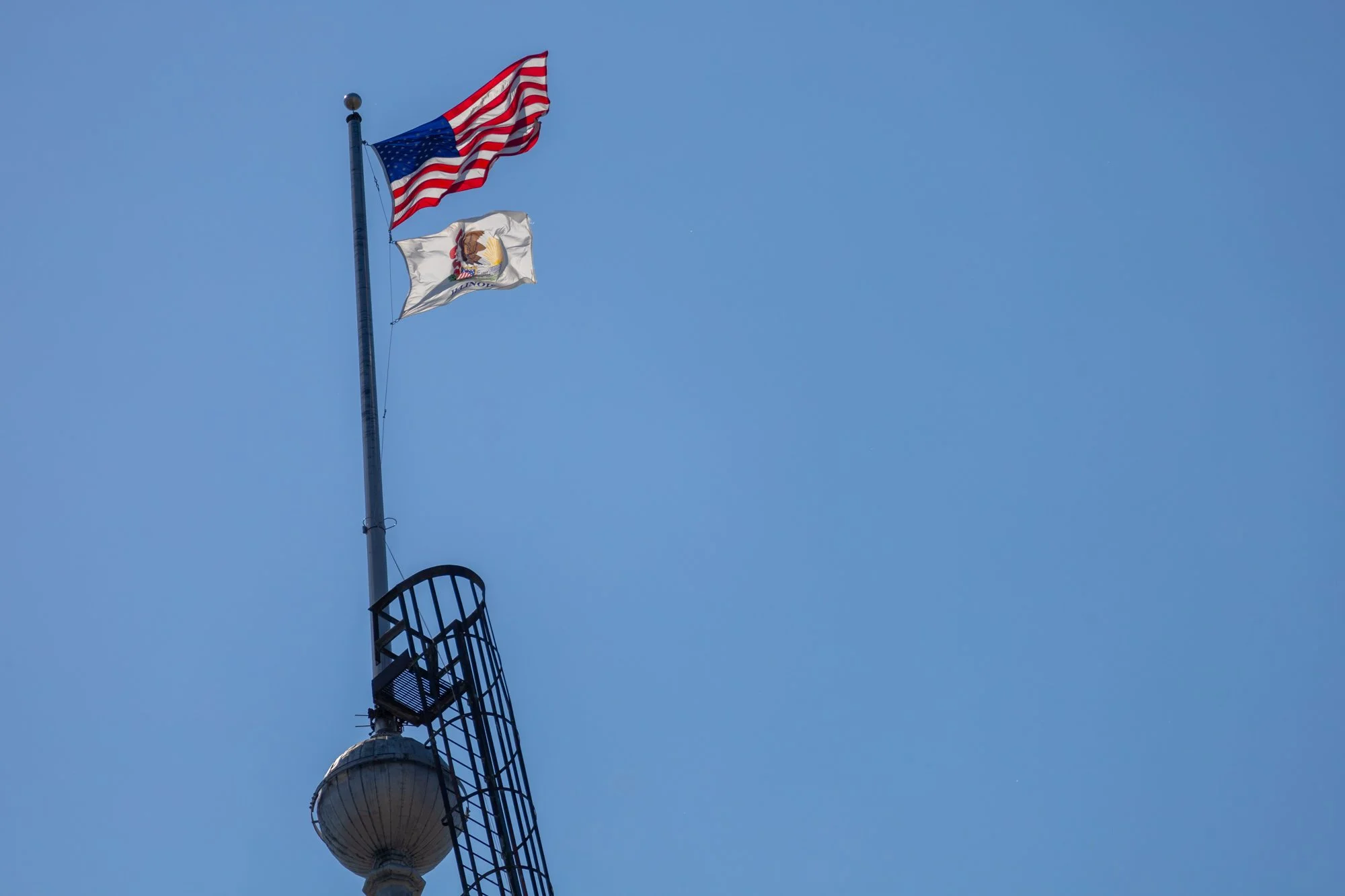
The U.S. and Illinois flags over the state capitol in Springfield in May 2024. (Capitol News Illinois file photo)
In-Custody Death at Richland County Jail
Olney, IL – The Richland County Sheriff’s Office is reporting an in-custody death that occurred at the Richland County Jail early this morning.
At approximately 5:55 a.m., correctional staff discovered 62-year-old Donald Pollock unresponsive in his cell. Pollock was unconscious and not breathing. Life-saving measures were immediately initiated, and emergency medical services were contacted. Despite these efforts, Pollock was pronounced deceased.
Pollock had been booked into the Richland County Jail the previous evening at approximately 8:00 p.m. on low-level firearms and drug-related charges.
The Illinois State Police have been contacted and will conduct an independent investigation into the circumstances surrounding Pollock’s death. Additionally, the Richland County Coroner’s Office will perform an autopsy to determine the cause of death.
At this time, no additional information can be provided out of respect for the Illinois State Police’s independent investigation. Updates will be shared as they become available.
Trump administration ends reimbursements for Illinois food programs
USDA funds are part of nearly $2 billion being withheld from Illinois, Pritzker says
By BEN SZALINSKI
Capitol News Illinois
bszalinski@capitolnewsillinois.com
SPRINGFIELD — The Trump administration has stopped reimbursing Illinois for a program designed to help farmers and supply fresh food to Illinois food banks.
The Illinois Department of Agriculture announced Tuesday that changes to federal funding mean Illinois is missing reimbursements for costs for the Local Food Purchase Assistance Program, or LFPA, and can no longer run the Resilient Food Systems Infrastructure Program, or RFSI.
The state agency said the federal U.S. Department of Agriculture has told states it will not reimburse them for any costs for the programs dating back to when Trump took office on Jan. 20.
LFPA, which funds the Illinois-EATS program, uses federal funding to buy fresh products from farmers at a fair market value, then distributes the food to communities via food pantries and other similar programs designed to help people in need for no additional cost. All the food produced as part of Illinois’ program comes from socially disadvantaged farmers, including those the federal government defines as “new farmers.”
More than 170 farmers have supplied food to 883 locations in Illinois through Illinois-EATS.
Brenda Stewart, a farm owner in Pembroke Township in Kankakee County, received grant funding through the state. She told Capitol News Illinois she is most worried about the people who depend on her farm and the grant program to eat healthy.
“We’re still going to grow our food, we’re still going to provide what we can to our community, but not on the scale if they were able to receive,” Stewart said.
Pembroke Township has no grocery store and many residents are on food stamps, Stewart said. She said IL-EATS and her farm provide many of the residents one of their only avenues for fresh and healthy food.
The USDA approved $43 million for Illinois to carry out the program for several years, but the state is still missing $17.8 million, according to the Illinois Department of Agriculture. The state and USDA announced a partnership for the program in 2022.
The state has also not received $6.5 million for the RFSI grant program. The program is designed to improve capacity for food processors and distributors and improve access to better distribution markets. The state has established a grant program based on funding from the federal government and was in the process of selecting winners.
There was no explanation for why reimbursements submitted after Jan. 19 were stopped, according to the state, and reimbursement claims have been returned.
USDA did not return a request for comment Tuesday afternoon.
“That program made the difference, and I would say to Elon Musk and President Trump, this is saving lives. This is teaching our babies how to eat fresh vegetables and how it helps their medical conditions,” Stewart said.
Read more: Pritzker says federal funds still being withheld; warns of further spending cuts
News that the two programs are on an indefinite hold comes a week after Gov. JB Pritzker and Illinois’ Democratic members of Congress sent a letter to the White House Office of Management and Budget asking why the Trump administration was withholding $1.9 billion from Illinois state agencies, nonprofits and businesses.
“These are federal funds that were passed by Congress, signed into law, and promised to Illinois,” the letter stated. “State agencies, small businesses, nonprofit organizations, and everyday citizens across Illinois — including in rural communities — are still having trouble accessing allocated federal funding.”
A federal judge issued another ruling last week prohibiting the Trump administration from blocking distribution of federal funding.
The end of funding for the programs comes as Illinois farmers face new tariffs imposed on three of the state’s largest trading partners and retaliatory tariffs against American goods. Illinois farmers exported nearly $14 billion of agricultural products in 2023, according to the Illinois Farm Bureau.
“Illinois farmers’ products – from grains and feed, corn, soybeans, ethanol, beef, pork, and more – rely on access to foreign markets and will undoubtedly be impacted by these new tariffs either through increased prices or decreased market access,” Illinois Farm Bureau President Brian Duncan said in a statement. “This uncertainty coupled with an already struggling farm economy has farmers worried as we head into planting season.”
Capitol News Illinois is a nonprofit, nonpartisan news service that distributes state government coverage to hundreds of news outlets statewide. It is funded primarily by the Illinois Press Foundation and the Robert R. McCormick Foundation.

With electricity price spikes coming, environmental and industry groups pitch reform
Officials hope to pass energy package this spring
By ANDREW ADAMS
Capitol News Illinois
aadams@capitolnewsillinois.com
Illinois faces potential energy shortfalls and all-but-guaranteed price spikes for northern Illinois this summer, consumer and environmental advocates say.
Lawmakers and advocates in Springfield have proposed bills that they say would address their concerns — but it’s unclear whether they’re likely to pass by the General Assembly’s expected May 31 adjournment.
Rising electricity demand from data centers has put pressure on the grid at the same time the federally regulated grid operators face a backlog in approving renewable energy projects. This has created concerns there won’t be enough energy-generating resources like power plants and solar panel installations in the coming years.
Read more: State official: renewable investments ‘best thing’ to lower energy costs
On Tuesday, environmentalists made their pitch for how to bolster the state’s grid and implement new consumer protections. The plan comes from the Illinois Clean Jobs Coalition, a group of consumer and environmental advocates that has backed several major energy bills, including the Climate and Equitable Jobs Act. That law set Illinois’ goal to shut down all power plants using fossil fuels by 2050.
The ICJC proposal, contained in twin House and Senate bills, offers several provisions aimed at stabilizing volatile electricity prices and increasing grid reliability. It’s a broader proposal than when the group announced an early version in its platform last spring.
The bill would bump up the energy efficiency targets for the state’s major utility companies, increase their minimum spending on low-income efficiency programs and create “time of use” electric rates that offer electric customers lower rates at times of day with lower demand and higher rates at times of high demand.
Ameren Illinois, the utility for downstate, would have its energy efficiency targets increased more to match the already higher targets for ComEd, according to Kari Ross, Natural Resource Defense Counsel energy affordability advocate.
A utility official raised concerns about the financial impact of that proposal.
“It is essential that the financing costs of running energy efficiency programs is fully considered and Ameren Illinois’ ability to fund reliability improvements at reasonable interest rates is not put at risk,” Ameren spokesman Tucker Kennedy said in a statement to Capitol News Illinois.
These elements were discussed — although ultimately abandoned — in negotiations around a package of energy legislation passed earlier this year. That bill was signed into law on Feb. 19.
Read more: Worried about grid reliability, state officials seek to boost renewables, energy storage | Lawmakers give small boost to renewable developments, delay broader reform
The bill would also put new requirements on electric utilities and data center operators. Data centers — large facilities housing hundreds or thousands of computers that are constantly running — draw massive amounts of electricity and have been blamed for rising electric demand.
Gov. JB Pritzker has made promoting high-tech industries, including data centers, a major plank in his economic development platform in recent years. During his time in office, dozens of data centers have opened in Illinois.
Under the proposal, utilities would need to adopt rules requiring data center operators to cover the costs associated with their increased demand. The Illinois Environmental Protection Agency also would be directed to institute environmental standards for the growing industry.
“It's no secret that these vast energy hungry facilities are coming to our neighborhoods, and while they promise progress, economic benefits and technological advancements, they also pose risks to the electric grid and place a huge pollution burden on neighborhoods that are already surrounded by toxic industry,” Gina Ramirez, a representative of the Southeast Environmental Task Force, said Tuesday.
Read more: Pritzker touts Illinois’ economic development at data center groundbreaking
The lead sponsor of the bill said it’s being considered by a working group made up of members of the House and Senate alongside advocates.
“We have learned a lot in the last few years because we worked on these comprehensive energy bills in a similar format to when we started on CEJA, so we're getting good at it,” Rep. Anne Williams, D-Chicago, said. “We have a bicameral group. We have the governor's office very heavily involved in the discussions. I think we're to the point that we agree about the problem. We agree about the topics that we need to focus on moving forward.”
She and other advocates say this is an issue they intend to address this spring.
Industry groups back battery storage
Last week, lawmakers introduced a different proposal that would incentivize the development of energy storage.
Proponents say the nascent technology can store energy generated by solar and wind energy at times of low demand so it can be used later at times of high demand, even if the sun isn’t shining and the wind isn’t blowing.
The proposal would empower the Illinois Power Agency, which manages electricity procurement and planning, to begin procuring electricity from energy storage facilities. The agency would also be required to develop a “storage procurement plan” in a somewhat similar fashion to its renewable energy plan.
It also lays out requirements for utilities to develop a plan to use “virtual power plants.” That’s a term for a system of resources like rooftop solar or house-scale batteries to be used to put energy into the grid.
“Illinois energy demands will outpace our supply as early as 2030,” bill sponsor Sen. Bill Cunningham, D-Chicago, said last week. “Battery storage is needed to reduce that probability and the expense. Illinois residents are already experiencing the consequences of energy shortfalls.”
Cunningham noted that “by the middle of the year,” customers in northern Illinois will see a $10 to $30 increase in monthly bills.
Rep. Marcus Evans, D-Chicago, is sponsoring a House version with support from Rep. Barbera Hernandez, an Aurora Democrat who introduced a previous iteration of the proposal last year.
The bill is backed by at least six clean energy industry groups, including the Solar Energy Industries Association and American Clean Power — two powerhouse national lobbying organizations.
“Energy demand in Illinois is rising fast, and solar and storage are the fastest technologies to develop and deploy,” Andrew Linhares, SEIA’s senior manager for the central region, said in a statement. “Investing in energy storage will not only strengthen the power grid, it will strengthen the state economy through good jobs, private investment, and reduced consumer costs.”
Battery storage has been a fiercely debated topic in Springfield in recent months. The ICJC proposal also contains an initial procurement round for energy storage at the Illinois Power Agency and requirements for a virtual power plant program.
Both the ICJC reform package and the industry-backed battery storage bill await hearings in the Senate Energy and Public Utilities Committee before it can be considered by the full Senate. The House versions of the bills have not been assigned to committee.
Capitol News Illinois is a nonprofit, nonpartisan news service that distributes state government coverage to hundreds of news outlets statewide. It is funded primarily by the Illinois Press Foundation and the Robert R. McCormick Foundation.
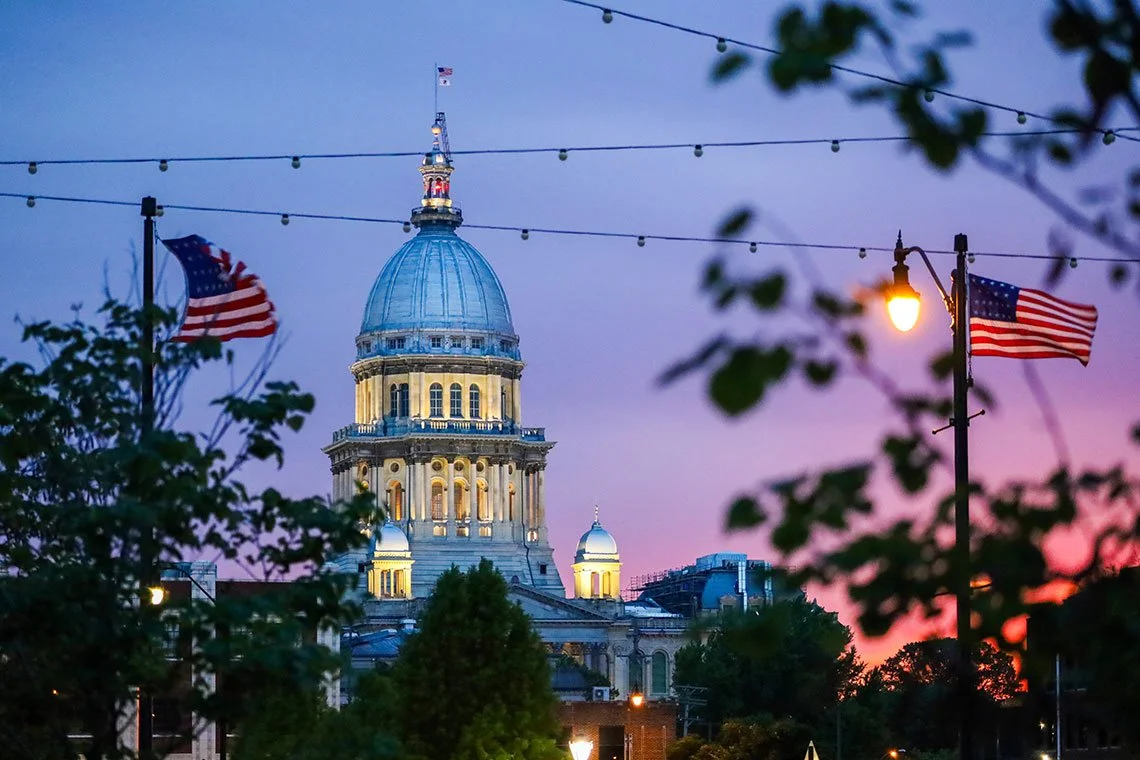

The Illinois Capitol in Springfield pictured in May 2024. (Capitol News Illinois file photo)
Weinhoeft Appointed as Interim U.S. Attorney for the Southern District of Illinois
FAIRVIEW HEIGHTS, Ill. – U.S. Attorney General Pamela Bondi has appointed Steven D. Weinhoeft to serve as Interim U.S. Attorney for the Southern District of Illinois. Weinhoeft, returns to the role he held from 2018 to 2022, bringing decades of experience in federal law enforcement and complex litigation to the position.
“I am honored and excited to return to this role to serve the people of the Southern District of Illinois,” said Weinhoeft. “I look forward to working with Attorney General Bondi, our talented team, and our law enforcement partners to uphold the rule of law with integrity and resolve.”
Weinhoeft has served in the U.S. Attorney’s Office for the Southern District of Illinois since February 2008, holding multiple leadership roles, including United States Attorney (2018–2022), First Assistant U.S. Attorney, Chief of the Criminal Division, and Supervisor of the Organized Crime Drug Enforcement Task Force and Dangerous Drugs Division.
Weinhoeft has built a career spanning nearly 29 years. Before joining the U.S. Attorney’s Office, he spent more than a decade at the Sangamon County (Ill.) State’s Attorney’s Office, including serving as its First Assistant State’s Attorney and Chief of the Criminal Division. He has significant trial experience, and his expertise includes broad areas of state and federal law, including violent crime, multi-district and international drug conspiracies, public corruption, national security, and complex financial crimes. He has technical experience serving as the office’s criminal Computer Hacking and Intellectual Property Coordinator. He also serves as the Digital Asset Coordinator with specialized expertise in cryptocurrency and blockchain issues.
The Southern District of Illinois covers 38 counties in southern Illinois and serves approximately 1.2 million people. The district has offices in East St. Louis, Benton, and Fairview Heights.
As U.S. Attorney, Weinhoeft will again serve as the chief federal law enforcement official representing the United States in all civil and criminal litigation. His appointment took effect on Feb. 28, 2025, and he was formally sworn into the position by Chief United States District Judge Nancy J. Rosenstengel at a ceremony Monday.
County Commissioners Introduced To New Owners Of Friendsville Mine Solar Project
Plans for a 5,000 acre solar farm in Wabash County are still on despite a change in ownership of the company overseeing the project. At Monday’s Wabash County Commissioner meeting, John Jones of R3 Renewables said his company had sold a majority interest to RWE Clean Energy….
Matthew Spaccapaniccia of RWE says his company has operations around the world specializing in a variety of energy forms…
Spaccapaniccia said he hopes the new necessary applications will be submitted to local officials sometime this fall. In May of 2022, plans were announced to build a 5,000-acre solar farm on previously mined coal properties, such as former Friendsville Mine.
Mt. Carmel's Leaf Season Officially Over
Public Works Director Mike Gidcumb reported at Monday’s City Council meeting that leaf season has officially come to an end…
Laundromat To Locate On Market Street
A former video gaming business on Market Street will soon be home to a new laundromat. Bobby Arora of Wabash Laundry, LLC was at yesterday’s city council meeting to his company’s plan to use a Rural Business Development to fund the laundromat at 516 Market Street, which formerly was home to Rockstar Gaming Lounge. Mayor Joe Judge said the city is assisting Wabash Laundry with the grant process…
Judge called it a win-win saying the money would act as an incubator in helping other businesses in the future.