County Commissioners Introduced To New Owners Of Friendsville Mine Solar Project

Plans for a 5,000 acre solar farm in Wabash County are still on despite a change in ownership of the company overseeing the project. At Monday’s Wabash County Commissioner meeting, John Jones of R3 Renewables said his company had sold a majority interest to RWE Clean Energy….

Matthew Spaccapaniccia of RWE says his company has operations around the world specializing in a variety of energy forms…

Spaccapaniccia said he hopes the new necessary applications will be submitted to local officials sometime this fall. In May of 2022, plans were announced to build a 5,000-acre solar farm on previously mined coal properties, such as former Friendsville Mine.

Laundromat To Locate On Market Street

A former video gaming business on Market Street will soon be home to a new laundromat. Bobby Arora of Wabash Laundry, LLC was at yesterday’s city council meeting to his company’s plan to use a Rural Business Development to fund the laundromat at 516 Market Street, which formerly was home to Rockstar Gaming Lounge. Mayor Joe Judge said the city is assisting Wabash Laundry with the grant process…

Judge called it a win-win saying the money would act as an incubator in helping other businesses in the future.

Illinois bill aims to add more oversight of homeschooling 

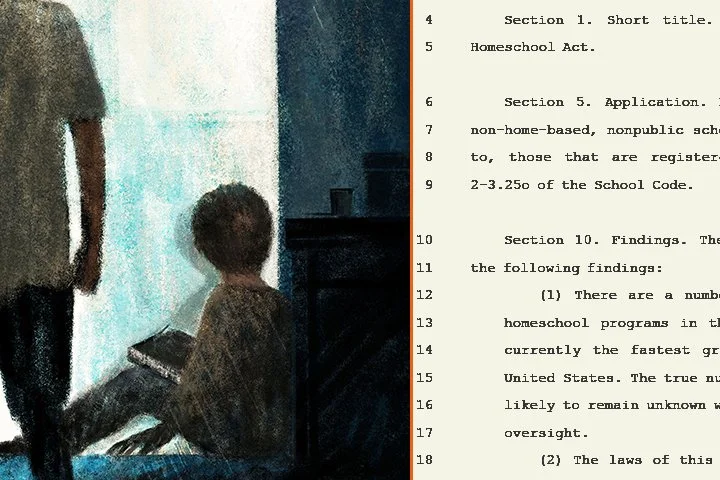
Following a ProPublica and Capitol News Illinois investigation, an Illinois lawmaker has introduced legislation that would require families to tell their public school districts if they are homeschooling.

By Molly Parker
& Beth Hundsdorfer
Capitol News Illinois

A new Illinois bill aims to add some oversight of families who homeschool their children, a response to concerns that the state does little to ensure these students receive an education and are protected from harm.

The measure, known as the Homeschool Act, comes after an investigation by Capitol News Illinois and ProPublica last year found that Illinois is among a small number of states that place virtually no rules on parents who homeschool their children. Parents don’t have to register with any state agency or school district, and authorities cannot compel them to track attendance, demonstrate their teaching methods or show student progress.

Under the new bill, families would be required to tell their school districts when they decide to homeschool their children, and the parents or guardians would need to have a high school diploma or equivalent. If education authorities have concerns that children are receiving inadequate schooling, they could require parents to share evidence of teaching materials and student work.

Illinois Rep. Terra Costa Howard, a Democrat from a Chicago suburb who is sponsoring the legislation, said she began meeting with education and child welfare officials in response to the news organizations’ investigation, which detailed how some parents claimed to be removing their children from school to homeschool but then failed to educate them.

Read more: “No Schoolers”: How Illinois’ hands-off approach to homeschooling leaves children at risk

The investigation documented the case of L.J., a 9-year-old whose parents decided to homeschool him after he missed so much school that he faced the prospect of repeating third grade. He told child welfare authorities that he was beaten and denied food for several years while out of public school and that he received almost no education. In December 2022, on L.J.’s 11th birthday, the state took custody of him and his younger siblings; soon after, he was enrolled in public school.

“We need to know that children exist,” said Costa Howard, vice chair of the Illinois House’s child welfare committee. The legislation is more urgent because the number of homeschooled children has grown since the pandemic began, she said. “Illinois has zero regulations regarding homeschooling — we are not the norm at all.”

The most recent numbers available at the time of the news organizations’ investigation showed nearly 4,500 children were recorded as withdrawn from public school for homeschooling in 2022 — a number that had doubled over a decade. But there is no way to determine the precise number of students who are homeschooled in Illinois, because the state doesn’t require parents to register.

The bill would require the state to collect data on homeschooling families. Regional Offices of Education would gather the information, and the state board would compile an annual report with details on the number, grade level and gender of homeschooled students within each region.

Read more: Illinois lawmaker calls for strengthening protection for homeschooled children

Homeschool families and advocates said they will fight the measure, which they argue would infringe on parental rights. Past proposals to increase oversight also have met swift resistance. The sponsor of a 2011 bill that would have required homeschool registration withdrew it after hundreds of people protested at the Illinois State Capitol. In 2019, a different lawmaker abandoned her bill after similar opposition to rules that would have required curriculum reviews and inspections by child welfare officials.

The Home School Legal Defense Association, which describes itself as a Christian organization that advocates for homeschool freedom, said it plans to host virtual meetings to educate families on the bill and ways they can lobby against it.

Kathy Wentz of the Illinois Homeschool Association, which is against homeschool regulations, said she is concerned about the provision that would allow the state to review education materials, called a “portfolio review” in the legislation. She said visits from education officials could be disruptive to teaching.

“There is nothing in this bill to protect a family’s time so they can actually homeschool without interruptions,” Wentz said. She pointed to a 1950 Illinois Supreme Court ruling establishing that homeschooling qualified as a form of private education and that the schools were not required to register students with the state.

The bill would require all private schools to register with the state.

The Capitol News Illinois and ProPublica investigation found that it’s all but impossible for education officials to intervene when parents claim they are homeschooling. The state’s child welfare agency, the Department of Children and Family Services, doesn’t investigate schooling matters.

Under the proposed law, if the department has concerns about a family that says it is homeschooling, the agency could request that education officials conduct a more thorough investigation of the child’s schooling. The new law would then allow education officials to check whether the family notified its district about its decision to homeschool and compel parents to turn over homeschool materials for review.

The increased oversight also aims to help reduce truancy and protect homeschooled students who lose daily contact with teachers and others who are mandated to report abuse and neglect, Costa Howard said. Some truancy officials said that under existing law they have no recourse to compel attendance or review what students are learning at home when a family says they are homeschooling.

Jonah Stewart, research director for the Coalition for Responsible Home Education, a national organization of homeschool alumni that advocates for homeschooling regulation, said the lack of oversight in Illinois puts children at risk. “This bill is a commonsense measure and is critical not only to address educational neglect but also child safety,” Stewart said.


Disturbance leads to arrest of Princeton man on multiple charges

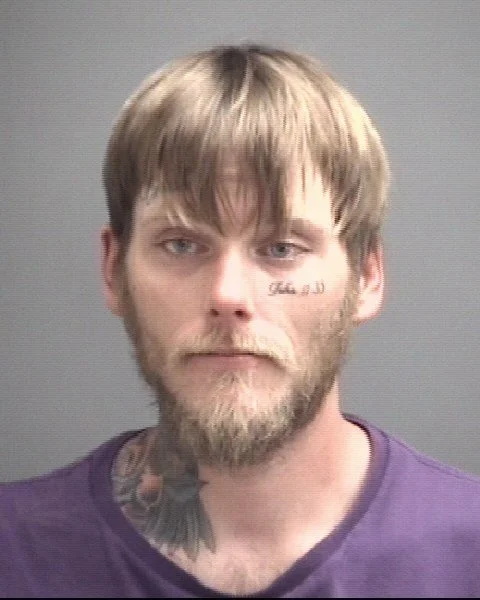
On March 1, 2025, at 10:22 a.m. Gibson County Central Dispatch received a 911 report of a disturbance in the 200 block of West Vine Street in Patoka.  Multiple law enforcement officers from the Gibson County Sheriff’s Office and Princeton Police Department were dispatched to the scene.  Upon arriving on the scene Deputy Quinten Might met 31 year old Frankie Doughty of Princeton in front of the residence.  While speaking with Mr. Doughty he voluntarily surrendered to Deputy Might.  At that point Deputy Might placed Mr. Doughty into custody and then made contact with a victim in the disturbance.  Upon speaking with the victim Deputy Might contacted detectives with the Gibson County Sheriff’s Office and they began a thorough investigation into the incident. 
 
At the conclusion of their investigation Mr. Doughty was placed into custody and transported to the Gibson County Jail where he was charged with:
 
Battery-Serious Bodily Injury
Battery- W/ Prior Conviction
Battery- In Presence of a Child
Intimidation With a Deadly Weapon
Strangulation
Interference With the Reporting of a  Crime.
 
This is an active and ongoing investigation.
 
Arresting Officer Deputy Quinten Might
Assisting Officers were Deputies Bryan Small, Jennifer Loesch, and Sgt. Roger Ballard.  Also assisting in this investigation were Princeton Officers Craig Zurliene, Brandt George, and Jordan Smith.
 
All criminal defendants are to be presumed innocent until, and unless proven guilty beyond a reasonable doubt in a court of law.

Mount Carmel woman arrested on DUI charge

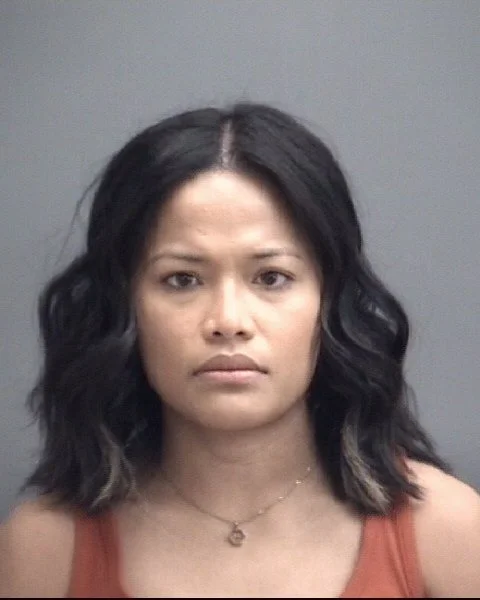
On February 28, 2025, at 10:58 p.m. Gibson County Deputies Eric Powell and Shawn Holmes conducted a traffic stop on a White Volkswagen after observing erratic driving behavior on US 41 near State Road 168.  Upon stopping the vehicle on State Road 168 just west of Casey’s General Store Deputy Powell identified the driver as 29 year old Eden Pellacer of Mount Carmel.  Upon speaking with Ms.  Pellacer Deputy Holmes detected the odor of an alcoholic beverage coming from the driver.  At that point he began a roadside DUI investigation.  Once the investigation was completed Deputy Holmes placed Ms. Pellacer into custody and transported her to the Gibson County Jail where she was charged with Operating a Vehicle While Intoxicated an A Misdemeanor.
 
Deputy Holmes was assisted in his investigation by Deputies Eric Powell, Wyatt Hunt, and Levi Sims.  Also assisting were Fort Branch Officer Lewis Jerrell and Haubstadt Officer Bryan Munnier.
 
All criminal defendants are to be presumed innocent until, and unless proven guilty beyond a reasonable doubt in a court of law.

Supreme Court declines to review Carbondale abortion clinic ‘bubble zone’ ordinance

Case could have overturned similar protections nationwide 

By CARLY GIST
For the Saluki Local Reporting Lab 

CARBONDALE — The U.S. Supreme Court this week declined to review a case challenging a since-repealed Carbondale ordinance intended to create a buffer between anti-abortion activists and those seeking reproductive care. 

Carbondale officials declined to comment and have given no indication they plan to reinstate the ordinance, though anti-abortion activists vowed to fight it again if they do. 

The case, Coalition Life v. City of Carbondale, sat on the Supreme Court’s schedule for four months before justices declined to take it up, effectively ending the case.

After the Dobbs v. Jackson Women’s Health Organization decision ending federal abortion protection, Republican-led states tightened abortion restrictions, while Illinois moved in the opposite direction, becoming a safe haven for abortion services. Three clinics opened in Carbondale, a small southern Illinois college town with direct access to multiple southern and Midwestern states and an Amtrak stop. 

Carbondale quickly became one of the closest options for patients traveling from across the region — but it also drew anti-abortion protesters and self-described sidewalk counselors who aim to dissuade women from seeking abortions. 

During a January 2023 Carbondale City Council meeting, residents and abortion rights activists decried what they called disruptive behavior outside clinics as patients and staff tried to enter. The council then voted unanimously to amend its disorderly conduct ordinance, making it illegal to come within 8 feet of a person without their consent within a 100-foot radius of a medical facility.

Following the enactment of this “buffer zone,” Coalition Life, an anti-abortion organization based in St. Louis, sued the City of Carbondale, claiming the ordinance was an infringement on free speech. Two lower courts had previously dismissed the challenge, citing Hill v. Colorado, a 2000 Supreme Court ruling that upheld a similar Colorado law.

In July, Coalition Life petitioned the Supreme Court to review the Carbondale case in hopes of overturning the Hill decision. Three days earlier, the Carbondale City Council rescinded the ordinance, but Coalition Life pressed forward with its petition, saying nothing would otherwise stop the city from reinstating it.

Though the case did not receive the four votes necessary for a review, Justices Samuel Alito and Clarence Thomas wanted to hear it, along with a similar case from Englewood, New Jersey. Thomas wrote, “a majority of this Court recently acknowledged that Hill ‘distorted [our] First Amendment doctrines.’” He noted that several justices have described Hill as “absurd,” “defunct,” and “erroneous.”

The justices argued that since Dobbs v. Jackson, any justification for buffer zones has been weakened.

“Hill has been seriously undermined, if not completely eroded, and our refusal to provide clarity is an abdication of our judicial duty,” Thomas wrote. “...I would have taken this opportunity to explicitly overrule Hill. For now, we leave lower courts to sort out what, if anything, is left of Hill’s reasoning, all while constitutional rights hang in the balance.”

Coalition Life Executive Director Brian Westbrook said this week his organization is “frustrated that the Supreme Court did not take up the case” but also is “very thrilled with Justice Thomas’ dissenting opinion.” 

Mayor Carolin Harvey and City Attorney Jamie Snyder declined to comment on the Supreme Court’s decision not to take up a review. 

Regardless, Andrea Gallegos, executive administrator of Alamo Women’s Clinic, said it represents a win for patients and reproductive care clinics. 

“Anti abortion protestors use harmful rhetoric and impede on patient privacy and safety everyday,” she said. “Any protections that cities can provide is vital.” 

Over a 2 ½ year period since the Dobbs decision, Carbondale police had responded to more than 250 calls at the city’s three reproductive health clinics, according to police records obtained by the Saluki Local Reporting Lab. 

Though some were requests for medical assistance and other miscellaneous calls, the total included more than 60 reports of public disturbances, safety concerns and traffic issues, including disorderly conduct, suspicious activity, people in the roadway and requests for traffic enforcement. Nearly 100 calls — the vast majority —  were requests for extra police presence around the clinics. Gallegos said safety and security is at the forefront of Alamo’s values, and the organization will continue to respect patients’ decisions and provide protections. 

“We know that (Coalition Life) and others alike will never stop,” she said. “We know that they are always planning their next move on the infringement of the rights of our patients. We will move forward with continuing to provide care and helping to dismantle their misinformation campaigns.” 

Westbrook said Coalition Life will continue its sidewalk counseling while monitoring the City Council’s next move.

“The city council should know loud and clear that if they plan to put yet another bubble zone in place in Carbondale, we will be right back in court,” he said. 


This story was produced for Capitol News Illinois through the Saluki Local Reporting Lab, supported by grant funding from the Pulitzer Center, the Illinois Press Foundation and the SIU Foundation.

Capitol News Illinois is a nonprofit, nonpartisan news service that distributes state government coverage to hundreds of news outlets statewide. It is funded primarily by the Illinois Press Foundation and the Robert R. McCormick Foundation.  


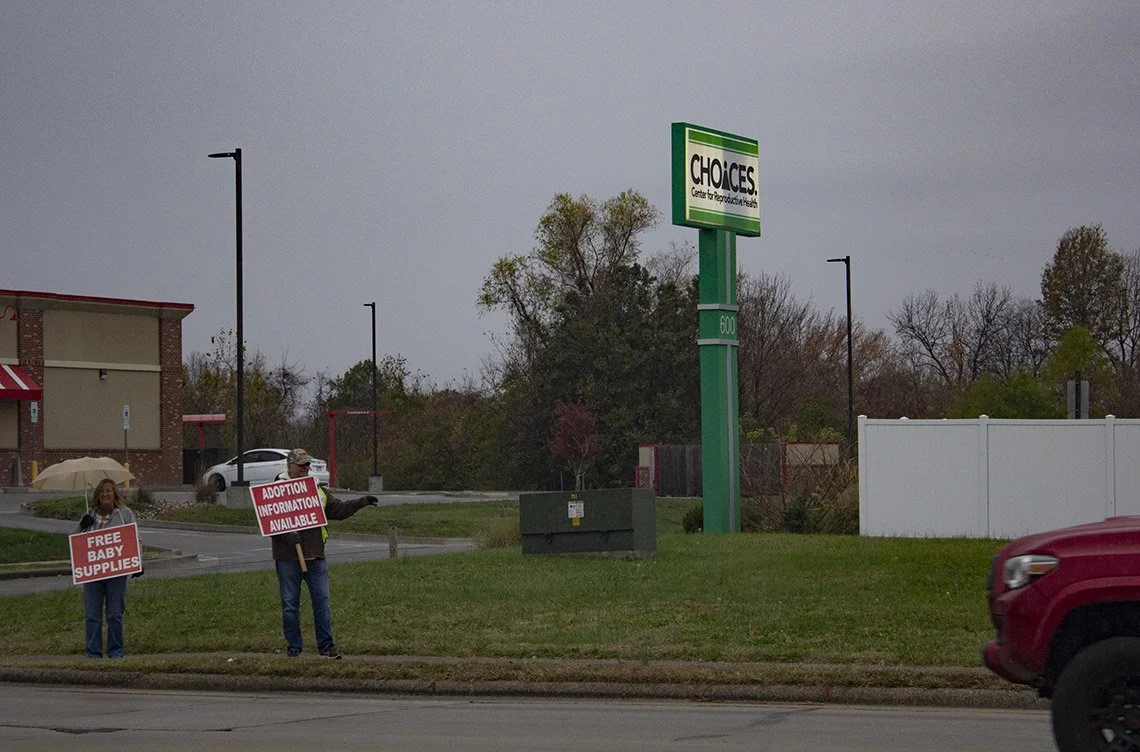
Anti-abortion activists display signs and wave at passing cars on a rainy morning in November in front of CHOICES Center for Reproductive Health in Carbondale. (Saluki Local Reporting Lab photo by Carly Gist)

WGH Foundation Event Reaches Impressive Mark

Next week’s Wabash General Hospital Foundation’s Soiree is already a financial success. At Monday’s hospital board meeting, foundation executive director Danielle Stevens said the event has already raised more than $100,000. The Soiree generates money for the foundation’s medical scholarship program. A few tickets remaining available for the Soiree set for Friday, March 7th at the Anderson Building.

County Commissioners Donate To Local Events

A change has been made in the way the Wabash County hotel/motel tax fund helps local events. Instead of Chamber and Merchant’s representatives attending multiple county commissioner meetings throughout the year requesting the funding, the yearly funding was taken care of at last week’s meeting. Chamber executive director Lesley Hipsher’s requests for $7,500 for Ag Days in addition to $3,000 for the Christmas Uptown celebration.

Trump to implement new tariffs on Illinois’ largest trading partners as state faces uncertainty over economic projections

April taxes could provide revenue boost 

By BEN SZALINSKI
Capitol News Illinois
bszalinski@capitolnewsillinois.com 

SPRINGFIELD — As the Governor’s Office of Management and Budget Director Alexis Sturm warned a House committee that uncertainty about President Donald Trump’s economic and administrative policies could affect Illinois revenue, the president announced new tariffs will take effect Tuesday on imports from some of Illinois’ top trading partners. 

After initially pausing implementing 25% tariffs on products from Canada and Mexico, Trump announced in a social media post Thursday morning that tariffs will begin on March 4. In addition, he said the U.S. will add another 10% tariff on Chinese goods. 

The president alleged drugs were still coming into the United States at “unacceptable levels.” 

Meanwhile in the Illinois Statehouse, Sturm told the House Revenue and Finance Committee that revenue projections in Gov. JB Pritzker’s introduced budget account for the possibility of tariffs affecting the economy.

“There’s a lot of uncertainty in our outlook based on what’s going on at the national level regarding tariffs, tax policy, what the Federal Reserve is going to do,” Sturm said. 

Read more: Trump tariffs could impact hundreds of billions of dollars of trade in Illinois

The governor’s $55.2 billion budget is based on the December S&P Global forecast that projected stable economic growth and considered some of Trump’s top economic policies, including tariffs and tax cut extensions, would be implemented, Sturm said. 

After the governor’s budget office in November projected flat revenue growth for fiscal year 2026 based on the September S&P forecast, the December forecast caused state officials to revise their forecast upward by $1.8 billion in the upcoming fiscal year.

Read more: Pritzker calls $55.2B budget ‘responsible and balanced’ – but warns Trump policies could upend it

There’s also a risk that Trump’s administration pulls back federal funding states are expecting. The current fiscal year budget for the state expects to receive upwards of $20 billion in federal funding, but earlier this week, Pritzker wrote a letter to the federal Office of Management and Budget saying the federal government is withholding $1.9 billion that has already been promised to Illinois.

Read more: Pritzker says federal funds still being withheld; warns of further spending cuts

“There’s no real way to prepare for that,” Sturm said. “Obviously we are watching closely what’s going on at the national level, but I think the governor has tried to make clear that this state at this level of operations can’t cover any decisions that the federal administration or Congress makes to reduce its payments to Illinois.”

Asked whether there are any spending cut plans for downturns in revenue projections, Sturm the governor’s office doesn’t have a backup plan.  

“At this point, no,” Sturm said. “I think the important thing to watch is what happens in April.”

Sturm hinted there could be some good news for state finances when income tax revenue is reported at the end of April. She said state officials are expecting a “pretty significant April tax payment,” which could cause state officials to reevaluate their revenue projections for the current fiscal year.

Personal income tax receipts for the state are up 8% for the fiscal year through January, according to the non-partisan Commission on Government Forecasting and Accountability

But new tariffs on imported goods could add more uncertainty to the state’s economy. 

IMPORT PARTNERS

Illinois received $127.8 billion of imports from China, Canada and Mexico in 2023, according to the Department of Commerce and Economic Opportunity. Canada is Illinois’ largest partner for both imports and exports, with the state receiving $65.6 billion of goods from the country in 2023.

Illinois is highly dependent on oil and gas from Canada, meaning consumers could be in line for higher energy and gas prices due to Trump’s tariffs. About 72% of Illinois’ imports, or $47.4 billion, from Canada in 2023 was oil and gas, according to DCEO.

China had the second-highest volume of imports to Illinois in 2023, with $43.9 billion worth of goods, including $27.2 billion of computers and electronics.

CANADIAN ENERGY

Illinoisans might end up paying more for alcohol and cars if tariffs are implemented on Mexican goods. Illinois received $18.3 billion of imports from Mexico in 2023, including $5.9 billion of beverages and tobacco and $2 billion of transportation equipment.

China, Canada and Mexico received $37.9 billion of exports from Illinois in 2023, nearly half of the state’s exports for the year. This included a combined $3 billion in agricultural goods to China and Mexico and nearly $4 billion of machinery to Canada. 

Canada’s proposed targeted tariffs include penalties on American exports of food and metal products, according to the Canadian Broadcasting Company. Illinois sent $3.2 billion of food and primary metal manufacturing products to Canada in 2023.


Capitol News Illinois is a nonprofit, nonpartisan news Service that distributes state government coverage to hundreds of news outlets statewide. It is funded primarily by the Illinois Press Foundation and the Robert R. McCormick Foundation.
Governor’s Office of Management and Budget Director Alexis Sturm speaks to the House Revenue and Finance Committee in Springfield on Thursday, Feb. 27, 2025. (Capitol News Illinois photo by Andrew Campbell)