"Disgusting" Situation Closes District #348 Administrative Offices

Cleanup continues at the Wabash District #348 office on West 13th Street where sewage backup caused the building to be evacuated….

That’s District #348 Superintendent Dr. Chuck Bleyer who told the school board Tuesday night that it’s hoped the clean up will be finished tomorrow. In the meantime, workers in the district office are working offsite.

Black, Latino lawmakers criticize Pritzker’s proposed budget


Republicans take issue with governor’s rhetoric, spending growth 

By ANDREW ADAMS
JADE AUBREY
PETER HANCOCK
& BRIDGETTE FOX
Capitol News Illinois
news@capitolnewsillinois.com 

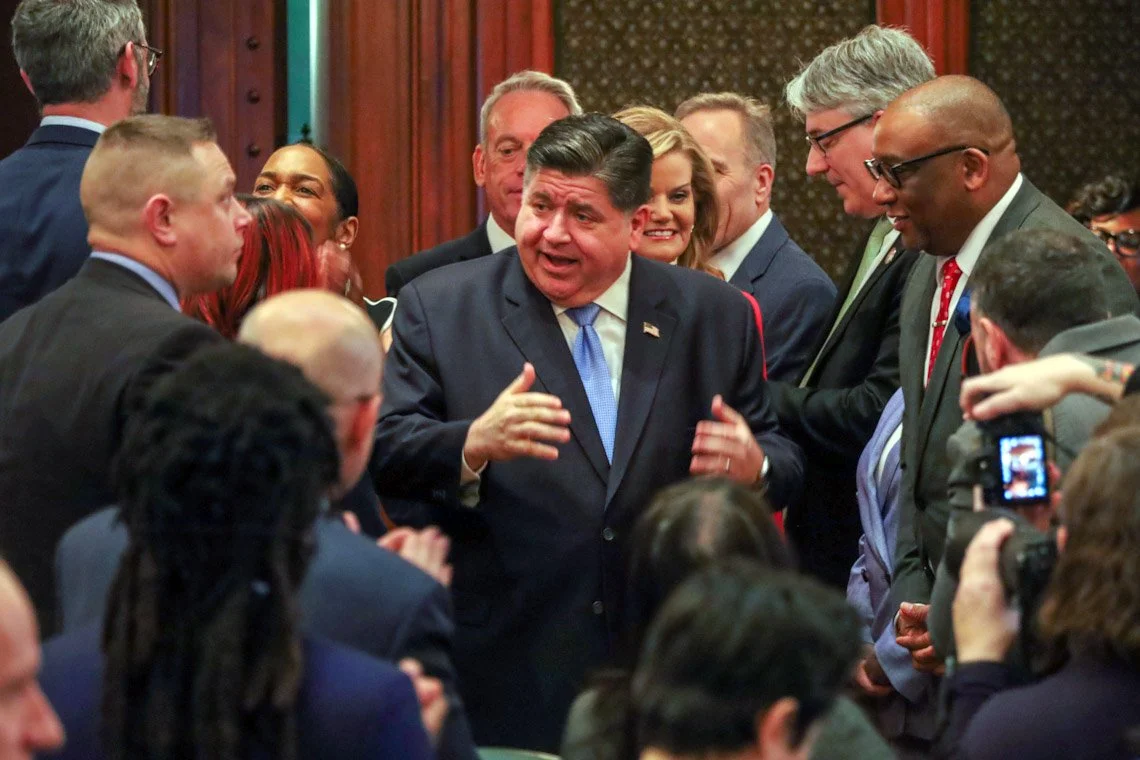
SPRINGFIELD – Majority Party Democrats had mixed reactions to Gov. JB Pritzker’s budget address Wednesday, with leadership in the General Assembly offering praise amid criticisms from members of the legislature’s Black and Latino caucuses. 

The governor’s budget speech – which outlined a $2 billion spending increase without new taxes on everyday Illinoisans – also drew immediate criticism from Republicans, some of whom left the House floor as he drew parallels between the Trump administration and Nazi Germany in the 1930s. 

The Illinois Legislative Black Caucus and Illinois Legislative Latino Caucus together include about a quarter of all lawmakers in the General Assembly. Several of them pushed back on the governor’s proposal, which he called “responsible and balanced.”  

“This is not a time for celebration,” Sen. Willie Preston, D-Chicago, said at a news conference. “Budgets reveal the morals and the values of our state. In Illinois, Black communities contribute significantly to the economy, yet when the budget is finalized, those contributions are not flowing back into our community.”

At least two Black Caucus members said they wouldn’t vote for Pritzker’s proposal as it stands today – though the February budget proposal only kicks off negotiations each year, with a budget vote coming generally in May after lawmakers make changes.  

Sen. Javier Cervantes, D-Chicago, said the Latino Caucus was “profoundly disappointed” in Pritzker’s proposal to eliminate a health care program for many immigrants. 

But other Democrats, like moderate veteran House member Fred Crespo, D-Hoffman Estates, praised Pritzker’s address as the best he’s heard in his near-two decades in the General Assembly, saying he was heartened to hear the governor vow to ask for legislators to suggest budget cuts commensurate to spending increases they might propose.

Republicans, meanwhile, took exception to the governor’s tone during his address, accusing him of using the opportunity to further his rumored ambitions for higher office. Still, several Republicans suggested there is room for collaboration on some of Pritzker’s policy proposals relating to economic development and prescription drug affordability. 


Black Caucus reaction

Black Caucus members said the governor’s proposed budget does not adequately address “historical disparities” within the state’s Black communities and does not reflect the priorities of Black Illinoisans. 

Preston said Black taxpayers are not getting their “fair cuts” of state aid.

Rep. Carol Ammons, D-Urbana, said she will not vote for the budget until the Black community receives more resources.

As hundreds gathered around the podium on the Capitol rotunda where the caucus gave its response, Rep. Will Davis, D-Homewood, asked for the crowd’s opinion on the proposal. 

“Did you hear something that applies directly to you?” he asked. “Did you hear something in that budget speech that talks about you? And your priorities? And your family? And your employment? And your community? Did you hear it? I didn't.” 

Davis later said he would vote ‘present’ on the budget as of now. 

Other Black Caucus members were more supportive. Sen. Elgie Sims, who has led budget negotiations for the Senate Democratic caucus for the last several years, said Pritzker’s proposal is a “great first step.” The Chicago Democrat said he doesn’t have any major issues with the proposal but wants additional details on a few items.

“I often say – and I've said this to our caucus on a number of different occasions – there are infinite needs with finite resources,” Sims said. “From our perspective, that's why these next couple of months, as we go through negotiations, we're going to have to match those infinite needs to the finite resource we have.”

Sims said members need to be responsible and prudent on this year’s budget due to “so much unpredictability coming out of D.C.”


Latino Caucus reaction

Pritzker’s proposed budget would eliminate the Health Benefits for Immigrant Adults program that provides coverage to low-income people between ages 42 and 64 who would qualify for Medicaid if they were citizens. Pritzker’s office projected the cut would save $330 million in general fund spending. Its sister program, Health Benefits for Immigrant Seniors, was not cut from the proposed budget.

Pritzker said he’d work with lawmakers on his proposal but urged them not to come to negotiations empty handed.

“If you come to the table looking to spend more, I’m going to ask you where you want to cut,” Pritzker said.

Members of the Latino Caucus said they were going to go through the budget “line-by-line” to try and keep HBIA on the table.

“We will be talking about other options, revenue options, and other options that could be on the table to make sure that all of our programs are preserved,” Rep. Lilian Jiménez, D-Chicago, said.

Caucus members said Pritzker did not inform them before the budget address that HBIA was on the chopping block.

“All of us have been hearing that it was going to be a tough budget year. I think that we expected there to be some things in the budget that we weren't going to be happy with,” Sen. Karina Villa, D-West Chicago, said. “But I think completely removing a program is not anything that we were expecting.”


Republicans criticize message

Republicans reacted angrily to the speech, especially Pritzker’s criticisms of the Trump administration and frequent references to Nazi Germany.

Near the end of his speech, Pritzker used the recent conviction of former Illinois House Speaker Michael Madigan on federal corruption charges to call out Republicans who have remained largely silent about actions of the Trump administration that have been challenged or even reversed in federal courts.

“If you applauded that (Madigan) decision like I did, then I expect you to defend and applaud those same federal courts as they check this president in his quest for unrestrained power,” Pritzker said.

He wrapped up his speech with a warning about the dangers of neo-Nazis, comparing the rise of Trump’s Make America Great Again movement with the rise of fascism in Germany in the 1930s.

“The seed that grew into a dictatorship in Europe a lifetime ago didn't arrive overnight. It started with everyday Germans mad about inflation and looking for someone to blame,” Pritzker said. “I’m watching with a foreboding dread what is happening in our country right now.”

Some Republicans walked out.

“That was appalling to sit there,” House Minority Leader Tony McCombie, R-Savanna, said during a news conference after the speech. “It was, it was hard to sit there through that.”

Deputy Minority Leader Ryan Spain, R-Peoria, accused Pritzker of delivering a campaign speech by “playing to what he believes is a national message and feeding his presidential ambitions.”

On the substance of the governor’s budget plan, however, House Republicans said there appears to be some areas for potential for bipartisan agreement, such as calls for lowering the cost of prescription drugs and investing in economic development initiatives.

“There were things that are opportunities for collaboration in government, which is what we'd like to see more of,” Spain said. “But we're going to have to put aside the insulting national rhetoric in order to do so.”


Democrats have questions

Democrats applauded Pritzker’s invocation of Nazi Germany. 

“I thought it was a speech for our moment,” Senate President Don Harmon, D-Oak Park, said in a statement. “The governor recognizes that our budget doesn’t exist in a vacuum and is subject to the economic winds in Washington and our place on the greater world stage.”

Other Democrats said they wanted to know what the governor’s contingency plans are if there are major cuts to federal funding.

And while members of the Latino Caucus are looking for ways to save HBIA, other Democrats said the governor made the right call in cutting it. 

Speaking as the chair of the “New Democrats” caucus, a recently rebranded caucus of roughly two dozen moderate Illinois House members, Rep. Terra Costa Howard, D-Glen Ellyn, said HBIA’s elimination should tell Democrats to think differently about funding requests.

“It's a positive step toward acknowledging that the accountability of programs and the programs needs to be better before we pass the law,” she said.

Crespo continued his criticism of Democrats for passing bills that are “subject to appropriation” yet not funded in the budget – creating future-year spending pressures and giving “folks a false sense of hope.”

“When we pass legislation or appropriation bills, we need to do a better job on the front end to make sure that we understand potentially how much it's going to cost,” Crespo said.

Both Costa Howard and Crespo were among a group of Democrats who opposed elements of the FY25 budget last spring, in a rare dissent from Pritzker and their caucus’ leadership.

They both agreed that they’d like to see a return to empowering appropriations committees to better police funding requests. House Speaker Emanuel “Chris” Welch, D-Hillside, has increasingly relied on internal working groups composed of House Democrats to craft major legislation on key subjects, rather than allowing them to come together through the committee process. 

“If we don’t go back and start using our aprops (appropriations) committees, then what is the point?” Costa Howard said. “It’s a waste of everyone’s time.” 

Welch didn’t issue a statement himself, though his spokesperson sent one on behalf of his four-person budgeting team.

“Governor Pritzker shared his vision of ways to continue strengthening our state and uplifting working people,” Reps. Robyn Gabel, Kam Buckner, Will Guzzardi and Eva-Dina Delgado said in a statement. “Now the work of creating a budget that invests in Illinois families begins. We know the most important goal is to continue our work of helping people make ends meet, but we also know the biggest challenge in that work will be the chaos and uncertainty in Washington.”


Comptroller Mendoza

Comptroller Susana Mendoza said lawmakers need to assume “a worst-case scenario” if they’ve been planning on receiving funding from the federal government.

“There’s going to be a lot of ‘no’s’ going around,” she said. “If you really want to fight for your project, then you have to figure out where are you going to cut in order to make that revenue a possibility in this year's budget.”

 Mendoza called the $55.4 billion in projected revenue a “conservative” estimate, though she said she worried it does not take future federal funding cuts into account. 

“Every day there's some new level of instability or unpredictability injected into the system, not just here in Illinois, but across the country, and it doesn't help anyone,” she said. “It doesn't help Democrats, Republicans or anyone in between. And I do believe that we should be working really hard to find efficiencies everywhere we can, but we also need to be doing it in a responsible and methodical way.”


Interest groups 

One focus of Pritzker’s speech was criticizing “pharmacy benefit managers” – organizations which set the price of prescription drugs on behalf of health insurance plans.

The Pharmaceutical Care Management Association, which represent PBMs, said the speech “missed the mark” and wasn’t focusing enough on the manufacturers of drugs. 

Education unions offered a mixed response. The governor proposed increasing funding for the K-12 school Evidence-Based Funding formula by $350 million – the minimum called for in law. 

Illinois Federation of Teachers President Dan Montgomery said the budget exposed “deep, systemic flaws in Illinois’ revenue system” by only chipping in the minimum amount. Montgomery and Illinois Education Association President Al Llorens also criticized the governor for not proposing any large reforms to the state’s two-tier pension system.

Groups representing community colleges as well as teachers and administrators all praised his proposal that would allow the publicly funded schools to offer four-year degrees.

Hannah Meisel and Jerry Nowicki contributed.


Capitol News Illinois is a nonprofit, nonpartisan news service that distributes state government coverage to hundreds of news outlets statewide. It is funded primarily by the Illinois Press Foundation and the Robert R. McCormick Foundation.

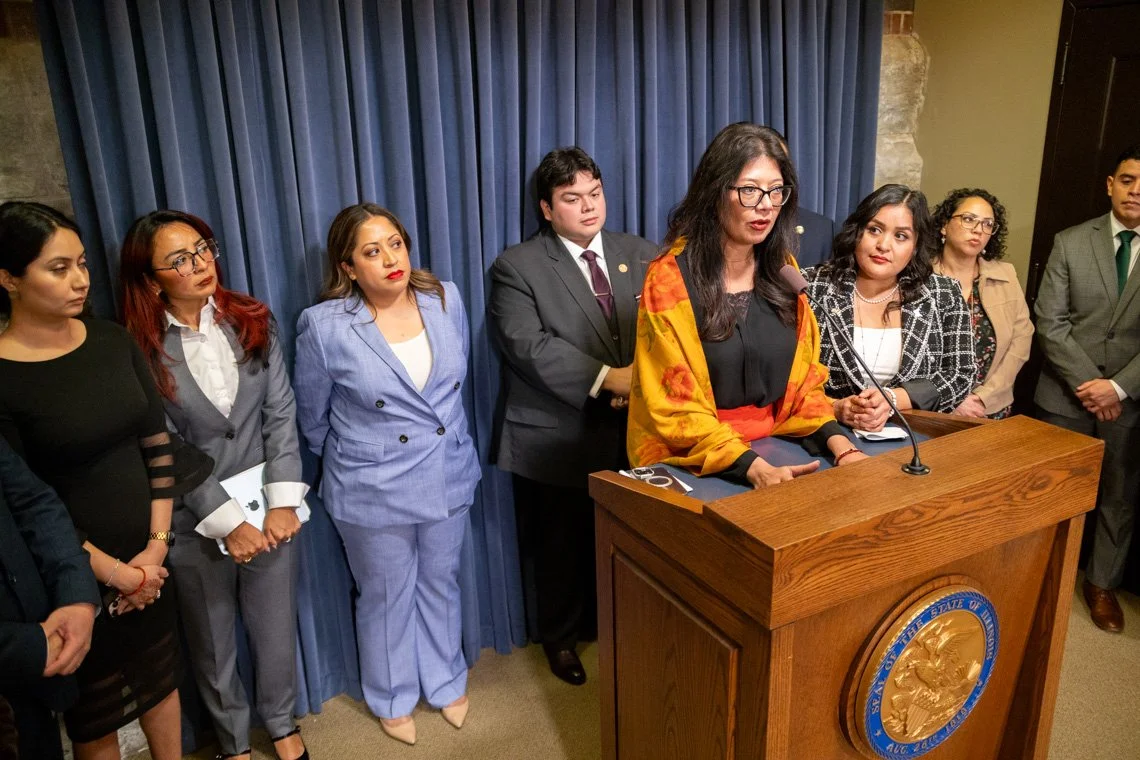
Sen. Karina Villa, D-West Chicago, reacts to Gov. JB Pritzker’s budget address. Villa is the Senate chair of the Illinois Latino Legislative Caucus. (Capitol News Illinois photo by Andrew Adams)


Allendale School Board Notes

At the February 2025 Allendale School Board meeting held in the Library of Allendale School, the board:

1. Discussed a tentative school calendar for the 2025-2026 school year. Will approve a calendar for next year at the March meeting.

2. Approved a change in the June meeting date. The regular board meeting will now be held on June 24, 2025 instead of June 25, 2025.

3. Approved the resignation of Part-time Custodian, Kent Deisher.

4. Approved the resignation of Part-time Kitchen, Shelly Deisher.

5. Jessica Deisher, 4th grade teacher, and Emily Wilson, 3rd grade teacher, made an outstanding presentation to the board this evening

U.S. Attorney Rachelle Aud Crowe for the Southern District of Illinois departs from post

FAIRVIEW HEIGHTS, Ill. – Rachelle Aud Crowe, the United States Attorney for the Southern District of Illinois, who has served as the chief federal law enforcement officer in the district, has departed from the position, effective Feb. 18. She releases the following statement:

“It has been my honor to serve the Southern District of Illinois as the United States Attorney. Announcing my departure accompanies many emotions, but my heart is full of gratitude.

Working for the Department of Justice and leading an office of talented attorneys, dedicated legal staff and supportive administrative employees has been a lifelong dream. It was my privilege to guide the Department on matters of policy, procedure and management as a member of the Attorney General’s Advisory Committee and the Domestic Terrorism Executive Committee.

I have been fortunate to partner with the local, state and federal law enforcement officers to seek justice for victims and improve public safety. In addition to prosecuting hundreds of criminal cases, the office represented the government effectively in civil lawsuits and recovered millions of taxpayer dollars.

I will cherish the time I spent at the federal courthouses. I’m thankful to the district judges for their judicial oversight, it’s been my honor to work with and learn from them. The future for the office is bright, and I’m confident the employees will continue to exceed their high standard of excellence, integrity and functionality. 

Thank you for the encouragement during my service.”

“From the beginning, USA Crowe has been a champion of the FBI mission,” said FBI Springfield Special Agent in Charge Christopher Johnson. “The combination of the FBI’s investigative efforts and the Southern District of Illinois’ commitment to uphold the law has brought justice for victims and made our communities a safer place to live.”

“It’s been a pleasure working alongside U.S. Attorney Crowe,” Drug Enforcement Administration St. Louis Division Special Agent in Charge Michael Davis said. “She’s been a tremendous partner and we’re grateful for her service. Her commitment to helping remove the threat of drugs and those who distribute them across Southern Illinois has been invaluable.”

"U.S. Attorney Crowe has been a tremendous partner for the Illinois State Police," said ISP Director Brendan F. Kelly. "U.S. Attorney Crowe supported our Public Safety Enforcement Group and its work, bringing charges and winning convictions in numerous criminal cases, and was instrumental in holding people accountable and bringing them to justice."

Ali M. Summers is the Acting U.S. Attorney for the Southern District of Illinois. She joined the office as an Assistant U.S. Attorney in 2012.

BREAKING: Pritzker proposes $2B in spending growth without new income or service taxes

Budgeting office says global outlook has changed since previous $3.2B deficit estimate

By JERRY NOWICKI
Capitol News Illinois
jnowicki@capitolnewsillinois.com 

Editor’s note: This is a breaking news story. Check back to capitolnewsillinois.com for fuller coverage of the budget proposal later today. 

Gov. JB Pritzker has proposed growing spending by about $2 billion without new income or service taxes in the upcoming fiscal year – though his administration acknowledged policy changes by the Trump administration could drastically alter the fiscal landscape. 

Spending and revenues would each grow by about 3% under the proposal laid out Wednesday during the governor’s annual budget address, with total general revenue fund spending growing to $55.2 billion. 

View the budget book here | View the budget in brief here

The proposal is balanced, in part, because the governor’s budgeting office expects to collect about $1.5 billion more in base tax revenue than it did when it issued its first fiscal year 2026 forecast in November. 

That November forecast from the Governor’s Office of Management and Budget had projected revenues to remain flat, driving a deficit of $3.2 billion. But it relied on a September economic forecast from the financial services company S&P Global. The governor’s office says S&P has since revised its forecasts – but the numbers released Wednesday are ultimately likely to fluctuate amid the rapid pace of policy changes happening in Washington, D.C.

The governor’s proposal would increase K-12 funding by $350 million and boost higher education funding by 3%. He’d keep funding flat for the Early Childhood Block Grant, however, which is a major driver of his effort to increase access to publicly supported preschool in Illinois.

Ultimately, lawmakers and the governor will have to come to an agreement on a spending plan by the end of May. But the governor’s opening salvo could meet opposition from Democratic lawmakers in the General Assembly – especially members of the Illinois Legislative Latino Caucus – due what it doesn’t fund. 

The proposal would eliminate a health care program for low-income noncitizens aged 42-64 who are in the U.S. without legal permission. The Health Benefits for Immigrant Adults program, which was implemented in 2022, provided Medicaid-like and costs the state general revenue fund roughly $330 million, or less than 1 percent of the overall budget. 

“As always, I stand ready to work with members of the General Assembly to deliberate and negotiate the final budget, but let's be clear, I will only sign a balance budget. If you come to the table, looking to spend more, I'm going to ask you where you want to cut,” Pritzker said in his address. 

Advocates say that program is a key public health measure that drives down emergency room care costs and ultimately saves money. The governor’s office says its decision not to propose funding reflects the state’s fiscal reality. 

The budget proposal maintains funding for a similar program serving immigrants aged 65 and older, passed by the legislature during the early months of the pandemic in 2020. 

The governor’s plan would raise another $469 million in revenue through other changes to law, including adjusting tax rates on electronic gambling and table games at casinos to generate $100 million in revenue. The plan also calls for pausing the transfer of $171 million in sales tax collected on motor fuel to the road fund, and raising $198 million by providing temporary amnesty for individuals making delinquent tax payments. 


Capitol News Illinois is a nonprofit, nonpartisan news service that distributes state government coverage to hundreds of news outlets statewide. It is funded primarily by the Illinois Press Foundation and the Robert R. McCormick Foundation. 

New state transportation chief hopes for ‘a good kind of disruption’ 

IDOT Secretary Gia Biagi comes in as feds pause some program funding 

By ANDREW ADAMS
Capitol News Illinois
aadams@capitolnewsillinois.com

CHICAGO — Gia Biagi made her name building parks. Now, she’s leading the department that oversees more than 145,000 miles of roads, 7,000 miles of railways, 1,000 miles of waterways and 26,000 bridges. 

In December, Gov. JB Pritzker tapped Biagi to replace former Illinois Department of Transportation Secretary Omer Osman. Biagi took the reins of the department in mid-January as acting director and is tasked with leading IDOT through several high-profile projects around the state – as well as a five-year, $29.7 billion spending plan to keep the state’s highways up to par. 

But Biagi took over IDOT at the same time President Donald Trump’s hectic policy changes started to raise questions about the future of transportation funding. 

The state Senate has yet to confirm Biagi, but lawmakers have rarely opposed nominations from Pritzker. 

Biagi is likely an unknown figure to most Illinoisans, having spent her career in Chicago city government and urban planning. But within those circles, Biagi stands out. 

After starting her career in the office of Chicago Mayor Richard M. Daley, Biagi eventually moved to the city’s park district, where she oversaw planning for several award-winning projects: Maggie Daley Park in the Loop, the redevelopment of Northerly Island to include park space, and the 606 – a 2.7-mile-long park and trail built along a former rail line. 

When she left the Chicago Park District in 2015, she joined Studio Gang, a legendary architecture and design firm known for designing skyscrapers and public parks. There, Biagi oversaw the planning stages for the redevelopment of Tom Lee Park, an award-winning initiative to transform Memphis’ largest park.

“Our goal was really centering community in the design conversation,” Biagi said in an interview. 

Biagi also led the Chicago Department of Transportation for just under four years. During her time at CDOT, the department added 100 miles of bike lanes to the city’s streets, expanded the Divvy bike rental program and oversaw a $3 billion capital plan. 

Biagi replaces Osman, who had led the department since the beginning of Pritzker’s first term in 2019. Unlike Biagi – an outside hire with no previous state government experience – Osman was a 29-year veteran of the department when he took the secretary job, having started at IDOT as a civil engineer out of college before working his way up. 

Biagi’s focus on different types of transportation mirrored Osman’s mandate at IDOT. His tenure coincided with the Rebuild Illinois bipartisan infrastructure plan established in 2019, which outlined $44.8 billion of spending, including $33.2 billion in transportation spending. The department, Osman said in 2021 interview, “truly went multimodal” as a result of that plan and began focusing more on ports, aviation, transit, railroads, walking and cycling. 

“I am extremely proud of our accomplishments, including keeping projects on track during a global pandemic,” Osman said in December. “I look forward to seeing new, exciting ideas and projects under the new secretary and the top-notch IDOT staff.”

OSMAN PHOTO 

‘More disruption’

In June, IDOT published its latest multi-year plan, an outline of how it will spend $41.4 billion on improvements to highways, railroads, transit and more between fiscal years 2025 and 2030. 

That plan includes $23 billion for state road maintenance, modernization and expansion, and $6.7 billion for local highway projects. About $11.8 billion is set to go to rail, air, marine and transit projects. 

Biagi indicated she wants to increase the speed – and day-to-day impacts – of the thousands of projects her department will approve.  

“It’s our job, not only to get that money spent, to get shovels in the ground, get hands on those shovels, get people into jobs, get the work done and get it done as fast as possible,” Biagi said. “One of my goals is to really think as creatively as possible about how we can deliver faster and more. That does mean more disruption, but it’s maybe a good kind of disruption.” 

Part of that approach, she said, is to find projects that will improve local communities, both by reducing the “friction” of travel and by creating jobs.

“If people have what they need and we can get shovels in the ground on projects, that’s people in jobs. That’s economic impact. That’s better quality of life for people on the ground all across the state,” Biagi said. 

While Biagi said her primary job in her first few months is to listen and better understand the workings of IDOT, she noted that she eventually wants to bring some of the skills she developed over her career as an urban planner to the state agency. 

“Part of what we can do is to develop longer-term relationships with communities,” Biagi said. “So it’s not just project based when the big highway project is coming, but that we really try to nurture those so we can get at some of the smaller things that improve the quality of life at a more granular level.” 

‘A legacy project’

In Chicago, few infrastructure projects have drawn as much attention – and controversy – as the planned redevelopment of Jean Baptiste Pointe du Sable Lake Shore Drive, known simply as Lake Shore Drive. 

For more than a decade, transportation officials – including those at IDOT and CDOT – have been considering options to rebuild the northern portion of the iconic ribbon of highway. The department and other agencies involved are expected to announce a finalized plan for the first phase of the project this year. 

“I’m in the rare position of being on one side of it for a while, then being on the other side of it. We recognize this is a significant project for the next 100 years for Chicago. It’s a legacy project; it’s at the level of Daniel Burnham,” Biagi said, referencing the famous architect and urban planner who originally proposed the Chicago street grid pattern in 1909. 

State lawmakers have even chimed in on the issue. Last May, the House of Representatives unanimously passed a resolution urging IDOT to transform the highway into a “true boulevard” which meets the needs of “pedestrians, cyclists, public transit users, and drivers.” The state Senate adopted an identical resolution the next day. 

But in July, IDOT officials selected their preferred option for a Lake Shore Drive redesign, which included no dedicated lanes for buses or public transit. 

“That’s kind of, like, an insult to our intelligence,” Sen. Mike Simmons, D-Chicago, said at a rally shortly after that plan was unveiled. “It feels really incremental and is certainly not going to help ensure we have a sustainable option in terms of doubling the number of people that use buses and trains in the city, which is a goal of the city of Chicago itself. That’s not, like, a radical aspiration.” 

Biagi hasn’t said much about her personal vision for Lake Shore, but did say IDOT was “open” to continuing the conversation about the project’s scope of work.

“Sometimes you just get one shot,” Biagi said.

“I’ve met a lot of folks who care so much about the lakefront and have strong opinions about the lakefront,” she later added. “It’s our job to listen really well and collaborate with the city.” 

Federal funding uncertainty 

Of the $29.7 billion in revenue dedicated to fund IDOT road projects under its current multi-year plan, about half comes from federal government reimbursements. For multimodal projects, about 40% of projected funds are set to come from the feds. 

But the early days of the new Trump administration have already upended at least one major transportation program – casting doubt on what other funding might disappear. 

On Feb. 6, the U.S. Department of Transportation sent a memo to state transportation directors — including Biagi — suspending all funding for the National Electric Vehicle Infrastructure, or NEVI, program.  

The program, which was set to distribute $5 billion to states by 2030, was laid out in the 2021 Infrastructure Investment and Jobs Act, sometimes called the "bipartisan infrastructure law.” 

More than $25 million of grants had already been announced by the state, with more than $100 million of grants expected in the future. 

But future funding, which was previously thought to be all-but-guaranteed under the program’s funding formula, is now in question after the Trump administration said the program would be put under review. The memo from federal officials barred all “new obligations” until federal guidance is updated and states file new EV infrastructure plans. 

Prior to that announcement, the governor’s office said it would pursue legal action if any federal payments that were already under contract were withheld. 

Read more: Lawsuits with Trump administration stretching Illinois attorney general’s resources

So far, the state hasn’t taken any action on the program, but it has engaged the Trump administration in at least four other lawsuits, including two cases involving other federal funding changes. 

But Biagi, staying diplomatic, said she’s going to let the new administration “get their sea legs.” 

“We’re going to be patient and look for opportunities to collaborate,” Biagi said in late January. “Everyone has an interest in infrastructure, no matter what party you’re in.” 


Capitol News Illinois is a nonprofit, nonpartisan news service that distributes state government coverage to hundreds of news outlets statewide. It is funded primarily by the Illinois Press Foundation and the Robert R. McCormick Foundation.
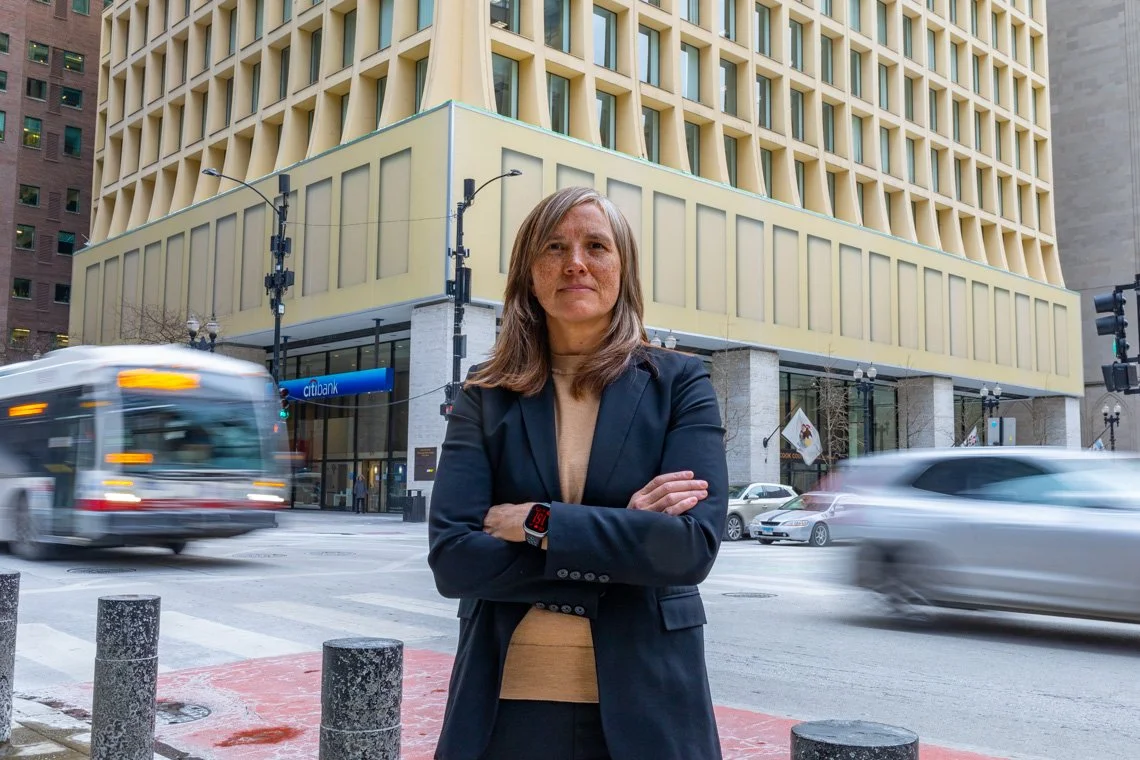
Gia Biagi takes over as the second Secretary of Transportation under Gov. JB Pritzker. (Capitol News Illinois photo by Andrew Adams)

Illinois health officials taking bird flu precautions despite assessing no ‘active risk’ to humans

But mutations, changes to federal policies could rapidly alter landscape

By JADE AUBREY
Capitol News Illinois
jaubrey@capitolnewsillinois.com

The U.S. Center for Disease Control and Prevention says the risk of an outbreak of the bird flu in humans is low, although Illinois’ health department is preparing for the possibility. 

On Friday, the Trump administration reportedly laid off 1,300 probationary employees of the CDC, which has led nationwide efforts to contain the bird flu. The layoff would affect 10% of the federal agency’s workforce. 

This comes after the administration paused federal health agencies’ communications with the public on Jan. 21 for over a week. The pause prohibited the CDC from publishing their weekly Morbidity and Mortality Weekly Report, which included one of the three reports on the bird flu scheduled to be published the week of Jan. 21.

The CDC has been monitoring and responding to cases of infection since the first outbreak of a mutated strain of the virus in commercial poultry in the U.S. in February 2022 – though it’s unclear how recent leadership changes and staffing cuts will affect this monitoring.

New U.S. Department of Health and Human Services Secretary Robert F. Kennedy Jr. has indicated he will follow President Donald Trump's lead on downsizing federal departments, meaning cuts to critical agencies that regulate public health and investigate new diseases could limit their ability to respond to a public health crisis.

While federal policy changes create uncertainty, the director of the Illinois Department of Public Health said this week said the virus is “not an active risk” to humans in Illinois because no human-to-human spread has been recorded. But the state has taken steps to limit its spread among animals. 


No known human-to-human spread

Bird flu is the term being used for H5N1 avian influenza, the disease caused by infection with avian influenza Type A viruses. It naturally occurs in wild aquatic bird populations, but has spread to domestic poultry and other bird and animal species in the U.S. 

It typically doesn’t infect humans. However, recent human infections have occurred after close or prolonged unprotected contact with infected sick or dead birds and other mammals. Currently, there are 68 reported cases of human infections, with one associated death. However, 41 of those 68 cases were transmitted from infected dairy cows.

According to IDPH, a person can be infected by breathing in the virus or touching something that has the virus on it and then touching their mouth, eyes, or nose. 

So far, no human-to-human transmission of the bird flu has been recorded. IDPH Director Dr. Sameer Vohra said this could change if a person with the bird flu contracts another strain of influenza, like the seasonal flu. The two infections could mutate and create a new virus that humans might not have immunity to, and human-to-human infections would likely begin. If that happens, then the worry of a pandemic would come into play.

“And that’s why, both through our statements currently and the national CDC’s statements, we’re continuing to maintain that the risk to humans right now remains low,” Vohra said in an interview. “Our responsibility is protecting the health of our residents here in Illinois, with our partners in Ag and DNR (the departments of agriculture and natural resources), and doing everything that we can and using the tools at our disposal in preparation, in case we have a human case or see human-to-human transmission emerge.”

People infected may be asymptomatic or experience mild flu-like symptoms such as eye redness, fever, cough, sore throat, runny or stuffy nose, muscle or body aches, headaches, fatigue, and shortness of breath to severe symptoms such as pneumonia. Less common symptoms of diarrhea, nausea, vomiting and seizures have been reported.

CDC data shows 909 human cases of bird flu have been reported worldwide since 1997, and the about half of them died. But not all cases of infection are likely to be reported or even noticed, as sometimes the virus doesn’t present any symptoms – meaning a true mortality rate is difficult to quantify.

The Illinois Department of Agriculture issued a 30-day suspension on the display or sale of poultry at swap meets, exhibitions, flea markets, and auction markets on Tuesday in attempts to reduce the spread of the virus.

In January, Illinois saw a relative increase in infection; Kakadoodle, a family-run farm in suburban Chicago, lost 3,000 chickens to the bird flu. The Lincoln Park Zoo in Chicago lost an infected flamingo and seal, while infections were reported in a wild goose in Tazewell County and a captive hawk in DuPage County.


Bird flu’s evolution

The 2022 outbreak of the virus sparked new monitoring immediately raised concerns because there were more than 378.5 million egg-laying chickens in the United States. The USDA said the bird flu is quickly taking over entire flocks when even one bird is infected, leaving farmers with no choice but to put whole flocks down. This is directly contributing to the recent increase in price and scarcity of eggs, which reached a record high in January.

According to the USDA Animal and Plant Health Inspection Service, a little more than 23 million birds have been infected in the last 30 days as of Jan. 15, including 159 commercial flocks. Infections in small mammals and birds were first reported in late 2022. The first multistate outbreak of the infection in dairy cows was reported in March 2024 as the virus mutated, creating a new strain and showing its adaptability to living in different animal breeds. Soon after that, the first case of human infection was reported.

“We've been fortunate, currently, to have no human cases of the bird flu here in Illinois, and no cases of dairy cattle that have been positive,” Vohra said. “And one of the things that has been reassuring is that we have not had any human-to-human transmission nationally.”

Following the Trump administration’s communications pause, the CDC on Thursday published a report on the bird flu, which revealed the results of blood tests taken last September from 150 U.S.-based veterinarians who work with cattle. It found that three of the veterinarians tested positive for the virus without experiencing symptoms. Two of the infected veterinarians practiced in states with known infections in cattle, but the other infected veterinarians practiced in Georgia and South Carolina, two states with no known infection in cattle.

The report called for “the possible benefit of systematic surveillance for rapid identification of HPAI A(H5) virus in dairy cattle, milk, and humans who are exposed to cattle.”


Learning from COVID-19

Vohra said IDPH is implementing safety measures it learned from the COVID-19 pandemic. He said the agency is working with local health departments and creating protocols for testing, treatment, quarantine, and isolation, as well as making sure health providers are stocked with the proper protective equipment, preventative medicine like Tamiflu, and rapid tests they would need if human transmission begin to occur in Illinois.

The department also recently improved testing to be able to individually identify strains of the bird flu. If a person tests positive for the bird flu on a rapid test currently used, the tests do not show a distinction between the seasonal flu and the bird flu. The department now has the capability to run advance testing on certain samples, such as those with known bird flu exposures or critically ill people with other flu diagnoses, to help identify bird flu in short order. Vohra said a positive result on the advanced tests would show which strain of the bird flu they’re infected with.

Because infections are detected at higher rates in the fall and spring seasons as birds migrate and spread the virus faster, state agencies have issued several guides for the general public on how deal with cases of the bird flu. 

Tips include avoiding contact with any bird displaying signs of illness, keeping dogs, cats and other pets away from carcasses of birds, and thoroughly cooking game meat to an internal temperature of 165 degrees Fahrenheit.

To be most effective, treatment must be started within two days of the infection. IDPH urges anyone who starts to experience symptoms after contact with a sick or dead bird to immediately talk to a health care provider.

If working with or handling poultry, members of the public are encouraged to visit the USDA’s “Defend the Flock” program for tips on biosecurity practices.

Editor's note: The description of IDPH's new bird flu testing capabilities has been corrected to more accurately describe how the new advanced testing process works. 


Capitol News Illinois is a nonprofit, nonpartisan news service that distributes state government coverage to hundreds of news outlets statewide. It is funded primarily by the Illinois Press Foundation and the Robert R. McCormick Foundation.
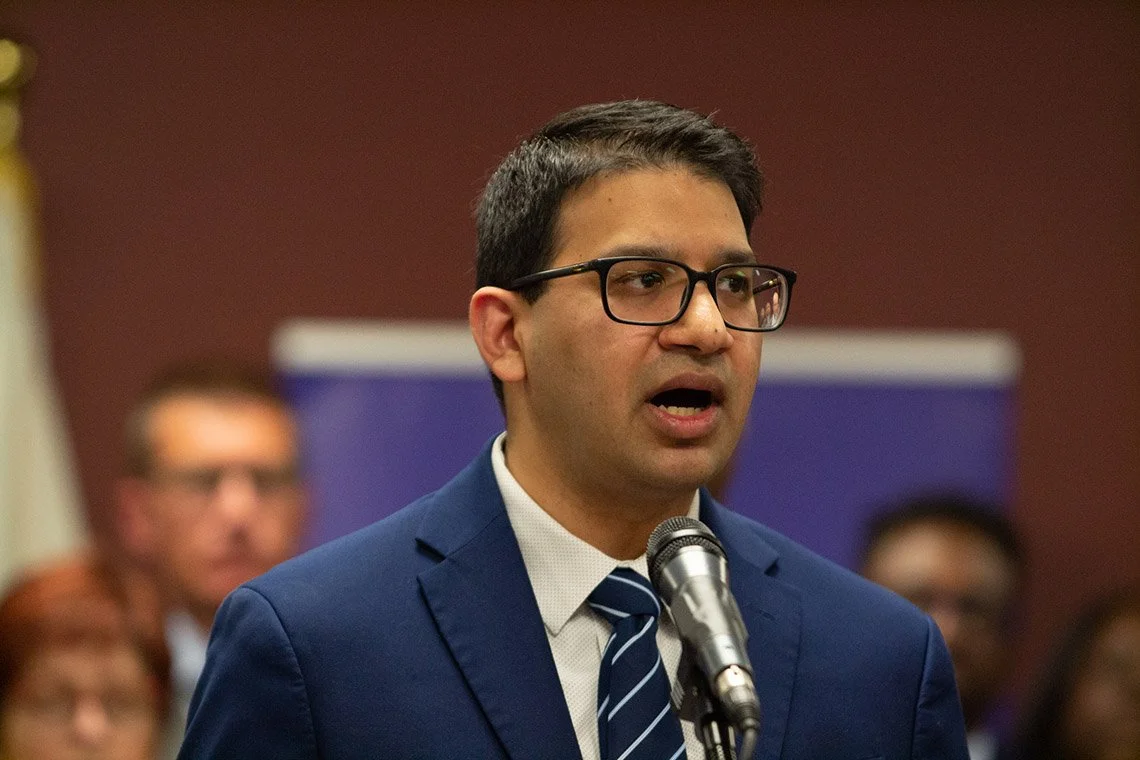
Dr. Sameer Vohra speaks at an event in Springfield in May 2023. (Capitol News Illinois photo by Jerry Nowicki)

Eliminating immigrant spending, boosting education funding top Senate Republican budget priorities

Gov. JB Pritzker set to give budget address Wednesday

By BRIDGETTE FOX
Capitol News Illinois  
bfox@capitolnewsillinois.com 

SPRINGFIELD – A day ahead of Gov. JB Pritzker’s annual budget address Wednesday, Senate Republicans said they want budget negotiations to include cuts to noncitizen spending while bringing in “transparent accounting.”

The Governor’s Office of Management and Budget predicts the state would face a $3.2 billion deficit in fiscal year 2026 if no changes were made to revenue or spending. Federal pandemic aid is no longer flowing, and tax revenue projections are static. 

The new fiscal year will begin July 1.

Senate Republicans want the Pritzker administration to provide more details about how the state has spent money on programs for asylum seekers and undocumented residents. They argue the state has made it difficult to see exactly where resources have been spent.

“We're unable to do that because of all the workarounds by this administration through executive orders and the state of emergency declarations that are constantly issued,” Senate Minority Leader John Curran, R-Downers Grove, said Tuesday at a Capitol news conference.

Curran was referencing Pritzker’s 30 separate, but altogether similarly worded, emergency declarations made since September 2022 in response to the asylum seekers transported from Texas and southern states to cities around Northern Illinois.

The declarations allow Pritzker to allocate funding for emergency services to cities like Chicago and its suburbs to support asylum seekers. The governor’s most recent declaration related to asylum seekers was filed Jan. 31. 

Sen. Sue Rezin, R-Morris, claimed the declarations were a way for Pritzker to “move money in the shadows,” as lawmakers aren’t sure how much money has been allocated from the budget for disaster declarations. 

However, the comptroller’s office has a database showing specific state expenditures on payments processed by the comptroller’s office for asylum seekers beginning in November 2023. Data shows the state has spent $158.7 million on asylum seekers since then. 

Senate Republicans said they don’t want taxes raised to fix the shortfall; instead, they want the emergency declarations to stop.

“We're calling on Gov. Pritzker to not increase taxes on Illinois families and businesses and present a transparent plan of how he intends to address the budget hole,” Rezin said.

Pritzker said in January that increasing taxes to raise revenue would be a “last resort.”

Curran also criticized the Illinois State Board of Education for not releasing $50 million from this year’s budget to fund after school programs.

ISBE said it was waiting on direction about how to release that $50 million, and Democratic lawmakers said they were frustrated by ISBE. In early February, Rep. Will Guzzardi, D-Chicago, said lawmakers would explore giving ISBE more guidance to ensure the money is released.

Capitol News Illinois is a nonprofit, nonpartisan news service that distributes state government coverage to hundreds of news outlets statewide. It is funded primarily by the Illinois Press Foundation and the Robert R. McCormick Foundation.  
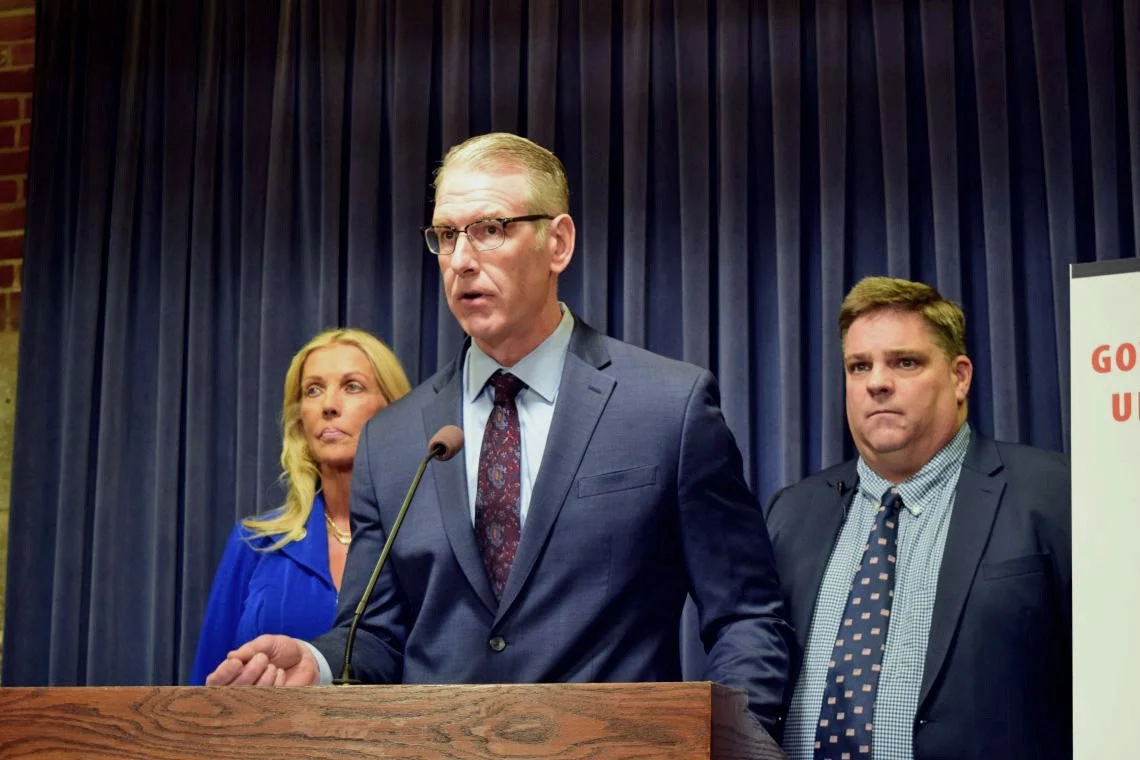
  

Senate Republican Leader John Curran, R-Downers Grove, center, speaks at a Statehouse news conference Tuesday, Feb. 18, 2025, about Gov. JB Pritzker’s upcoming budget address. Joining him were Sen. Sue Rezin, R-Morris, left, and Sen. Chapin Rose, R-Mahomet, right. (Capitol News Illinois photo by Jade Aubrey)