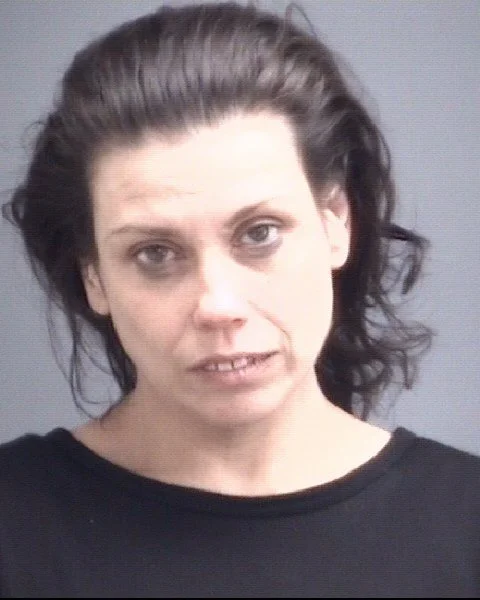
On February 5, 2025, at 8:55 a.m. Gibson County Central Dispatch received a report of a man who had exposed himself on Brummitt Street in Owensville. Deputy Quinten Might arrived on scene and began an investigation. During the investigation he observed video surveillance and was able to identify the male as 26 year old Braiden Koberstein of Owensville. After a brief search of the area Mr. Kobserstein was located and placed into custody. Mr. Koberstein was transported to the Gibson County Jail where he was charged with Public Indecency.
Assisting Deputy Might in his investigation was Fort Branch Town Marshal Darrell Parker, Indiana Conservation Officer Matt Clark, and Gibson County Sgt. John Fischer.
All criminal defendants are to be presumed innocent until, and unless proven guilty beyond a reasonable doubt in a court of law.

Mount Carmel woman arrested on OWI charge
On February 7, 2025, at 6:39 p.m. Gibson County Sheriff’s Sgt. Loren Barchett conducted a traffic stop on a 2017 Jeep Compass for an equipment violation on Broadway near Richland Creek Drive. Special Deputy Wyatt Lashbrook identified the driver as 45 year old Shannon Dill of Mount Carmel. During a roadside investigation Ms. Dill’s vehicle registration and driver’s license were ran through the Illinois Department of Motor Vehicles. It was discovered at that point the Ms. Dill’s operator’s license and vehicle registration were both not valid. During an inventory of the vehicle illegal drugs were located, and a OWI investigation was conducted. At the conclusion of the investigation Ms. Dill was booked into the Gibson County Jail where she was charged with Operating a Vehicle While Intoxicated, Possession of a Controlled Substance, and Possession of Marijuana. Ms. Dill was also issued citations for Expired Plates and No Valid License.
Arresting Officer was Sgt. Loren Barchett and he was assisted in his investigation by Special Deputy Wyatt Lashbrook, Deputy Wyatt Hunt, and Deputy Bart Wagner. Also assisting in this investigation was Princeton Officer Bryce Jutzi.
All criminal defendants are to be presumed innocent until, and unless proven guilty beyond a reasonable doubt in a court of law.
Petersburg man arrested on multiple charges
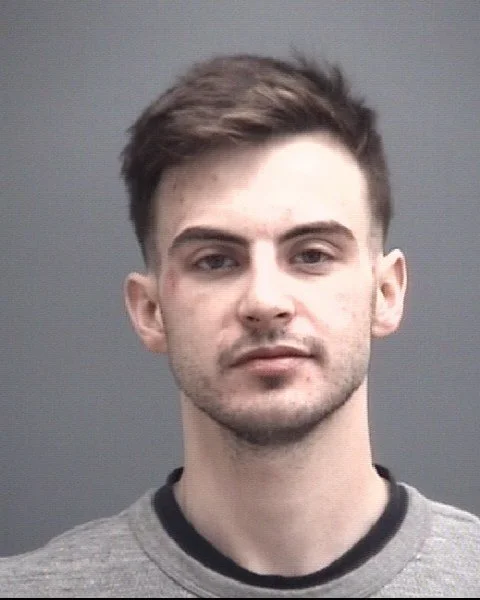
On February 9, 2025, at 7:50 a.m. Gibson County Central Dispatch received a 911 report of an accident with injuries at the Huck’s Gas Station located at 78 East State Road 168 near Fort Branch. The reporting party told dispatchers that a vehicle had struck the building and was attempting to leave. Deputy Quinten Might arrived on scene and observed a Brown/Tan Chevy truck stuck in a ditch near the exit of the business. Upon speaking to a witness on scene they advised the driver had left the vehicle and was inside the business. After a brief search of the business Deputy Might and Deputy Michael Owens located 25 year old James Johnson of Petersburg inside the business. At that point Deputy Might requested that a medic check Mr. Johnson out due to visible cuts to his face and blood on his hands. While speaking with Mr. Johnson Deputy Might detected the strong odor of alcohol coming from him. At that point Deputy Might began a roadside DUI investigation. At the conclusion of the investigation Mr. Johnson was transported to the Gibson County Jail where he was charged with OWI-Prior/ Refusal, Mischief, Failure to Stop After an Accident, and Driving while Suspended.
All criminal defendants are to be presumed innocent until, and unless proven guilty beyond a reasonable doubt in a court of law.
Pritzker takes aim at Trump tariffs with business tours, calls to foreign officials
Governor takes new climate role as Trump admin slashes EV charger funding
By ANDREW ADAMS
and JADE AUBREY
Capitol News Illinois
aadams@capitolnewsillinois.com
jaubrey@capitolnewsillinois.com
When President Donald Trump announced plans to issue tariffs on Canada, Mexico and China last week, the backlash from Illinois leaders was swift.
The duties on Mexico and Canada were “paused” by Monday afternoon amid negotiations between the nation’s leaders, but that didn’t stop Gov. JB Pritzker from frequently taking aim at the tariffs – and Trump – this week.
On Friday, at an announcement of a new tax credit for Freedman Seating, a Chicago-based vehicle seat manufacturer, Pritzker criticized the president’s attempts to impose the tariffs.
“Affordability and jobs are potentially the victims of that trade war,” Pritzker said. “Tariffs are a tax paid for by consumers. In the end, it's a tax on working families and on small businesses.”
Freedman Seating agreed to invest $4 million for capital upgrades at its Chicago facility and is set to get a state tax credit as part of a deal to create 50 new jobs and keep 676 existing ones. The deal is part of Illinois’ Economic Development for a Growing Economy program.
That company was the latest Pritzker visited in what became a week of campaigning against the tariffs. On Thursday, he visited Darvin Furniture in Orland Park and Funkytown Brewery in Chicago to discuss the proposed duties. The furniture store already put a hold on a deal with a Canadian supplier, according to Pritzker’s office.
Trump’s reasons for the tariffs aren’t relevant to Canada, Pritzker argued Friday.
“With regard to Canada, 1% of all the fentanyl that ends up in the United States is coming from the northern border, from Canada,” he said. “One percent, that's the emergency he's going after. Immigration is the second of the two emergencies that he has declared in order to put these tariffs on. Immigration – that is not a problem from Canada.”
On Wednesday, Pritzker called Canadian Ambassador to the U.S. Kirsten Hillman and Consul General of Mexico in Chicago Reyna Torres Mendivil to discuss the tariffs. On Friday, he said he urged them to make sure their respective countries “don't retaliate” against products that are important to companies in Illinois.
Read more: Illinois locked in legal battles with Trump administration over immigration policy
Pritzker also went after Trump’s disbandment of diversity, equity, and inclusion frameworks, calling the move an attack on civil rights during Friday’s news conference. And he criticized the Trump administration’s federal funding freeze, saying it was actually a freeze on programs that keep Illinois safe, specifically local law enforcement agencies.
“It's a massive effort to distract from what they are doing across the country, to take away things that working-class, middle-class people, families, and the most vulnerable really need,” he said.
EV charger clash
Trump’s actions may also pump the brakes on one of Pritzker’s signature policy goals: reducing the state’s carbon footprint.
Pritzker set a goal to have 1 million electric vehicles on Illinois roads by 2030. Pritzker’s administration has also awarded more than $1.1 billion in tax breaks meant to bolster the EV industry supply chain since 2022.
But that effort could face new headwinds after the Trump administration told states Thursday it was suspending funding for the National Electric Vehicle Infrastructure program, a Biden-era program that was originally designed to put $5 billion toward building new EV chargers.
The Illinois Department of Transportation, which administers the program in Illinois, announced in September that it approved $25 million for the first round of funding. Illinois was set to receive as much as $148 million in total through 2027 as part of the program.
Late last year, the department extended the application window for the second round and was accepting applications as recently as this week, according to its website.
Pritzker also on Thursday took on a new role as co-chair of “America is All In,” an advocacy group aimed at a “whole-of-society” response to climate change.
It originated during the first Trump administration after state elected officials and business leaders – including Pritzker – wanted to signal that they would still take aggressive action on climate change after Trump said he would pull the U.S. out of a 2016 U.N. agreement committing the nation to reducing its carbon emissions.
“We cannot be afraid to tell the truth: the climate crisis is real and we must tackle it with action that protects us from natural disasters and builds a strong clean energy economy with good-paying jobs,” Pritzker said in a statement “It’s clear that states like Illinois and cities, businesses, and institutions will be where climate action presses forward.”
Capitol News Illinois is a nonprofit, nonpartisan news service that distributes state government coverage to hundreds of news outlets statewide. It is funded primarily by the Illinois Press Foundation and the Robert R. McCormick Foundation.
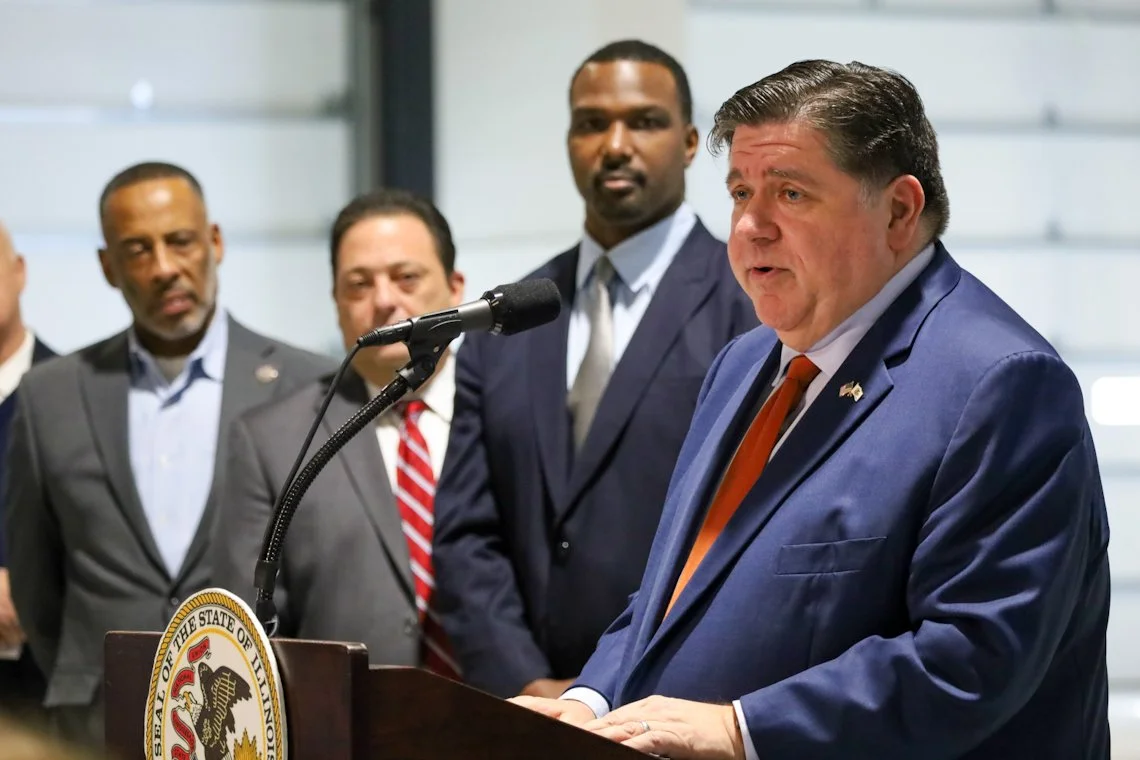
Gov. JB Pritzker speaks at a news conference with lawmakers and representatives of Pace Suburban Bus in Markham on Friday, Feb. 7, 2025. (Capitol News Illinois photo by Andrew Adams)
Next City Council Meeting Moved Up
A lack of quorum has caused the next City Council meeting to be moved up. The next meeting was scheduled for Tuesday, February 18th…a day later because of President’s Day. The council will now meet at noon on Friday, February 14th at City Hall.
1st Act Booked For Fantastic 4th Weekend
It’s still several months away, but the first big event of Mt. Carmel’s Fantastic Fourth of July weekend has been announced. The rock band “Whiskey Throttle” will hit the Merchants Park stage on Saturday, July 5th. Mayor Joe Judge said at Monday’s City Council meeting, the band plays a wide variety of music and he’s excited a local band will be performing during the holiday weekend. “Whiskey Throttle” features local businessman Tim Phillips.
March Ribbon Cutting Planned For New Water Plant
A ribbon cutting ceremony is planned for the middle of next month at Mt. Carmel’s new water plant. At Monday’s City Council meeting, Mayor Joe Judge said water commissioner Tom Meeks is working on finalizing the details of the ceremony at the plant which is now producing water.
Pritzker signs law to prioritize placing foster children with family members
Bill received unanimous support from legislature in fall
By BEN SZALINSKI
bszalinski@capitolnewsillinois.com
Capitol News Illinois
SPRINGFIELD — Foster care officials will have to prioritize placing children with their relatives under a new law signed by Gov. JB Pritzker on Wednesday.
Pritzker signed the Kinship in Demand Act, or KIND Act, at a ceremony at the Statehouse. The new law puts an obligation on the Department of Children and Family Services to use a “kin-first approach” when placing children in foster care.
Lawmakers and advocates said it’s better for children to be placed with a family member or another person close to the child when possible.
“Keeping these children safe and connected with relatives isn’t just smart policy; it’s the right thing to do,” Pritzker said.
Kin-first foster systems decrease the risk of abuse and create a higher chance of achieving permanent placement for kids, according to Casey Family Programs, the nation’s largest foundation focused on foster care. Most of the youth in DCFS care are already placed with families, according to Pritzker.
“It makes sure that we take into account the wishes of the young people that we care for and their families when we plan for their futures,” DCFS Director Heidi Mueller said.
DCFS will develop a certification policy for family members, which will allow them more access to financial resources for caregiving.
“The cost of raising a child is the same whether it’s done by a relative or a stranger,” Pritzker said. “The KIND Act allows DCFS to support relative caregivers by developing the certification standards specifically for them, ensuring the safety and well-being of youth in care, and allowing them to receive the same payment rate as non-family caregivers.”
Relatives will also have different criminal background criteria than other foster parents. The federal government allows DCFS to waive “non-safety-related licensing” for relative caregivers on a case-by-case basis. Relatives would still be subject to a personal analysis assessing their criminal record and its potential impact on the child.
Courts would also have a larger role in family-finding efforts like monitoring whether DCFS complies with notifying relatives that a child has been removed from their parents’ custody within 30 days.
Like most other state agencies, DCFS faced challenges during a two-year budget impasse that ended in 2017 and strained the system’s funding and ability to promptly place children in care settings.
The Pritzker administration ramped up funding for the agency, but former DCFS Director Marc Smith was found by a Cook County judge in contempt of court multiple times in 2022 for failing to find adequate placements for foster care children, some of whom were living in psychiatric hospitals longer than was medically necessary. An appellate court later vacated the contempt citations.
The agency has been the subject of some of the most intense criticism Pritzker’s administration has faced as governor, but lawmakers and advocates said Wednesday they’re seeing steps in the right direction for the agency since Mueller took over one year ago.
“I really do feel like we got it right this time because what the KIND Act is all about is keeping families intact,” Sen. Mattie Hunter, D-Chicago, said.
DCFS will now be turning their focus to helping kids transition from foster care to adulthood, Mueller said. This includes funding to expand services for housing for kids in foster care and improve planning for the transition to adulthood earlier in a child’s life.
“It’s an area that frankly we’ve looked at and we’ve recognized that there has been a gap in the support that we provide over time,” Mueller said.
Capitol News Illinois is a nonprofit, nonpartisan news service that distributes state government coverage to hundreds of news outlets statewide. It is funded primarily by the Illinois Press Foundation and the Robert R. McCormick Foundation.
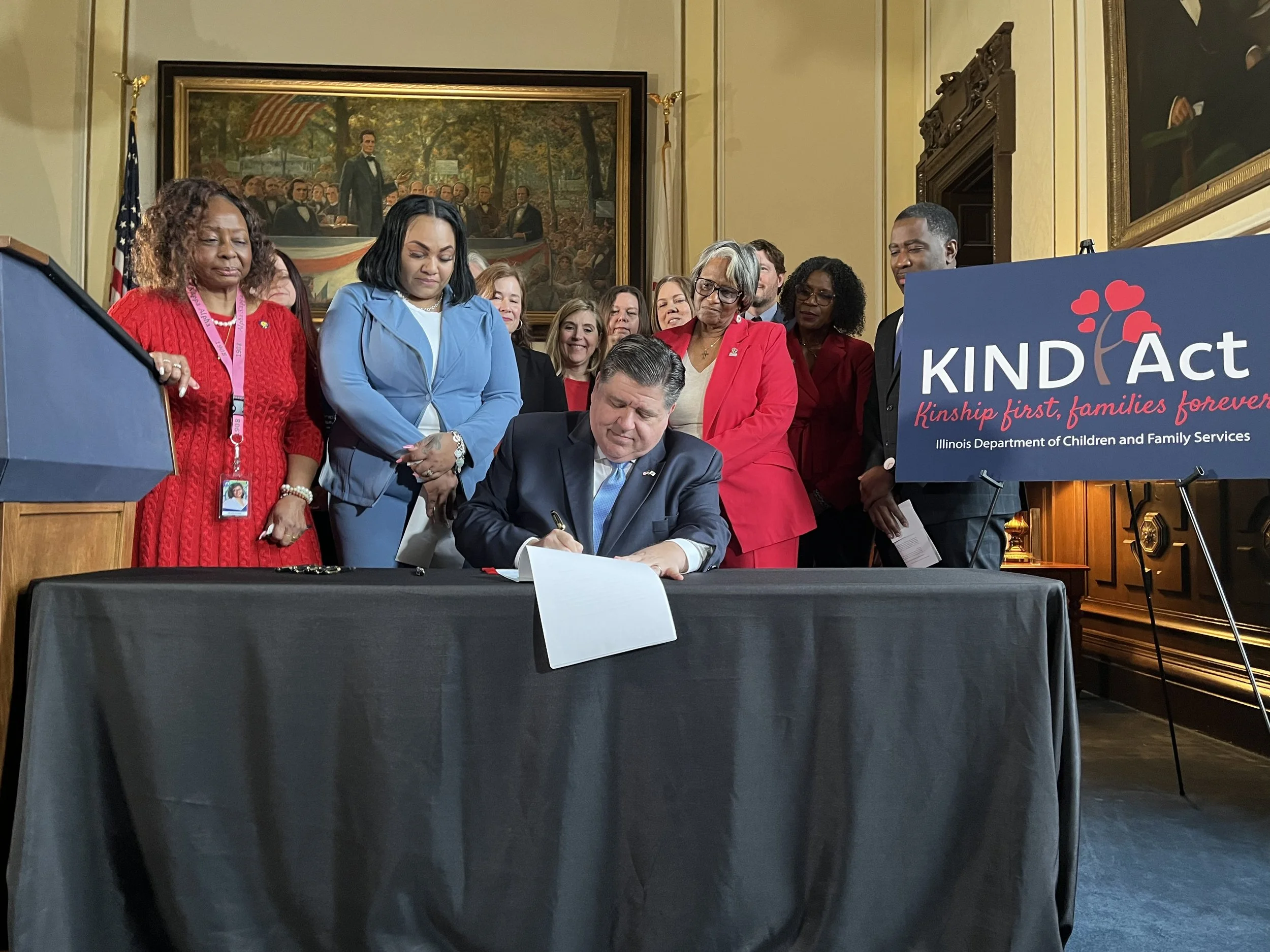
Gov. JB Pritzker signs the KIND Act Wednesday, Feb. 5, 2025, at the Illinois Capitol. The new law requires the state to prioritize family members when placing children in foster care. (Capitol News Illinois photo by Bridgette Fox)
Illinois lawmakers try again to ban certain food additives
Move comes as federal government poised to ban red dye No. 3
By LILY CAREY
For Capitol News Illinois and Medill Illinois News Bureau
lileycarey2025@u.northwestern.edu
For the second legislative session in a row, Sen. Willie Preston, D-Chicago, is pushing to ban several chemicals from Illinois food items.
But this time, Preston and his bipartisan backers have momentum from the federal government on their side.
Senate Bill 93, dubbed the Food Safety Act, passed out of the Senate Public Health Committee Tuesday. It would ban the use of four chemicals in Illinois foods: brominated vegetable oil, red dye No. 3, potassium bromate and propylparaben. All four of these substances have been the subject of scientific studies linking them to elevated health risks over time, and red dye No. 3 has been linked to cancer in animals.
Preston proposed an essentially identical bill last year, which passed the Senate with bipartisan support but was not called for a vote House. However, this year’s bill comes amid renewed national attention on the issue of food additives. In the past six months, the Food and Drug Administration has moved to ban two of the four substances that Preston’s bill proposes banning in Illinois — brominated vegetable oil and red dye No. 3.
The latter ban was enacted on Jan. 15, just days after Preston reintroduced the Food Safety Act. He said in a news release he intends to amend his bill in line with the recent federal bans.
“Manufacturers already have to comply with California standards, the EU (European Union) standards and now the FDA,” said Sen. Rachel Ventura, D-Joliet, at a Senate Public Health Committee hearing Tuesday. “We're just asking them to make sure that our state, Illinois, also has those same safe foods.”
The two recent federal bans came “at lightning speed for the FDA,” Preston said. But the agency has a long history of missing deadlines, Melanie Benesh from the research and advocacy organization Environmental Working Group noted during the hearing.
The ban on red dye No. 3 has been in the works since 1990, when the FDA linked the chemical to cancer in lab rats and to behavioral problems in children. Meanwhile, all four substances that the Food Safety Act proposes banning have been outlawed in Europe and Australia for decades.
Given the FDA’s history of regulatory delays, Preston and other members of the Senate Public Health Committee said Illinois needs to take food additive bans into its own hands.
“I want the FDA to be a leader on this issue, but I cannot allow them the time to be a leader on this issue at the expense of the people of Illinois,” Preston said.
California became the first state to ban red dye No. 3 and brominated vegetable oil in 2023, and several other states are currently considering similar bans on food and color additives, including New Jersey, New York, Arkansas, Oklahoma and Missouri.
But some legislators believe the recent FDA bans could signal a change to the federal food regulatory process. Sen. Andrew Chesney, R-Freeport, was one of three to vote against the act in committee. He said food additive regulations should be left to the federal government and he expects President Donald Trump “will handle things differently” and move regulations along more quickly.
Sen. Seth Lewis, R-Bartlett, one of four Republicans to support the bill last session, is a chief co-sponsor on this year’s effort.
“Make no mistake — food, and the security of our food and the quality of our food, is a bipartisan issue,” Lewis said at a Wednesday news conference. “We need to make sure that what our children are eating helps them grow to be accomplished individuals here in our society. That is not partisan, that is bipartisan.”
Lily Carey is a graduate student in journalism with Northwestern University’s Medill School of Journalism, Media, Integrated Marketing Communications, and a Fellow in its Medill Illinois News Bureau working in partnership with Capitol News Illinois.
Capitol News Illinois is a nonprofit, nonpartisan news service that distributes state government coverage to hundreds of news outlets statewide. It is funded primarily by the Illinois Press Foundation and the Robert R. McCormick Foundation.
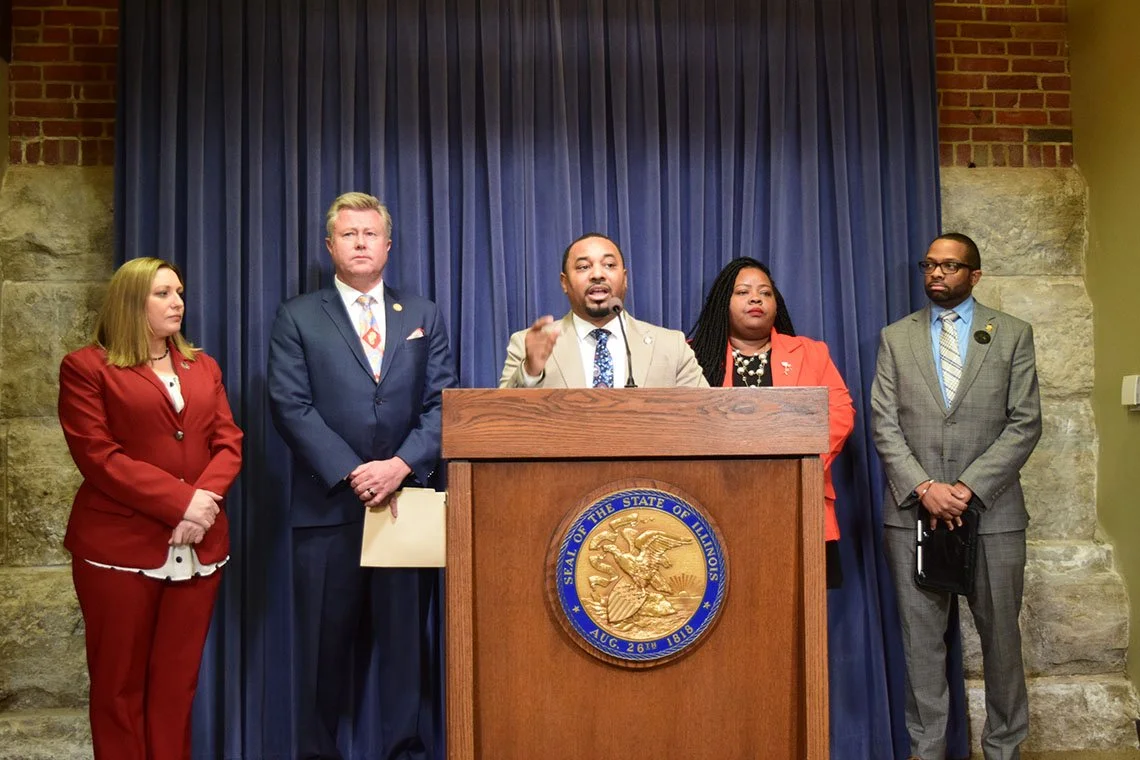
Democratic Sen. Willie Preston, center, speaks at a Statehouse news conference Wednesday, Feb. 5, 2025, about his bill to ban certain additives from foods sold in Illinois. Joining him were, from left: Sens. Rachel Ventura; Seth Lewis; Lakesia Collins; and Rep. Michael Crawford. (Capitol News Illinois photo by Jade Aubrey)
Judge declines to extend ‘swipe fee’ injunction to credit card companies
Ruling grants injunctions to national and out-of-state banks, denies it for Illinois banks
By BEN SZALINSKI
bszalinski@capitolnewsillinois.com
Capitol News Illinois
A federal judge on Thursday declined to issue an injunction to stop an Illinois law that bans certain credit card fees from applying to credit card companies and Illinois banks.
Credit and debit card companies charge what are sometimes known as “swipe fees," which are often paid by retailers, to process card transactions.
Lawmakers passed the Interchange Fee Prohibition Act last spring as part of the legislative package that enacted the state budget. It’s the first of its kind in the country and prohibits credit debit and card companies from charging fees on the tax and tip portions of credit and debit card transactions beginning July 1. The rest of the transaction, including the price of goods or services, would still be subject to the fees.
Banking groups filed a lawsuit in August challenging the state law on the grounds it superseded federal regulations on banks. Moreover, the bankers worried financial institutions don’t have the ability to comply with the law by July 1. They argued the law forces banks and credit card companies to implement costly new computer systems to differentiate between the transaction, tax and tip.
Supporters, namely the state’s largest retailer association, argued it will be an easy transition as some laws already prohibit interchange fees on certain purchases.
Federal Judge Virginia Kendall of the Northern District of Illinois issued a preliminary injunction in December preventing the law, once it takes effect, from applying to federally chartered banks. But on Thursday she declined to extend the injunction to credit unions and state-chartered banks. Her ruling did extend the injunction to out-of-state banks that operate in Illinois.
Financial institutions argued, and Kendall has so far agreed, that out-of-state banks now subject to the injunction are governed by federal law that can’t be superseded by state action. The injunctions are temporary, however, as the full case plays out.
“This ruling is a positive step forward, ensuring credit card companies and processers that unilaterally dictate swipe fees must comply with this law,” Illinois Retail Merchants Association CEO Rob Karr said in a statement. “By limiting swipe fees that can be charged on the tax and tip portion of transactions, Illinois will provide real relief to consumers and businesses who have long suffered under the opaque swipe fee payment structure.”
The new law was part of a deal made during budget negotiations last spring at the request of the state’s retailers.
State lawmakers capped a monthly sales tax deduction claimed by retailers at $1,000 to generate $101 million to fill a budget hole. In exchange and at the behest of IRMA, lawmakers passed the ban on swipe fees.
Kendall denied IRMA’s request at the end of January to be an intervening party in the case.
Leaders of banking organizations said Thursday they will continue to fight the law.
“Today’s ruling illustrates the fundamental flaws of this misguided state law that will inflict chaos on all participants in the Illinois payments system and the customers they serve,” Ben Jackson from the Illinois Bankers Association and Ashley Sharp from the Illinois Credit Union League said in a joint statement. “We will continue our efforts to ensure that all consumers, businesses and financial institutions are spared the mayhem IFPA will trigger.”
Another hearing on the lawsuit is scheduled for March 6 in Chicago.
Capitol News Illinois is a nonprofit, nonpartisan news service that distributes state government coverage to hundreds of news outlets statewide. It is funded primarily by the Illinois Press Foundation and the Robert R. McCormick Foundation.
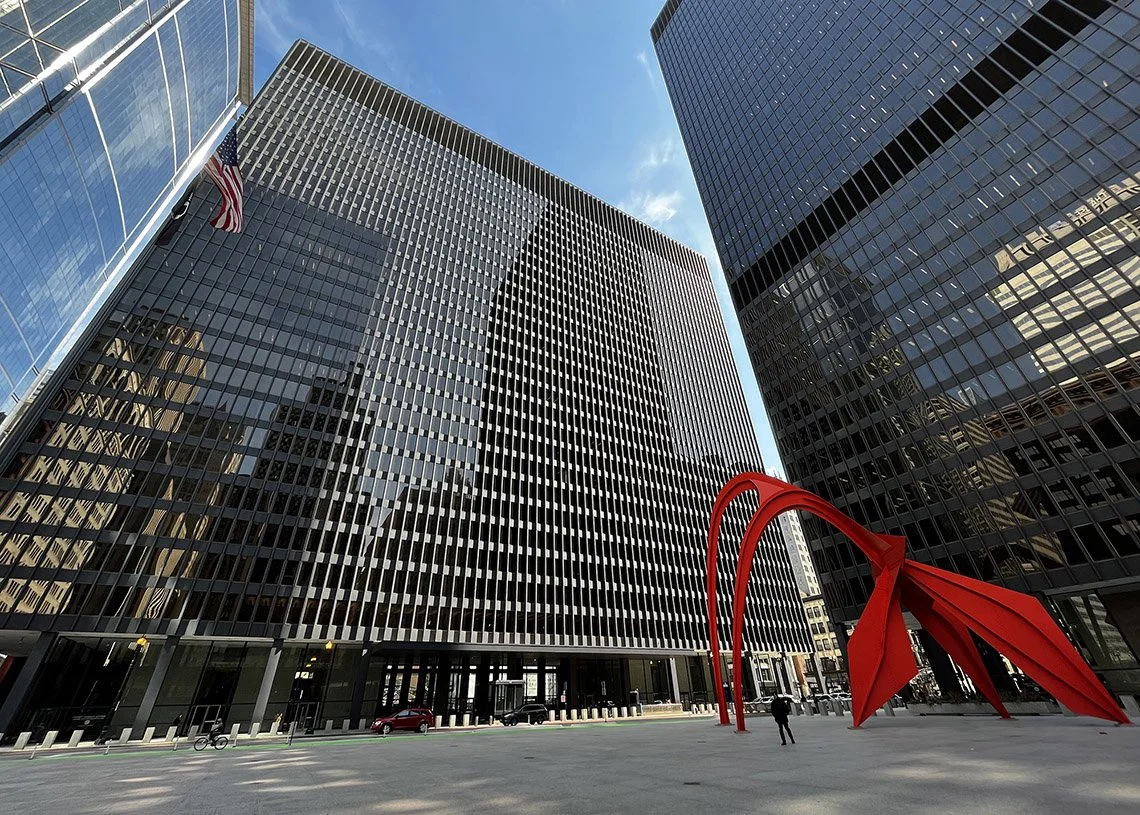
The Dirksen Federal Courthouse is pictured in Chicago. (Capitol News Illinois photo by Hannah Meisel)