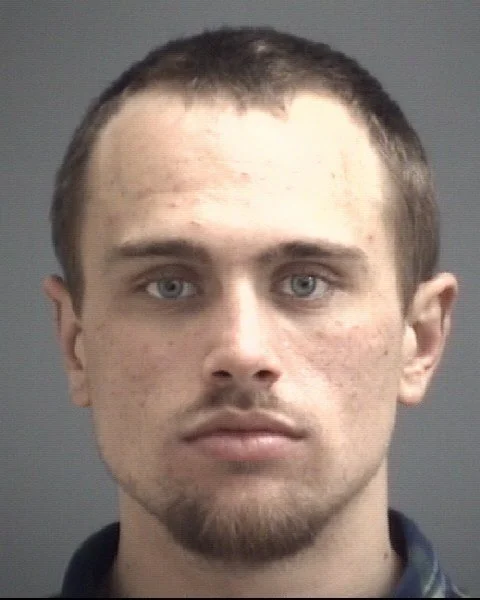
On 12/22/24, Mt. Carmel Police arrested Gage A. Price, age 20, of Mt. Carmel for Illegal Consumption of Alcohol by Minor and Possession of Alcohol by Minor. Officers also arrested Evan D. Isaac, age 22, of Mt. Carmel for Driving Under the Influence and Sell/Gift/Delivery of Alcohol to a Minor along with Autumn M. Keepes, age 20, of Mt. Carmel for Illegal Consumption of Alcohol by Minor as a result of this incident. Before the arrest, police were called to a residence in the 200 block of East 9th Street regarding an alleged dispute. Once on scene police learned that the dispute occurred between Price and another male subject. The other individual left the scene but the officers found that Price was intoxicated and in possession of alcohol. During this time the other involved party, Evan Isaac drove past the scene. The arresting officer caught up to Isaac and conducted a traffic stop on Isaac’s white Chevrolet in the 300 block of Pear Street. While the officers continued to investigate the dispute allegation, they found evidence suggesting Isaac and his passenger, Autumn Keepes, were intoxicated. After it was determined that no charges would occur from the dispute, they requested Isaac submit to a roadside sobriety check which he agreed to do. During the check, officers found several clues to indicate impairment, resulting in Isaac’s arrest. The officer also confirmed his suspicion as to Keepes being intoxicated resulting in her arrest. Isaac was processed for DUI and then transported to the Wabash County Jail, along with Keepes and Price. All three individuals were later released on Notices to Appear.
Greenup Woman Picked Up On Bench Warrant
On 12/19/24, Mt. Carmel Police arrested Heather R. Davis, age 43, of Greenup, Illinois, on a Crawford County Illinois Bench Warrant. Police learned of the warrant while conducting a stand-by for a property exchange at the Shamrock Motel, between Davis and another individual. Davis was transported to the Wabash County Jail where she was issued the warrant and turned over to corrections staff.
FTA Warrant Results In Arrest Of Mt. Carmel Man
On 12/20/24, Mt. Carmel Police arrested Justin M. Harms, age 33, of Mt. Carmel on a Wabash County Warrant for Failure to Appear. The arresting officer located Harms during a vehicle stop in the 700 block of North Walnut Street. Harms was transported to the Wabash County Jail where he was issued the warrant and turned over to corrections staff.
Mt. Carmel Man Picked Up On White County Warrant
On 12/17/24, Mt. Carmel Police arrested Mark A. Wagner, age 50, of Mt. Carmel on a White County Warrant for Deceptive Practice. Wagner was located at 9th & Market where he was taken into custody and transported to the Wabash County Jail. Wagner was issued the warrant and turned over to corrections staff.
Wanted Patoka man arrested for fleeing law enforcement
On December 26, 2024, at 5:47 p.m. Gibson County law enforcement went to a residence in the 200 block of West Cherry Street in Patoka to serve an arrest warrant on 25 year old Colton Linxwiler of Patoka. While at the residence conducting an investigation into Mr. Linxwiler’s whereabouts Deputies observed Mr. Linxwiler running from the area. After a brief foot pursuit Mr. Linxwiler was taken into custody and booked on the Failure To Appear warrant, and an additional charge of Resisting Law Enforcement.
Arresting Officer: Wes Baumgart.
Assisting Officers: Deputies U.B. Smith and Wyatt Hunt. Also assisting was Princeton Officer David Jones.
All criminal defendants are to be presumed innocent until, and unless proven guilty beyond a reasonable doubt in a court of law.
Wanted Owensville woman arrested on new charges
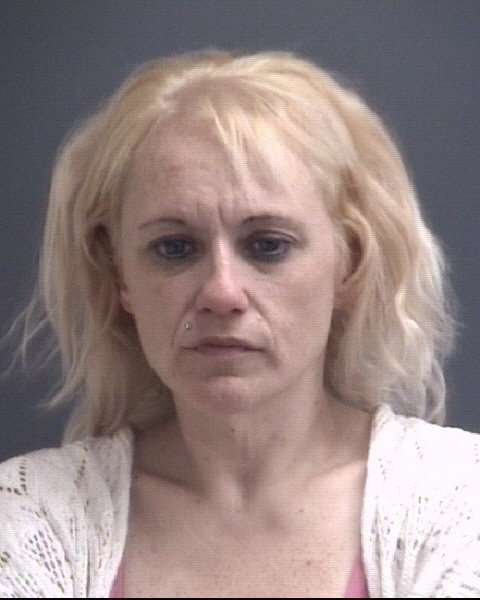
On December 26, 2024, at 8:41 p.m. Gibson County Deputies conducted a traffic stop on a Gold Chevrolet Jimmy for a registration violation near the intersection of Mary Ann Drive and West Street in Patoka. Upon approaching the vehicle Deputy U.B. Smith observed 38 year old Courtney Hale, a wanted Felon inside the vehicle and placed her into custody. During a roadside investigation Ms. Hale, an Owensville residence was found to be in possession of Methamphetamines and Paraphernalia. At the conclusion of the roadside investigation Ms. Hale was transported to the Gibson County Jail where she was charged with the Felony Bond Violation Warrant as well as new charges of Possession of Methamphetamines and Possession of Paraphernalia.
Arresting Officer: Wes Baumgart.
Assisting Officers: Deputies U.B. Smith and Wyatt Hunt. Also assisting was Princeton Officer David Jones.
All criminal defendants are to be presumed innocent until, and unless proven guilty beyond a reasonable doubt in a court of law.
Bill aims to reduce state requirements for name changes
By Atmika Iyer
Medill Illinois News Bureau
for Capitol News Illinois
atmikaiyer2025@u.northwestern.edu
SPRINGFIELD — Illinois lawmakers in early January could consider easing requirements for residents to change their names, a move proponents say will reduce risks for victims of domestic abuse, transgender residents and others.
The measure must clear the full Senate in the first week of January to reach Gov. JB Pritzker’s desk, otherwise it must go through the entire legislative process again after a new General Assembly convenes Jan. 8.
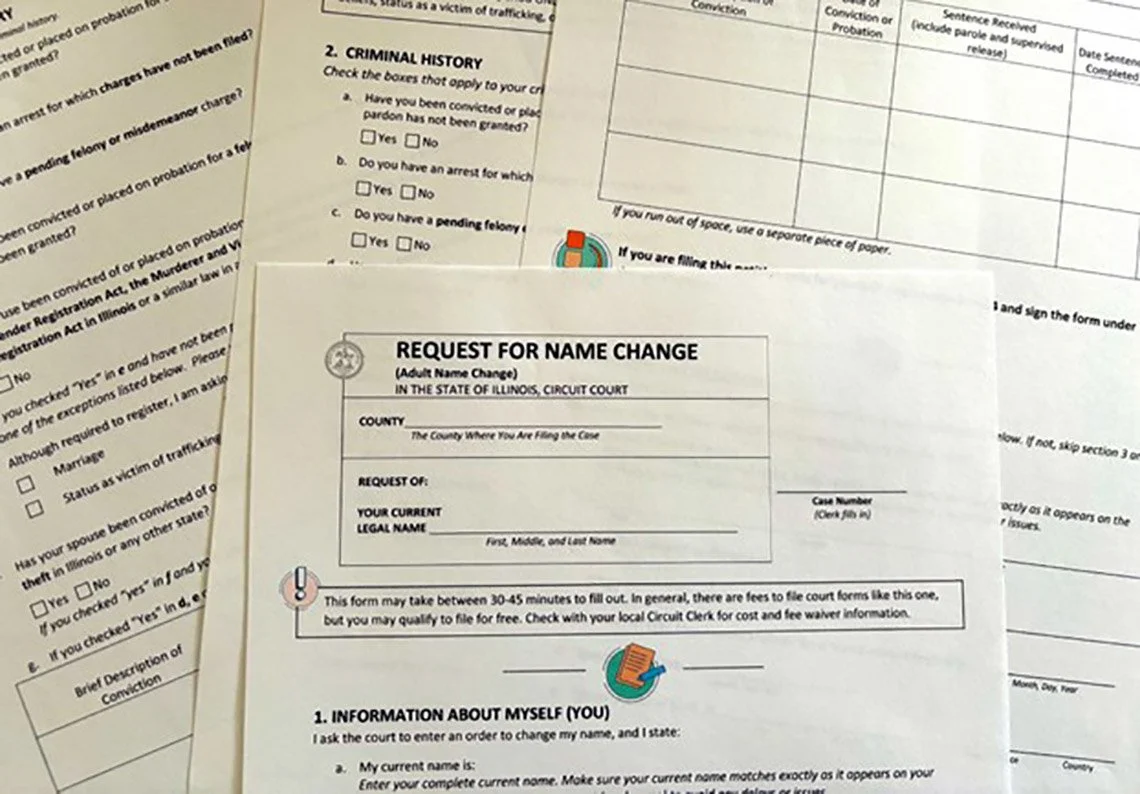
The bill, House Bill 5164, would eliminate an existing requirement to publish name changes with a local newspaper. It would also reduce the state residency requirement of people wanting to change their name from six months to three months.
“There are residents in our state who do not feel safe when they are an adoptee; they’re transgender; they’re an immigrant; they’re a survivor of domestic violence, survivor of sexual exploitation and human trafficking,” Sen. Ram Villivalam, the bill’s sponsor and a Chicago Democrat, said in an interview. “So they would like to change their name, and in doing so, we need to remove as many barriers as we can to ensure their health and safety.”
The goal of the bill is to decrease threats to people who have endured domestic abuse, discrimination and other threats to their safety. Villivalam said 24 states have already eased this requirement. Planned Parenthood, Equality Illinois and Brave Space Alliance are pushing for the change.
But the Senate’s top Republican, Sen. John Curran, R-Downers Grove, pushed back against the bill. He argued that impounding the records, meaning restricting access to them, should have a higher threshold.
Individuals are allowed to petition the court to impound records if they believe public disclosure would put them in harm’s way. That process allows individuals to self-attest to hardships and says they may – but are not required to – submit documentation.
“Why make it permissive, rather than a requirement, to attach relevant documents to the petition,” Curran said during a November committee meeting.
But Mike Ziri, the director of public policy at Equality Illinois, said impounded records don’t disappear from court records and are not sealed, but rather are selectively available to the involved parties.
“So it's not a complete sealing. There will still be access to parties and by the clerk, as well,” Ziri said. “In my experience, working with communities, folks who say they've experiencing hardship and heartache, they're not making that up, and they want protection for very good reasons.”
The Republicans who hold a minority in the state senate questioned whether noncitizens with a criminal record could change their names to evade legal consequences as a result of the lowered requirements for a name change.
“Is this creating a loophole for people who are here, who are criminals and part of things involved in the trafficking, involved in all of these nefarious activities that we've been reading about?” Sen. Sue Rezin, R-Morris, said.
Ziri said that the self-attestation was for impounding the court records of name changes, not to get the name change itself. Illinois law states that people on the sex offender registry, arsonists and people on the murderer and violent offender against youth list are barred from seeking name changes. The exceptions are marriage, religious reasons, human trafficking or gender identity. He also said a name change still requires the signature of a judge, and the process can take months.
“Changing your name does not allow you to escape the criminal record. That was legislation that was passed two years ago,” Ziri said. “That's on top of the other requirement state police already have to check the criminal records with the name change granted months later.”
Villivalam said this bill takes Illinois “another step forward” in ensuring the health and safety of residents.
“Now, more than ever – given the rise in hate and discrimination across the board – people you know feel targeted. So the legislative work that we can do to reassure them on their safety and health is part of our job,” Villivalam said in an interview. “As people continue to feel the hate, feel the discrimination, get targeted, we need to continue to take these steps to make sure they feel healthy and safe.”
Atmika Iyer is a graduate student in journalism with Northwestern University’s Medill School of Journalism, Media, Integrated Marketing Communications, and a Fellow in its Medill Illinois News Bureau working in partnership with Capitol News Illinois.
Capitol News Illinois is a nonprofit, nonpartisan news service that distributes state government coverage to hundreds of news outlets statewide. It is funded primarily by the Illinois Press Foundation and the Robert R. McCormick Foundation.
Indianapolis Man Arrested after 32-mile Chase on I-69
Gibson County – Thursday afternoon, December 26, at approximately 1:32 p.m., Sergeant Kevin Brown was patrolling I-69 near the 21 mile-marker when he attempted to stop the driver of a 2020 Penske truck for violating the left lane law. The driver also failed to maintain its lane causing a driver of a coal truck to drive onto the emergency shoulder to avoid a sideswipe crash. The driver of the Penske truck refused to stop and continued to travel north at approximately 70 mph. Stop sticks were deployed near Oakland City but the driver was able to avoid them. A second set of stop sticks were deployed near the 38 mile-marker in Pike County. The driver drove over the stop sticks but was able to continue north on I-69 into Daviess County. The driver of the Penske truck eventually lost control on I-69 near the 53 mile-marker when he swerved to attempt to avoid striking another set of stop sticks causing his vehicle to flip onto its side blocking both northbound lanes. No other vehicles were involved in the crash. The driver was identified as Brice Alkema, 24, of Indianapolis. A search of the truck revealed a small amount of suspected methamphetamine. He was transported to Daviess Community Hospital in Washington for minor injuries. Further investigation at the hospital revealed Alkema was under the influence of a controlled substance. After being treated, he was transported to the Gibson County Jail where he is currently being held on bond.
Arrested and Charges:
Brice E. Alkema, 24, Indianapolis, IN
Resisting Law Enforcement, Level 6 Felony
Possession of Meth, Level 6 Felony
Possession of a Controlled Substance, Class A Misdemeanor
Operating a Vehicle while Intoxicated - Endangerment, Class A Misdemeanor
Operating a Vehicle while Intoxicated (Controlled Substance), Class C Misdemeanor
Arresting Officer: Sergeant Kevin Brown, Indiana State Police
Assisting Officers: Senior Trooper Ross Rafferty, Sergeant John Davis, Trooper Taylor Fox, and Trooper Connor Giesler
Assisting Agencies: Gibson County Sheriff’s Office, Pike County Sheriff’s Office, Daviess County Sheriff’s Office, and Oakland City Police
Nearly 300 new Illinois laws take effect in 2025
By BEN SZALINSKI
Capitol News Illinois
bszalinski@capitolnewsillinois.com
Time to study up, Illinois. When the clock hits midnight on New Year’s Day, 293 new state laws will take effect.
Those include some of the defining bills of the 2024 legislative session and others that will change how people get IDs, evaluate job postings and even cancel gym memberships.
In addition to the laws taking effect on Jan. 1, the state’s minimum wage will rise to $15 to complete a ramp up initiated during Gov. JB Pritzker’s first month in office in 2019.
Digital driver’s licenses
The secretary of state can begin creating a process to issue digital driver’s licenses and state IDs beginning in the new year after Pritzker signed House Bill 4592. Residents will still be required to receive a physical ID and agencies or private entities will not be required to accept digital IDs in place of physical IDs.
Providing a phone to police to show a digital ID also doesn’t give police consent to search a person’s cell phone.
Salary transparency
Employers with 15 or more employees must include information about benefits and the salary range on job postings, according to House Bill 3129. The law will also apply to businesses hiring for remote work positions in Illinois.
“When employers aren’t transparent about pay, gender and racial wage gaps widen, costing women and people of color valuable compensation,” Lt. Gov. Juliana Stratton said in a news release. “Illinois’ new Pay Transparency law is a resounding win for the working people who call our state home.”
‘Junk’ health insurance
Short-term, limited duration health insurance plans will be illegal in Illinois beginning Jan. 1. The plans, often called “junk insurance” by critics, do not meet the minimum standards of the federal Affordable Care Act.
The ban outlined in House Bill 2499 was part of Pritzker’s health insurance overhaul that lawmakers passed in the spring. It was aimed at reducing barriers to care for patients and making health care more affordable by expanding coverage requirements for insurance companies.
Short-term insurance plans are typically for people who have a lapse in health insurance coverage such as when they lose or change jobs, but they are different from COBRA benefits, which most employers are required to offer under federal law. Supporters of the bill argued the plans are deceptive and stick consumers with huge out-of-pocket costs, but others said the plans provide consumers with an affordable option to fill a gap in coverage.
Caregiver discrimination
House Bill 2161 adds family responsibilities to the list of categories protected from discrimination and retaliation in the workplace. The new law prevents employers from taking adverse action against employees because of their responsibilities as a caregiver for a family member, which could cause them to miss work.
Bill sponsor Rep. Will Guzzardi, D-Chicago, told a House committee in April that pregnant women are a good example of who the bill is designed to help. He said pregnant women shouldn’t be passed up for a promotion or face other consequences at work in anticipation that they will be taking time off to care for their baby. Guzzardi stressed the bill does not protect employees who fail to meet job performance requirements.
AI regulations
New laws governing artificial intelligence take effect Jan. 1. It will be illegal to generate child pornography using AI, according to House Bill 4623. Supporters of the bill, including the Illinois Attorney General’s Office, said it is becoming more difficult to distinguish between real and AI-generated images. They said updating Illinois’ child pornography laws was a necessary to step allow law enforcement to identify and prosecute child pornography cases.
House bill 4875 also adds new protections to prohibit using AI to recreate a person’s voice, image or likeness for commercial purposes without the person’s consent. Recording artists can seek damages for violations of the law.
Politics and religion at work
Employees can’t be required to sit through work meetings discussing religion or politics starting Jan. 1. Senate Bill 3649, an initiative of the Illinois AFL-CIO, creates new protections for employees who skip out on such meetings and prevents employers from retaliating against them.
The law does not prohibit discussing religion or politics at work, but employees are not required to participate in the discussions if such activities are not part of their job. The law excludes non-profit and advocacy groups where politics or religion may be part of job.
Coming later in 2025
Pritzker’s signature health reform package goes into effect on Jan. 1, but most provisions don’t have to be implemented until the beginning of 2026. House Bill 5395 bans “step therapy,” which requires patients to try and fail treatments preferred by insurance companies before they can receive the treatment recommended by their doctor.
It also bans insurance companies from requiring prior authorization for emergency in-patient mental health treatment, requires insurers to keep up-to-date lists of in-network providers and expands the power of the Illinois Department of Insurance to regulate premium rates.
Many hotels in Illinois will no longer be allowed to provide customers with single-use plastic soap and shampoo beginning July 1 under Senate Bill 2960. The move is designed to cut down on waste from single-use products. The Illinois Hotel & Lodging Association supported the change. Hotels with fewer than 50 rooms have until 2026 to make the change.
Other new laws
NIL money: Student athletes at NCAA universities can earn name, image and likeness money directly from their universities. House Bill 307 was an initiative of the University of Illinois.
Hearing aids: Insurance providers must cover medically prescribed hearing aids for all people under House Bill 2443. Coverage was previously only required for those under 18.
Gym memberships: House Bill 4911 requires gyms and fitness centers to accept multiple ways for people to cancel their membership. Physical fitness locations also must now allow customers to cancel their membership by email or online. Customers will also be allowed to submit written notice for canceling their membership by mail.
Subscription renewals: Businesses that offer a free trial or promotional period for their product or service must notify customers at least three days before the subscription automatically renews at a paid rate under Senate Bill 2764. The law only applies to subscriptions longer than 15 days.
Crime victim DNA: DNA evidence collected from a person who is the victim of a crime to aid a criminal investigation cannot be entered into a DNA database, according to House Bill 1168.
Capitol News Illinois is a nonprofit, nonpartisan news service that distributes state government coverage to hundreds of news outlets statewide. It is funded primarily by the Illinois Press Foundation and the Robert R. McCormick Foundation.

Illinois’ minimum wage to increase to $15 on Jan. 1, completing 6-year transition
The minimum wage in Illinois will increase to $15 an hour on Jan. 1, completing a six-year transition period since the increase was approved in 2019.
Beginning New Year’s Day, Illinois workers making minimum wage will see wages rise by $1 and tipped workers will see their paychecks bump to $9 an hour. Youth workers under 18 who work fewer than 650 hours a year will have a $13 minimum wage.
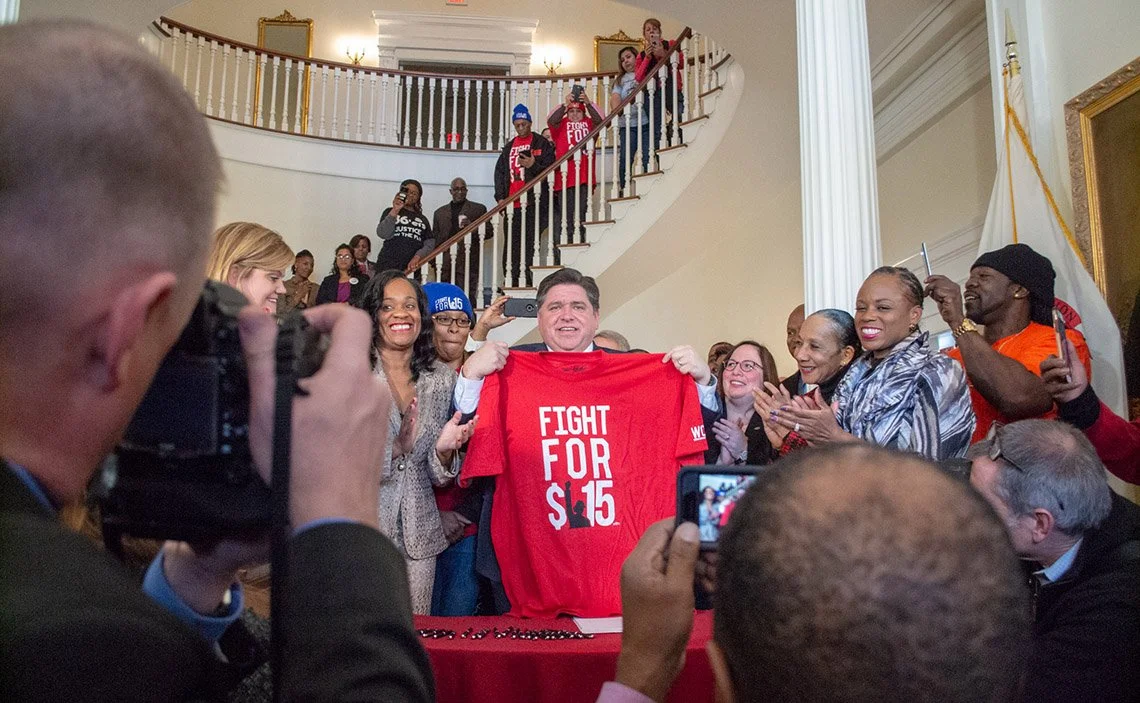
The final increase, ending a six-year ramp which began with the minimum wage rising from $8.25 to $9.25 on Jan. 1, 2020, puts a bow on Gov. JB Pritzker’s first major legislative victory. He signed the wage increase in February 2019 about a month after being sworn in for his first term, checking off a top campaign promise.
“Since day one of my administration, I’ve made it my mission to build an economy that works for everyone and raising the minimum wage to $15 an hour fulfills that promise to our working families,” Pritzker said in a statement. “This increase honors the workers who power our state and ensures they can better support their families, bringing us closer to a stronger, more equitable economy for all.”
Illinois will be one of 10 states with a minimum wage of $15 or greater, according to the National Employment Law Project. Twenty-two other states are also increasing their wages on Jan. 1.
The minimum wage increase is one of many economic changes that have happened since 2019, including effects of the pandemic, Illinois Chamber of Commerce CEO Lou Sandoval told Capitol News Illinois. He said those have caused businesses to adjust their operations in a variety of ways, such as increasing automation.
“I think you’re starting to see businesses pivot in terms of how they’re adjusting,” Sandoval said. “You’re seeing this at the national chains.” Some restaurants, for example, are “moving away from larger sit-down areas into grab-and-go.”
Illinois job growth has been slow since October 2019, according to a November report by the Commission on Government Forecasting and Accountability. The state has seen a net increase of 28,700 jobs from October 2019 through October 2024. That’s a growth rate of 0.5%, compared to the national rate of 4.9%.
The rate of new job postings by businesses at the beginning of the year will shed some light on how the jump to $15 on Jan. 1 is impacting business operations, Sandoval said.
To help small businesses with the change, the state provides a tax credit through 2027 to businesses with 50 or fewer employees for wages paid to minimum-wage workers.
The 2019 minimum wage law marked the first increase since the wage hit $8.25 in 2010. Senate Majority Leader Kimberly Lightford, D-Westchester, introduced a bill to raise it to $15 an hour in 2017 that was passed by the General Assembly and vetoed by Republican Gov. Bruce Rauner. Lightford sponsored the initiative again in 2019.
“As a state, we have helped countless workers make ends meet, reduce financial stress, and provide a more solid foundation for their futures,” Lightford said in a statement. “The $15 minimum wage is a testament to our commitment to economic justice and our belief that everyone who works full time deserves a living wage.”
The value of a $15 minimum wage, however, has changed since lawmakers acted in 2019. A person making $8.25 in February 2019 would need to earn $10.30 today to have the same buying power after inflation, according to the Consumer Price Index. A $15 hourly wage today has the buying power that $12.02 had in February 2019. A person would need to make an $18.72 wage today to have the same buying power that $15 had in February 2019. Top Democrats didn’t say if they will push for new increases.
“As a Senator of 25 years, history has shown my commitment of fighting to ensure workers are paid a living wage. That commitment still holds strong today,” Lightford said in an email statement.
Pritzker said he supports ideas that will help workers make more money, but didn’t commit to supporting any plan to raise the minimum wage further when pressed about it at a news conference Dec. 11.
“We always are thinking about how do you balance the need for higher wages with the needs that businesses have to hire people and do it affordably. But I think we did it the right way when we did it back in 2019,” Pritzker said.
The new $15 wage equates to a 40-hour-per-week annual salary of $31,200 before taxes. That equals the federal government’s poverty level for a four-person household. The poverty level is $15,060 in a single-person household.
But according to calculations in a national project by the Massachusetts Institute of Technology, $15 hourly still doesn’t equate to a “living” wage in Illinois, based on U.S. Census Bureau cost of living and other cost estimates provided by federal agencies adjusted for inflation.
A single adult with no children needs a $22.86 hourly salary to make a living wage in Illinois, while a two-parent household with two working adults and three children would each need to earn $31.69. In a two-parent household with one working adult and one child, the worker needs $36.49 to make a living wage, according to the MIT project.
Inflation is making it hard for workers to benefit from wage increases, Sandoval said, adding rising wages also cause businesses to raise prices.
“They might get the wage increase on one side, but their cost of living goes up accordingly,” Sandoval said.
Capitol News Illinois is a nonprofit, nonpartisan news service that distributes state government coverage to hundreds of news outlets statewide. It is funded primarily by the Illinois Press Foundation and the Robert R. McCormick Foundation.