Bailey Sworn-In as State Senator

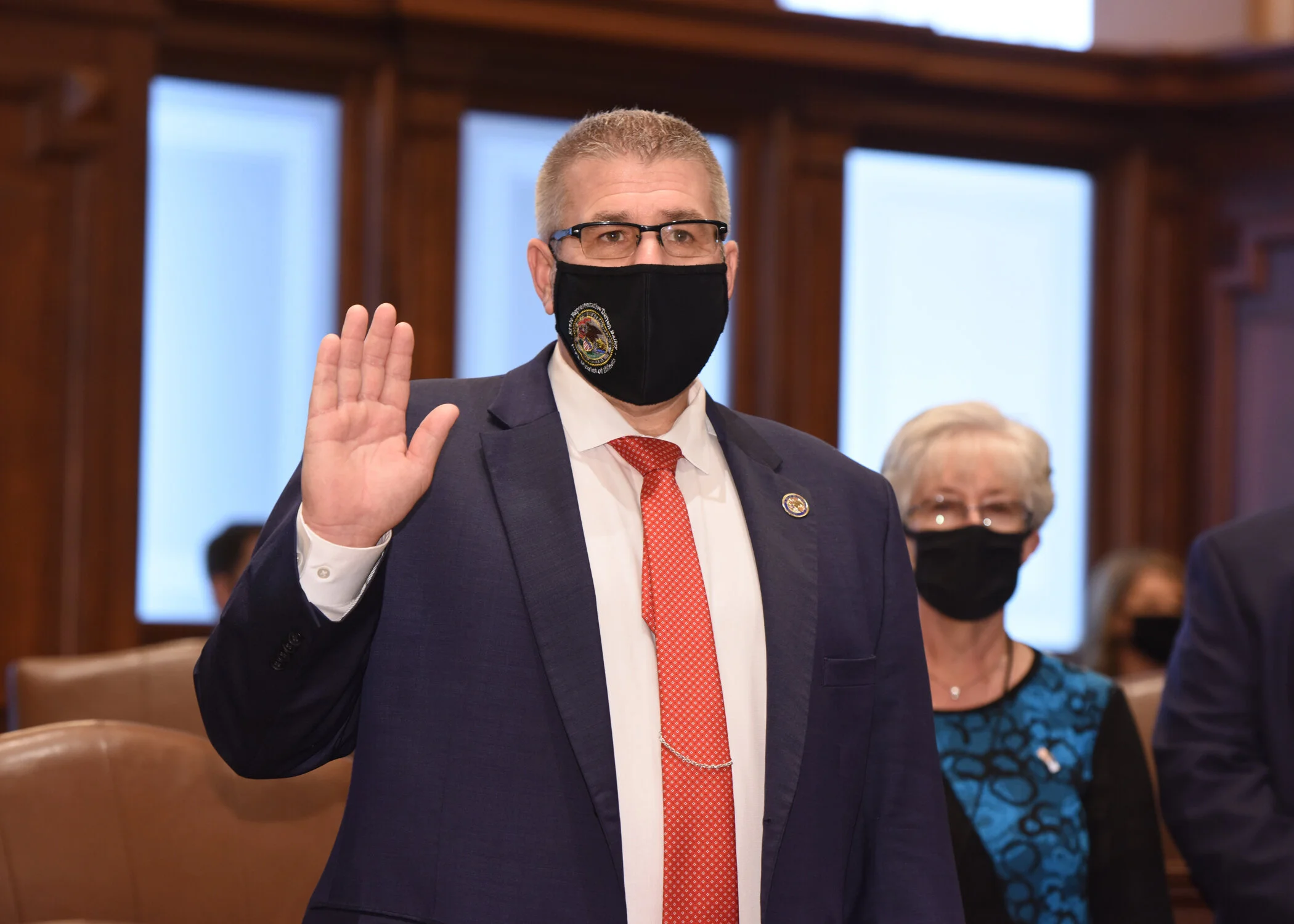
SPRINGFIELD– On the first day of the Illinois General Assembly, State Senator Darren Bailey (R-Louisville) has taken the oath of office and is beginning his first term in the Senate.

“I’m excited to get to work with my new colleagues in the ‘upper’ chamber and to finally get back to work for the people,” said Bailey. “My goals as legislator remain the same, to fight for limited but effective government, to protect the freedoms we hold dear, and to stand up against corruption.”

Bailey, a farmer and lifelong resident of Clay County, was elected to the Illinois Senate in November. He has been married for 34 years and has 4 children and 10 grandchildren.

Previously, he served in the Illinois House as the 109th District Representative since 2019. His current term in the Senate runs through 2022.

Bailey’s time in the House was highlighted by his fight for limited government and personal freedom, particularly as an advocate for businesses and workers hurt by government-ordered closures.

Senator Bailey will continue to operate his district office at 152 S. Church St. in Louisville, and will also take over former Senator Dale Righter’s district office at 88 Broadway Ave. Suite 1 in Mattoon. His website is available at SenDarrenBailey.com.

011321_JB_0053.jpg

Criminal Justice Reform Bill Passes Both Chambers, Moves To Governor's Desk

Policing in Illinois may look drastically different after a sweeping criminal justice bill was passed by lawmakers in Springfield.

House Bill 3653, which passed by a 60-50 vote, will change use-of-force guidelines, require body cameras for every police department in the state, end cash bail, and strip collective bargaining rights relating to discipline from police unions. The Senate passed the bill in the early morning hours of Wednesday by a 32-23 vote.

The legislation, which is the work of the Illinois Legislative Black Caucus, faced opposition from law enforcement groups and Republican lawmakers.

“The time is now,” said state Rep. Justin Slaughter, a Chicago Democrat who helped craft the bill. “The time is now to go from protests to progress.”

Illinois Sheriffs' Association Executive Director Jim Kaitschuck said the measure is too broad and, if it gets approved by lawmakers, he would quit being a police officer immediately.

Some GOP lawmakers are saying they are not necessarily opposed, but the rapid nature outside the normal process is alarming and should not be passed during lame-duck session.

“We are not on the right side of history,” state Rep. Andrew Chesney said. “You want to pass a flawed bill that is not supported by labor, it is not supported by the sheriff’s association, it is not supported by the police chiefs. Everybody that we task to keep us safe say this makes you less safe.”

The legislation also will allow officers to be punished or fired based on anonymous complaints from the public and defunds any department that does not comply 100% with the requirements.

Ogle County Sheriff Brian VanVickle called the reforms catastrophic to law enforcement and feels they would make policing impossible for officers who have to make split-second decisions.

As soon as the bill passed the House, a clearly emotional Slaughter put a black glove on his right hand and raised his fist into the air.

The Illinois Law Enforcement Coalition said Wednesday that the bill was pushed through in the middle of the night with little transparency or time for constituents to weigh in on the legislation.

“In the dark of night, Illinois legislators made Illinois less safe. More than 112,000 citizens so far have signed a petition to oppose the community-endangering law enforcement legislation being rammed through the General Assembly, but how did the Senate respond to those constituent concerns? By introducing a 764-page amendment at 3:51 a.m. and shoving it through in the middle of the night before the people voting on it even had a chance to read it," the group said in a statement. 

The group said it would hamper police officers. 

"It ties the hands of police officers while pursuing suspects and making arrests, and allows criminals to run free while out on bail," the statement said. "The legislation includes no way to pay for any of these law-abiding, citizen-threatening measures, so taxpayers will have to pay extra for the privilege of being crime victims.”

The measure next goes to Gov J.B. Pritzker's desk.

Judge Hoping Pritzker Eases COVID Mitigations Friday

REGIONS OF ILLINOIS SUCCESSFULLY CONTAINING THE VIRUS MAY BE ABLE TO EASE UP ON COVID-19 RESTRICTIONS STARTING FRIDAY. SOME AREAS OF THE STATE MAY BE GETTING GOOD NEWS LATER THIS WEEK, AND BE ABLE TO OPEN SOME THINGS BACK UP SAYS GOVERNOR J-B PRITZKER. AT MONDAY’S CITY COUNCIL MEETING, MT. CARMEL MAYOR JOE JUDGE SAYS HE HOPES THAT’S THE CASE….

METRICS TO REOPEN INCLUDE TEST POSITIVITY RATES, NUMBER OF HOSPITALIZATIONS AND THE NUMBER OF I-C-U BEDS AVAILABLE. THE ENTIRE STATE HAS BEEN UNDER TIER THREE MITIGATIONS SINCE LATE NOVEMBER. 

Legislative panel approves Pritzker’s emergency mask rule for Illinois

An emergency rule for businesses to enforce masks and social distancing in Illinois stands after a 12 member panel of lawmakers failed to block an emergency mask rule. Some wanted the entire 176 member body to take up the issue as a bill.

The Joint Committee on Administrative Rules, or JCAR, does not approve rules but they can block them. After one mask mandate was repealed last year by the governor, the Pritzker administration filed a modified rule, which was allowed to stand. That expired on Jan. 4 but was replaced with a third rule.

The current emergency rule differs slightly from the previous rule, by allowing businesses to provide written notice of enforcement to patrons not wearing a mask, among other changes.
On Tuesday, state Sen. Paul Schimpf, a Republican from Waterloo and a JCAR member, motioned to suspend the rule, saying there’s been ample time for the legislature to pass a law requiring masks if it was necessary.

“And we really need to get back to the system where the legislature makes the laws and the executive branch enforces those,” Schimpf said.

Anne Spillane, the governor’s general counsel, called into the meeting and said they didn’t want the legislature to make anything permanent as the COVID-19 pandemic remains fluid.

“I think that’s correct, and obviously to come back to all of you in 150 days to let you know where we stand and where we think the science stands and have a discussion,” Spillane said.

The motion to suspend didn’t get the eight of twelve required votes Tuesday.

JCAR co-chair, state Sen. Bill Cunningham, D-Chicago, reiterated the Pritzker administration's position in opposing suspending the emergency rule.

“This is a temporary problem that can be solved with a temporary solution, and this is certainly what these rules have allowed for,” Cunningham said after the meeting. “They’ve allowed for flexibility. We can come back at any time over the next couple of months and adjust them if we need to.”

Schimpf said if the state wants to impose this like seat belt laws, lawmakers have to pass a bill.

“Those are laws. We don’t have seatbelt administrative orders,” Schimpf said. “In saying it was too dangerous and too difficult to convene the General Assembly, that reason is no longer operative.”

State Rep. Andre Thapedi, D-Chicago, voted present, asking why the Pritzker administration didn’t bring a bill to pass into law after already having filed one emergency rule that expired after 150 days.

The emergency rule remains in effect until June, until the governor repeals the rule or JCAR approves any possible future motion to suspend.

Christian School To Open In Former City Hall Location

Two informational meetings are planned next week for a new Christian school that will be located in the former Mt. Carmel City Hall at 219 Market Street. Ambassador Christian Academy is the first school Offense Ministries in Mt. Carmel is opening. Offense Ministries is made up of Mike Neikirk and his wife Amy and Brandon Kight has his wife Jill. The group appeared at Monday’s City Council meeting and Mike Neikirk explained the goal of the group…

The school will open this fall offering classes for Pre-K, ages 3 and up all the way through 12th grade. Informational meetings for prospective students are planned January 19th and 21st at the Neikirk Building, 306 N. Market Street in Mt. Carmel. More info can be found at https://acamtcarmel.com.

Audio Block
Double-click here to upload or link to a .mp3. Learn more
IMG_9813.JPG

Pritzker Not Saying When Illinois Might Reopen To Phase 5

Illinois Gov. J.B. Pritzker’s plan to reopen Illinois with no restrictions, or Phase 5, is having a vaccine or therapeutic for COVID-19 “widely available.” The governor still can’t say exactly when that’ll be.

A 12-member state legislative panel Tuesday could take up a new emergency rule in place until June requiring masks and social distancing, but some want the entire 176-member state legislature to be more involved in managing the COVID-19 pandemic’s impact on the economy.

Outside of the Joint Committee on Administrative Rules process with only a fraction of state lawmakers involved, Pritzker’s administration has largely managed the pandemic by itself.

After more than two months of stay-home orders last Spring, Pritzker revealed his five-phased plan to reopen the state.

Phase 5 he said would come about with vaccines or therapeutics. Illinois is currently in Phase 3, Tier 3 restrictions with no indoor service for bars and restaurants allowed, but even in the capital city, officials are allowing for 25 percent capacity.

Starting Jan. 15, regions of the state the governor unilaterally drew can begin phasing to fewer restrictions if the regions meet certain metrics.

As for therapeutics for COVID-19, Illinois Department of Public Health Director Ngozi Ezike said things like Remdesivir or monoclonal antibodies are available.

“In some cases, they may be helpful, in some cases they may be not,” Ezike said Monday. “I think if you look at the World Health Organization, they’re not giving it a veritable thumbs up.”

Ezike will get the vaccine Tuesday during a press conference in Riverside.

Even with the vaccine going out, Pritzker still couldn't say exactly when to consider it “widely available” as the state works through phases of distribution for certain populations over others.

“You can do your own math to determine when we’ll get to a number that people can really be safe,” Pritzker said.

The governor didn’t say what that number would be to enter Phase 5.

State Rep. Avery Bourne, R-Morrisonville, said with since the goalposts moved, and no clear indication of if things will change, it’s beyond time for lawmakers to get involved.

“You can kind of expect to see that the governor might change his opinion,” Bourne said. “So that’s why it should be a legislative action as we’ve discussed so we know exactly what these parameters are and we can count on them being followed.”

It’s not just downstate that’s frustrated, state Rep. LaShawn Ford, D-Chicago, said it’s beyond time for the legislature to get involved. He faults legislative leaders for being hands-off.

“I don’t like it,” Ford said of the governor’s unilateral actions. “I’ve always been ready to come back and deal with the pandemic, and the impact that the pandemic is having on poor impoverished communities and businesses.”

It’s been nearly a year since the first case of COVID-19 was discovered in Illinois.

Madigan's Future As IL House Speaker Still Unclear

It’s unclear if Illinois House Speaker Michael Madigan will retain his role as speaker when the new legislature is seated Wednesday. While he suspended his campaign for Speaker, he said he hasn’t withdrawn his nomination.

The longtime House speaker said in a statement Monday he’s suspending his campaign for speaker so House Democrats can attempt to find someone else to get 60 votes.

One source said none of the three candidates had enough votes to get the position when polled Sunday, but Madigan had the most at 51, with the state Rep. Ann Williams as a runner up with 18 or 19.

Other names have been floated for possible consideration in the final days of lame-duck session.

Gov. J.B. Pritzker said Monday he just recently spoke with Madigan about making Illinois’ tax code more burdensome for businesses than the federal tax code.

“Did I ask him to step down? No, I was in a conversation about getting things done,” Pritzker said. “He is still the speaker now. We’re trying to get decoupling done during this lame duck and as I’ve said the members of the House of Representatives will be voting on who their speaker is going to be.”

Without a speaker, advancing any business in the House may be stalled. House Minority Leader Jim Durkin requested Secretary of State Jesse White appoint a provisional parliamentarian, a request White’s office said it will take into consideration.

It’s still possible Madigan could resume his candidacy for Speaker in the days ahead. Regardless, Madigan’s future as speaker remains uncertain.

Attorney General Kwame Raoul said the ComEd scandal implicating Madigan is “really disturbing,” and members of the House must consider facts about that case.

“And I say facts because they’ve been brought up by way of the deferred prosecution agreement where ComEd has acknowledged certain allegations,” Raoul told WMAY last month.

Madigan hasn’t been charged in the ComEd bribery scheme and maintains he’s done nothing wrong. Several people close to the speaker have been charged in the case.

U.S. Sen. Dick Durbin also said it’s the House’s call on who will be the next Speaker.

“I expressed myself clearly on the day after the election on Nov. 4th about my feelings about Michael Madigan and chairmanship of the Illinois Democratic party,” Durbin said.

Back in November, he said it’s time for new leaders of the state’s Democratic party, a role Madigan has served since 1998.

Madigan serving as both speaker and party chair gives him a nexus of power over political funds while controlling what advances at the statehouse.

Fee Unveiled For New Mt. Carmel Water Plant

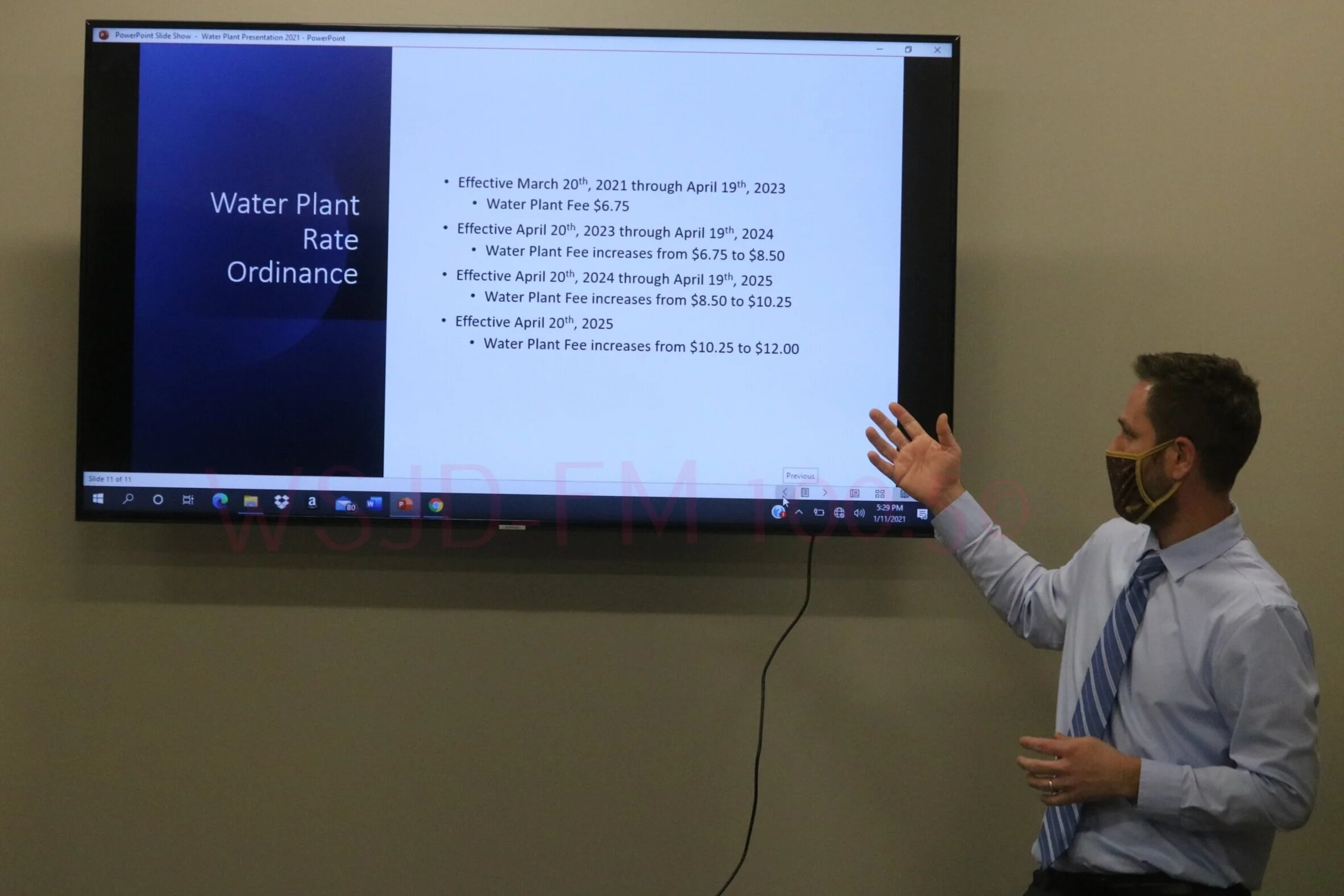
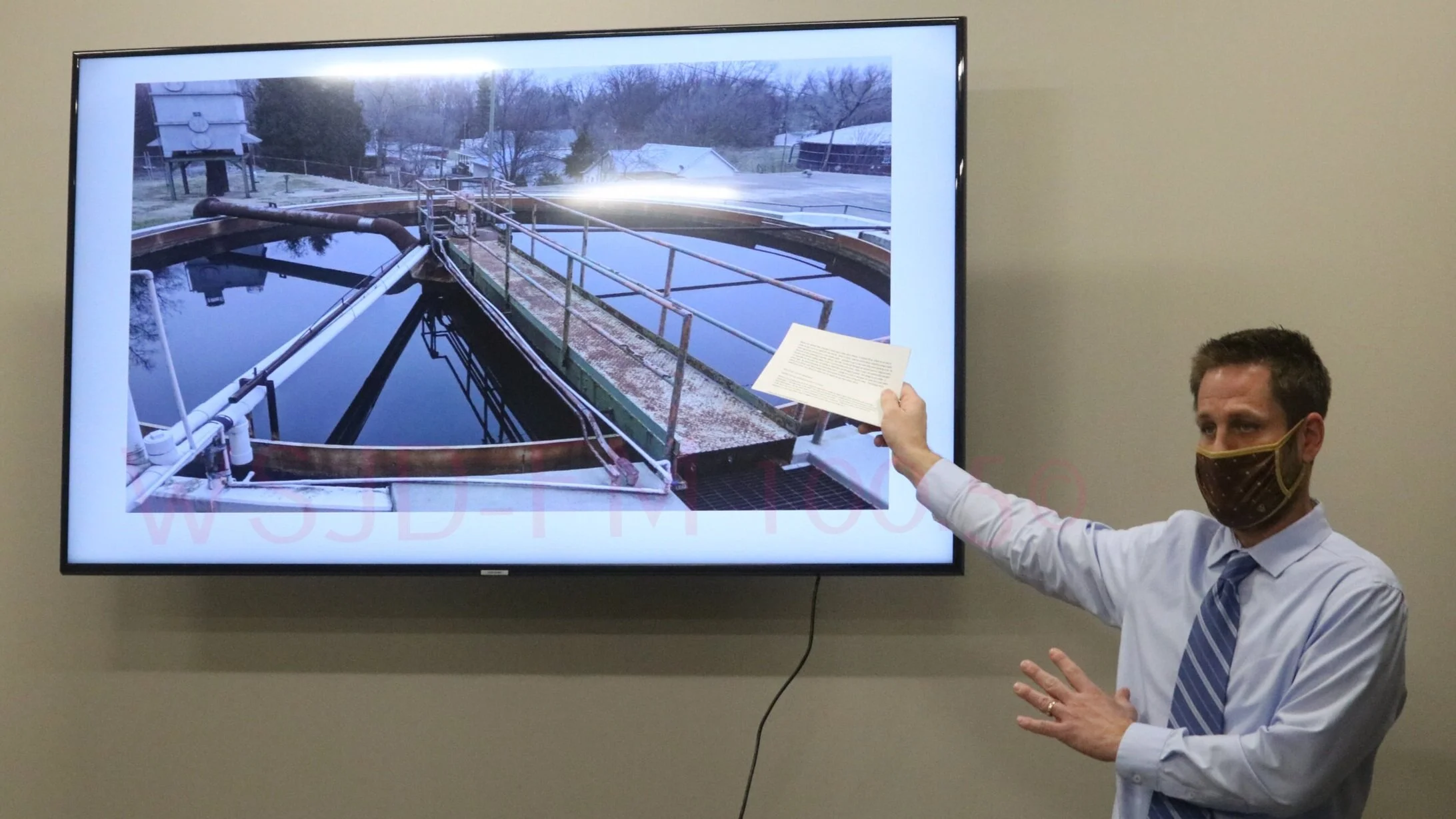
It looks like City of Mt. Carmel water customers will soon see an extra $6.75 added to their bill every month. At last night’s city council meeting, commissioners heard a presentation from water commissioner Justin Dulgar on costs incurred studying a new water treatment plant with a price tag of around $10.5 million…..

The council heard the first reading of an ordinance that would establish a monthly $6.75 water plant fee on some 3,100 water bills in the city effective March 21st. The fee would increase to $8.50 a month in April of ’23, $10.25 on April of ’24; and top out at $12 a month in April of 2025. The fees are expected to be formally approved the next city council meeting in two weeks.

 The council last night also approved a $500,000 line of credit to pay for engineering costs already incurred in planning the new water plant. The line of credit was through the First National Bank for a two year term at a rate of a half percent. Mayor Joe Judge said the other institurion the city talked with offered at 2.8% interest rate. The new water plant is expected to be built on the site of the current plant on South Mulberry Street.

IMG_9836.jpg
IMG_9821.jpg

$144,000 In Wabash County RMC Gift Checks Written In 2020

One of the big benefits for businesses to join the Wabash County Retail Merchants Committee is the gift check program. And 2020 saw a huge number of gift checks circulating through the local economy. The Wabash County Chamber of Commerce administers the gift check program for the merchants and chamber executive director Lesley Hipsher reports $141,000 worth of gift checks were written last year, with the bulk coming during the holiday season. Hipsher said with the importance of the Shop Local campaign, the RMC’s gift check program definitely promotes local spending. Gift checks spend just like cash and are only redeemable at RMC member businesses.