As the governor puts more COVID-19 mitigations in for the southernmost part of the state, a state lawmaker in the northwestern region says it’s the wrong strategy.
Gov. J.B. Pritzker announced more COVID-19 restrictions for Region 5 of his COVID-19 reopening plan. That’s the southernmost region of the state. Pritzker’s reopening plan increases mitigation efforts, like prohibiting indoor service at bars and restaurants, if a region has a COVID-19 positivity rate of 8 percent or more for three days.
The governor told CNN on Sunday that continued mitigations are necessary.
“The truth of the matter is it is very dangerous and even if there are therapeutics that are coming online that are helping people, our hospitalizations are going up,” Pritzker said.
State Rep. Joe Sosnowski, R-Rockford, said that’s fear-mongering. And while it’s important to take COVID-19 seriously, he said hospitals are able to handle the situation in his northwestern region where there are ongoing mitigations that have been in place since Oct. 3.
“Even right now when he says that we need additional mitigation we have no issues at all with hospital capacity,” Sosnowski said. “There are empty beds. In fact, health care workers have been laid off, not just in our region but across the state.”
In the latest monthly report from the Illinois Department of Employment Security, in September the state saw a decline of 7,300 educational and health services jobs.
Even with the governor’s restrictions on businesses, Region 1’s positivity has climbed to above 11 percent. Despite that, around 40 percent of the region’s surgical beds are open. Nearly half of the region’s ICU beds are open.
In Illinois, of nearly 35,000 hospital beds across the state, patients with COVID-19 symptoms in the hospital have increased to 2,012 as of Oct. 17, according to Illinois Department of Public Health data. That’s up from the July 4 low of 1,326. The peak hospitalization on April 28 was 5,037.
At no point in the pandemic have hospital beds statewide reached max capacity. The only time there were fewer than 10,000 vacant beds was on May 6.
The Illinois Health and Hospital Association recognized pandemic fatigue, but urged continued hygiene, mask use and social distancing to help maintain hospital capacity.
“We are now seeing a new surge in COVID cases and deaths in Illinois, matching and exceeding peak levels seen last spring,” said IHA spokesman Danny Chun. “While hospitals are continuing to be prepared to provide life-saving care and making sure they are able to respond to the COVID-19 pandemic, it is critical that everyone NOT let down their guard and keep following the three Ws – wear a mask, watch your distance, and wash your hands – and avoid large crowds.”
“Taking these important precautions will help hospitals maintain needed capacity and not be overwhelmed,” Chun said.
Sosnowski said COVID-19 is serious but ongoing restrictions in northwestern Illinois aren’t doing any good. He said with more than half of the COVID-19 deaths at long-term care facilities, it’s obvious where the focus should be.
“The governor should be spending all of his time working on state-run institutions for the elderly, nursing homes, assisted living centers and doing everything we can to shore up those centers,” Sosnowski said.
Pritzker said the continued mitigations are necessary. Sosnowski noted in Wisconsin where unilateral restrictions were shot down back in May by the state’s Supreme Court, Wisconsin has a rate of 20 COVID-19 deaths per 100,000. That’s much lower than Illinois’ 75 per 100,000.
“I think that should be a real eye-opening experience to residents of Illinois that they need to start demanding their local legislators and the [Democratic] majority party and the governor to stop what they are doing and get back to common sense,” Sosnowski said.
Driver In Garbage Truck Wreck That Killed Mt. Carmel Woman Gets 9 Years In Prison
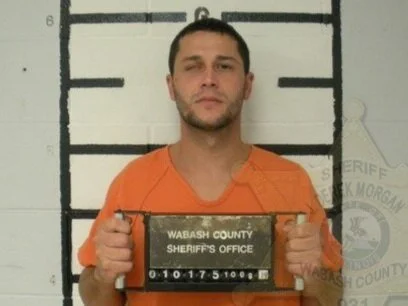
The driver of the garbage truck that killed a Mt. Carmel woman in 2019 has been sentenced to 9 years in prison for driving under the influence of meth.
State’s Attorney Cassandra Goldman reports that 34-year-old Derek R. Wells of Bridgeport was under the influence of methamphetamine when the 2018 Peterbilt garbage truck he was driving slammed into the side of a vehicle driven by Brenda Morehead killing her. The wreck occurred on Route 15 at the intersection of East 850 Road on March 5th of 2019.
Wells was charged August 29th of last year with aggravated driving under the influence of any other drug, which is a Class 2 felony.
Wells is required to serve 85% of his sentence. After his release from prison, Goldman said Wells will be on two years of parole.
Pritzker Puts COVID-19 Clamps On Southern Illinois
Murphysboro, Ill. — Governor Pritzker and the Illinois Department of Public Health (IDPH) are announcing COVID-19 resurgence mitigations will be implemented in Region 5, in Southern Illinois, beginning at 12:01 a.m. on Thursday, October 22, 2020. The region is seeing a 7-day rolling average test positivity rate of 8 percent or above for three consecutive days, which exceeds the threshold set for establishing mitigation measures in the region under the state’s Restore Illinois Resurgence Plan.
The administration continues to work aggressively to support small businesses impacted by the ongoing pandemic, distributing $24.6 million in emergency grants and assistance to businesses and communities in Region 5 alone. Businesses in the region will also receive priority consideration for the current round of Business Interruption Grants as a result of the additional mitigations. Region 5 includes Marion, Jefferson, Wayne, Edwards, Wabash, Perry, Jackson, Franklin, Williamson, Saline, Hamilton, White, Gallatin, Union, Johnson, Pope, Hardin, Alexander, Massac, and Pulaski counties.
In response to the recent increase in cases in all 11 regions across Illinois, Governor Pritzker and the administration will resume daily weekday press conferences to ensure transparency as the state continues to combat the COVID-19 pandemic.
“While we continue to see a safer pandemic landscape than back in the Spring – in terms of positivity, hospital capacity, and community spread – and safer than much of the Midwest, things have changed,” said Governor JB Pritzker. “Every region of the state has started to move in the wrong direction. Cases, positivity rates, hospitalizations and deaths are rising statewide. Experts have predicted for months that the country could see a resurgence of the virus as temperatures get colder and more people spend more time inside. Here in Illinois, it looks like a new wave could be upon us. To be clear, ours will not be one of the states that takes no action in response to rising cases, hospitalizations and deaths. We will follow public health recommendations to bring our numbers down, save our economy and let more of our kids go to school.”
“We are seeing an alarming trend as the number of COVID-19 cases increases, but we are not helpless to change the trajectory,” said IDPH Director Dr. Ngozi Ezike. “Your actions matter. If you wear your mask and keep you distance from others, you help stop the spread of the virus. Your actions also matter if you don’t wear your mask and you are around numerous other people not wearing masks at a large event. You become part of the reason the virus spreads. Help us reduce the spread of the virus so restaurants can stay open, so kids can go to schools, and so loved ones can visit family in long-term care facilities.”
“Southern Illinoisans are known for rising above challenges,” said Dr. Craig Davis, System Director of Hospitalist Medicine at Southern Illinois Healthcare. “I can recall countless examples of powerful community when we set aside differences and work together. Today, we’re in a healthcare crisis that continues to escalate; we’re losing family, friends and neighbors. My appeal to each of you is simple. Wear a mask. Pause large gatherings. Practice social distancing. Wash your hands frequently. Please consider these short-term sacrifices for the greater good. The enemy is disease, not each other.”
Mitigation measures taking effect October 22 in Region 5 include:
Bars
No indoor service
All outside bar service closes at 11:00 p.m.
All bar patrons should be seated at tables outside
No ordering, seating, or congregating at bar (bar stools should be removed)
Tables should be 6 feet apart
No standing or congregating indoors or outdoors while waiting for a table or exiting
No dancing or standing indoors
Reservations required for each party
No seating of multiple parties at one table
Restaurants
No indoor dining or bar service
All outdoor dining closes at 11:00 p.m.
Outside dining tables should be 6 feet apart
No standing or congregating indoors or outdoors while waiting for a table or exiting
Reservations required for each party
No seating of multiple parties at one table
Meetings, Social Events, Gatherings
Limit to lesser of 25 guests or 25 percent of overall room capacity
No party buses
Gaming and Casinos close at 11:00 p.m., are limited to 25 percent capacity, and follow mitigations for bars and restaurants, if applicable
These mitigations do not currently apply to schools.
Support for small businesses has been one of the central features of the Pritzker administration’s COVID-19 response. Since March, the administration has launched a menu of small business and community relief programs – with over $500 million in grants and programs launched by the Illinois Department of Commerce and Economic Opportunity (DCEO), including emergency hospitality grants, a downstate small business stabilization program, Fast Track Capital, and more.
DCEO is also actively processing reimbursements for local governments impacted by COVID-19 via the state’s local CURES program. All eligible Region 5 governments can submit their certification to the department and begin submitting reimbursement requests. For more information on programs available for businesses and communities, please visit DCEO’s website.
In the coming days, IDPH will continue to track the positivity rate in Region 5 to determine if mitigations can be relaxed, if additional mitigations are required, or if current mitigations should remain in place. If the positivity rate averages less than or equal to 6.5% for three consecutive days, then Regions 5 will return to Phase 4 mitigations under the Restore Illinois Plan. If the positivity rate averages between 6.5% and 8%, the new mitigations will remain in place and unchanged. If the positivity rate averages greater than or equal to 8% after 14 days, more stringent mitigations can be applied to further reduce spread of the virus.
Currently two of the state’s 11 regions have positivity rates above the public health department’s 8% threshold for resurgence mitigations. Region 1, home to Rockford, Dixon and Galena, is currently operating under additional mitigations as the region continues to report a 7-day rolling positivity rate above 8%. Tightened mitigations were implemented on October 3 and the region has continued to see test positivity climb at a consistent pace. However, hospital admissions in the area have stabilized after a period of growth.
As part of the administration’s robust response to the pandemic, the state continues to strengthen its nation-leading testing operation. Illinois is averaging more than three times the testing than the average state. Testing is readily available throughout the state, and the vast majority of test results are returned within an actionable period. Moving forward, testing remains a critical step to reduce the spread of the virus, given that a positive test result begins the contact tracing process and can prevent further spread in communities.
In addition to testing, IDPH continues to monitor each region in the state for several key indicators to identify early, but significant increases of COVID-19 transmission in Illinois, potentially signifying resurgence. Indictors include an increase in the region’s positivity rate with a simultaneous increase in either hospital admissions for COVID-like-illness or a decrease in hospital capacity, or three consecutive days of greater than or equal to 8% test positivity rate (7-day rolling average). These indicators can be used to determine whether additional community mitigation interventions are needed for a region to prevent the further spread of COVID-19.
A full list of mitigation measures pertaining to some businesses and industries may be found on the Illinois Department of Commerce and Economic Opportunity (DCEO) website at www.dceocovid19resources.com/restore-illinois.
Mt. Carmel Man Sent To Jail After Allegedly Battering His Wife
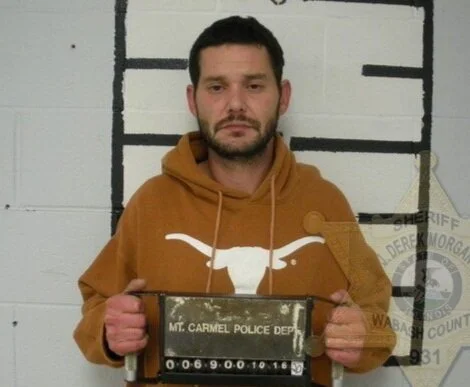
On 10/16/2020, Mt. Carmel Police arrested Brandon H. Rayborn, age 36, of Mt. Carmel, for Domestic Battery following a domestic dispute at an apartment in the 1000 block of North Cherry Street. Officers arrived at the apartment where they could hear screaming coming from inside. Officers made contact with Rayborn and his wife and found the two having a dispute. As officers investigated further, they found evidence to indicate Rayborn had battered his wife during the argument. Rayborn was placed under arrest and transported to the Wabash County Jail, being held pending a bond setting by a judge. Also, Rayborn is on Mandatory Supervised Release from the Illinois Department of Corrections, who issued a Parole Warrant against Rayborn.
Mt. Carmel Woman Picked Up On Probation Violation Warrant
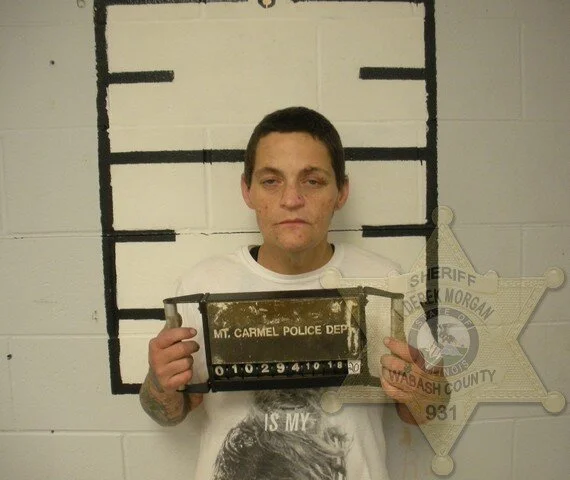
On 10/17/2020, Mt. Carmel Police arrested Terri M. Brown, age 54, of Mt. Carmel, on a Wabash County Warrant for Violation of Probation. Brown was stopped in the 1100 block of West 3rd Street, where she was taken into custody and transported to the Wabash County Jail. Brown is being held on a $1000 cash bond.
Evansville Woman Arrested At Rural King On Various Charges
On 10/18/2020, Mt. Carmel Police arrested Katherine E. Ackerman, age 43, of Evansville, Indiana, for Retail Theft along with two Vanderburgh County Indiana warrants for her arrest. Officers were dispatched to Rural King, where employees had become suspicious of Ackerman’s behavior in the store. Once officers arrived, they made contact with Ackerman. Ackerman admitted to taking an accessory to a Dewalt drill as well as a Milwaukee rechargeable battery. Additionally, officers recovered suspected narcotics on Ackerman’s person which will be submitted to the lab for analysis. Ackerman was placed under arrest and transported to the Wabash County Jail, where she charged and held pending the posting of bond. Ackerman was also served a warrant for Petition to Revoke and another for Larceny / Possession of a Hypodermic Syringe, both out of Vanderburgh County.
Local Harvest Producing Good Yields
As farmers head into the final stretch of the fall harvest and certified crop advisor Mike Wilson of Wabash Valley Service Company says the yields look good….
Wilson said many farmers should be done with harvest by the end of this month, which is typical.
School Officials Hoping 4 Day In Person Break Stems COVID Cases
Wabash District #348 officials are working hard to prevent further spread of COVID-19 at the junior high and high school buildings. On Tuesday, Superintendent Dr. Chuck Bleyer put students of those two schools on remote learning to conduct contact tracing after a student tested positive. On Friday, those students again went to remote learning as Bleyer hit the pause button….
Friday was the last day students who were on full remote learning could opt back in to in-person learning until the end of the semester.
Bridgeport Road Project Plagued By Impatient Drivers
The Bridgeport blacktop at the Allendale-Lancaster Road reopened to traffic last weekend after being closed for an extended period for improvements. The intersection improvement consisted of new concrete being poured and Wabash County Highway Engineer Dustin Bunting said impatient motorists didn’t feel the need to obey the road closed barricades….
Bunting said another driver attempted to drive around the barricades while workers on the scene….
The work at the intersection was part of the overall resurfacing project of the Bridgeport blacktop to the Lawrence County line.
MCPD Budget Benefits From Cannabis Tax And UTV/Golf Cart Permits
Like it or hate it…Illinois’ recreational legal cannabis is beginning to bring tax revenues into the city of Mt. Carmel’s budget. Finance Commissioner Eric Ikemire reports that the city has receive $2,000 in cannabis tax proceeds, all of which goes to the police department’s budget. The police budget this year has also benefitted from the city’s legalization of golf carts and UTV’s. Ikemire said the city has issued more than 160 permits at $50 apiece generating over $8,000 so far this year.