Enhanced mail-in voting was approved by state lawmakers as a way to increase options for people to vote without being exposed to COVID-19, and authorities promise it’s secure.
If you voted in a recent election in Illinois, expect to get a vote-by-mail application if you haven’t already. August 1st is the deadline local election officials have to be sent out mail-in ballot applications.
Illinois State Board of Elections spokesman Matt Dietrich said the next step if the voter wants a mail-in ballot is to return that application. Then, in late September the ballots will be sent out.
“Sept. 24 is the start of early voting in Illinois,” Dietrich said. “We always start 40 days ahead of the election and that’s when local election authorities can begin mailing the actual ballots out to people who have applied for them,” Dietrich said.
If you still haven’t received a mail-in ballot application, Dietrich said you can request one from the election authority.
While some, including President Donald Trump, have raised concerns about increased fraud with mail-in balloting, Dierich said vote-by-mail in Illinois is as secure as voting in person.
“You are always going to have a case here, or an individual case there,” Dietrich said of concerns over voter fraud. “We’ve never had anything that’s come close to affecting any election.”
Sangamon County Clerk Don Gray started mailing more than 90,000 mail-in ballot applications to voters Friday.
Gray said while an online ballot tracking system like Sangamon County has deployed is not required, many counties are implementing a tracking program to ensure proper chain of custody for mailed-in ballots.
“From you casting that ballot and returning it and knowing that we’ve received it, validated it and that it’s been tabulated and ready for release for results on election day,” Gray said. “Every election authority is providing for resources like that for providing confidence in the system.”
Illinois’ elections are decentralized with 108 different elections authorities facilitating the vote.
Gray said there’s still in-person voting people can have confidence in.
“There will be an Election Day. There will be early voting. We will provide for all the necessary safety, security, health provisions,” Gray said.
Gray said for anyone who has questions about any aspect of the voting process should contact their local election officials.
The General Election is Nov. 3.
WGH Board Gives Final Approval To Expansion Project
Calling it a “big moment”, a significant expansion project at Wabash General Hospital got the go ahead yesterday afternoon from the WGH Board of Directors.
During a special board meeting. WGH CEO Karissa Turner laid the groundwork for the project telling the board preliminary work began in Fall of 2017 leading up to last December’s announcement of the work that will include constructing a 32,000 square foot, two-story medical office building along 13th Street next to the hospital.
Originally, plans called for construction to begin June 1st, but the pandemic put those plans on hold indefinitely. Now after the board’s blessing yesterday, Turner said construction is set to begin next January, weather permitting, and take approximately a year to complete.
In addition to the medical office building, plans call for a 3,000 square foot addition to the orthopedic and rehab facility on College Drive along with an overhaul of the dietary and board meeting room in the main hospital.
After approving the construction plan, the board okayed the financing model to pay for the $14.8 million project. Adding in landscaping, equipment, and furnishings, the price tag goes up to a maximum of $15.24 million.
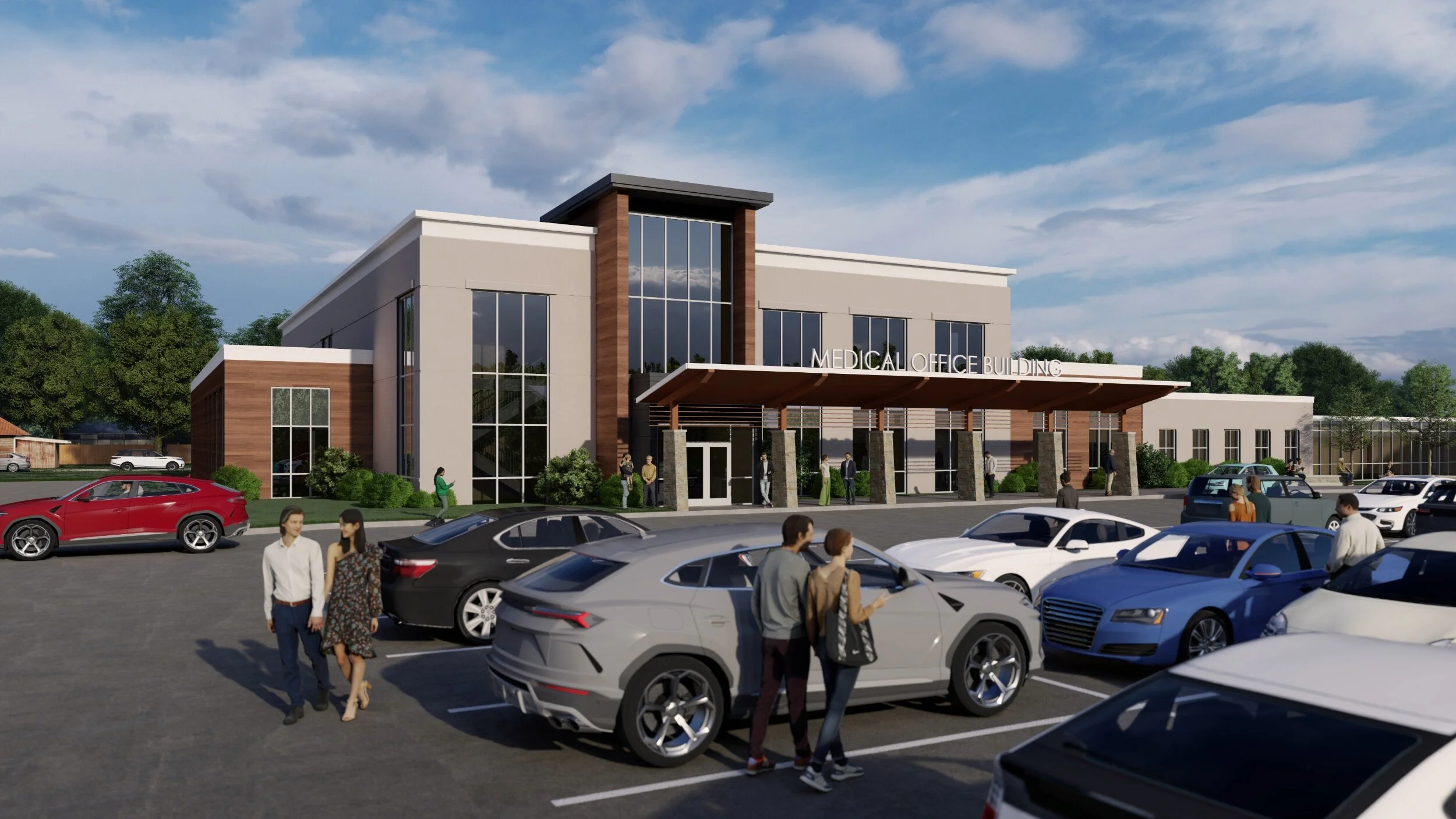
Rendition of the new WGH medical office building.
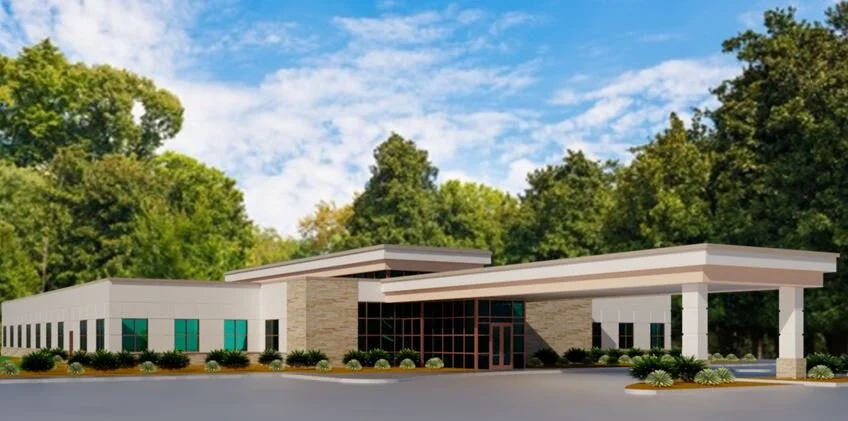
Rendering of expansion to WGH orthopedic-rehab center. New space can be seen on left of building.
School Reopening Plans Vary Across Illinois
School districts across Illinois are releasing plans for the upcoming school year and the differences are apparent from district to district.
The Illinois State Board of Education issued guidance for all 852 school districts to follow, but said each would be responsible for developing its own specific plan. The rules include a requirement for all students and staff to wear face coverings, social distancing whenever possible, and gatherings are limited to no more than 50 people.
Unit 5 in Normal announced the only students allowed to attend in-class instruction Monday through Friday will be those in kindergarten through fifth grade, while grades 6 through 12 will attend two days a week.
Peoria schools plan to implement a staggered schedule with students alternating on a 2-day schedule and Friday being a remote learning day for the entire district. Health Department Director Monica Hendrickson said with the virus still making an impact, no plan is foolproof.
“It is not going to be zero risk and it’s not going to be perfect, but everyone’s intention is that we try to keep our community as healthy and safe as we possibly can,” Hendrickson said.
The Bloomington school district is giving parents until Aug. 4 to decide if their children will attend school in person or remotely for the fall semester.
One of Illinois’ largest school districts plans to start instruction entirely online. U-46 in Elgin said remote instruction will last until at least Oct. 9, then a hybrid model of learning will follow.
A recent survey of parents in Unit 5 in Normal who were not sending their children back to school said they were most concerned about exposing them to COVID-19. The second most common reason was the mask requirement.
Ben Schwarm, the deputy executive director for the Illinois Association of School Boards, said hybrid plans that offer a combination of in-person and online instruction seem to be the most popular for districts. He said the health of students and staff is paramount.
“Stay within those safety protocols that are out there, because safety and health is the No. 1 concern and I know is it for our school board members as well,” he said.
Madigan Under Microscope Following ComEd Scandal
There are bipartisan calls for Illinois Democrats to step out from underneath the millions of dollars of political money House Speaker Michael Madigan controls.
A patronage scandal involving a utility and people connected to Madigan, who’s the Democratic Party of Illinois chairman and Illinois House Speaker, and that could lead to increased scrutiny on political funds he controls.
Madigan, D-Chicago, hasn’t been charged with a crime, but a recent deferred prosecution agreement with ComEd the federal government released implicated the speaker in a nearly decade-long patronage scandal.
Longtime Illinois politics observer and University of Illinois Springfield professor Kent Redfield said legislative leaders from both parties have control of their individual committees and party political funds. But Madigan controls four funds.
Those funds are the Democratic Party of Illinois with $2.4 million currently, the Democratic Majority fund with $4.3 million, the 13th Ward Democratic Org with $2.2 million and the Friends of Michael J Madigan fund with $13.6 million. That’s a total of $22 million that Madigan can move around heading into the November election.
“The fact that he controls multiple committees and has the ability to move money into around and between those committees puts him in position to raise a lot of money and use that money to influence elections,” Redfield said. “It also creates relationships between the interest groups that want to influence legislative races.”
While there are caps on what individuals can contribute, there are no limits on transfers between funds, Redfield said.
The ComEd deferred prosecution agreement released last week implicated Madigan, including that the utility paid someone to pass money to a Madigan associate in an effort that evaded public disclosure.
State Rep. Grant Wehrli, R-Naperville, said it’s time for Democrats to stop taking Madigan’s money.
“That’s how he controls you and that’s also how he gets unknowing participants to run as candidates, he showers them with money,” Wehrli said. “That is his power. Stop taking it. Stop enabling him.”
State Rep. Anne Stava-Murray, D-Naperville, didn’t support the speaker in his most recent election by members of the House. She said that’s allowed her the independence to be critical of the speaker, something she did before and after getting elected.
“I found that personally, my financial freedom from reliance on their money has allowed me to be forthcoming in how I feel,” she said. “And if we all step up and ask for a change then we can have some leadership that we can have confidence in that’s running our state party and hopefully different leadership that we have confidence in that’s the speaker of the House.”
Democratic state Rep. Bob Rita said there are campaign finance rules in place.
“It’s not just a Democratic issue, it’s a Democratic and Republican issue when you talk about campaign finance and depending on the nature and where the donations came from and how they came from is something we should look at down the line and that could be tied into this ethics package when we get the details on that,” Rita said.
“A lot is in the details of what transpired and how different donations are acquired,” Rita said. “We have some strict guidance on campaign finance now and it’s worth looking at but as long as we're in the guidelines, this is for all parties, not just Democrats or Republicans or Independent, anyone running for public office.”
State Probing Unemployment Benefits Fraud
There could be millions and millions of dollars of fraud going on with unemployment benefits being sent to people who didn’t apply for them, according to an Illinois state legislator who is calling for public hearings on the issue.
Unemployment security is covered by employer taxes. Since the beginning of March, more than 1.4 million Illinoisans have filed for initial claims amid continued economic restrictions the government imposed to slow the spread of COVID-19.
Thursday, the U.S. The Department of Labor reported nearly 39,000 more Illinoisans filed for unemployment benefits last week, around 2,300 fewer than filed the week before.
Wednesday, the Illinois Department of Employment Security announced they are investigating a fraud following an increasing number of reports of people getting unemployment benefits when they didn't apply for them.
“The increase in the fraudulent unemployment claims is believed to be coming primarily out of the Pandemic Unemployment Assistance (PUA) program,” a statement from IDES said. “Under the ambiguous federal guidelines, which were developed in haste because of the urgency of the pandemic and issued to every state without a uniform method of implementation, the potential for fraud within this system is abundant.”
“One of the largest vulnerabilities within PUA is the absence of an employer on the other side of the claim to contest the claim in the event it is fraudulent or should be protested,” the department said.
Gov. J.B. Pritzker said it’s a fraud, but couldn't say how expansive it is.
“We don’t know yet, but we know that it’s wide enough spread that we’ve gotten a lot of reports of it,” Pritzker said.
State Rep. Tim Butler, R-Springfield, told WMAY radio he’s aware of one instance where someone who didn’t apply got a card with $11,000. He said public hearings are needed.
“We can do it today. We can have a hearing tomorrow,” Butler said. “We can have a hearing at the capitol building tomorrow and march these people in front of us and get these questions answered or at least get the ball rolling telling them they need to investigate. We need to hold these people responsible.”
A statement from IDES said the department is cracking down and investigating.
Despite there being a data breach back in May of the IDES website the state said seemed to expose names and social security numbers independent contractors filing for recently created benefits, Pritzker said the program the federal government set up “seemed to be attractive to hackers.”
“The fraud that’s being engaged in by them with information that they obtained in some other capacity, it’s not that they’re breaching our systems it’s that they’re applying in the normal way that people apply to get these programs and payments to them using the names that they’ve gotten,” Pritzker said. “Now how they would obtain them from somebody’s mailbox if it were sent to somebody, I’m not sure. There’a lot of federal investigation going on. ”
Butler said the feds aren’t the only ones who need to investigate. He demanded there be hearings at the statehouse to question state officials.
“I think millions upon millions of dollars are subject to fraud on this and I don’t see anything that the governor is doing to try and correct this situation,” Butler said.
Unemployment insurance is covered by taxes employers pay. The state is already borrowing billions to cover the cost of the historic levels of unemployment driven by government shutdowns of sectors of the economy.
Bleyer: Much Of Return To School Plan Mandated By State
Some parents have taken to social media this week to speak out against various aspects of the return to school plan adopted Monday night by the District #348 school board. One of the most contentious point is the requirement that every person inside a school building wear a mask. Some parents have complained that students shouldn’t be forced to wear something they might feel is ineffective. But, Superintendent Dr. Chuck Bleyer said the district had little to no control over certain aspects of the return to school plan…
Bleyer said it’s important to keep the educational system as safe as possible and stay open as long as possible under the guidelines. Bleyer said a return to normal as quickly as possible is the ultimate goal whether that be with herd immunity, a vaccine, or effective treatment.
Mt. Carmel City Council Agenda
AGENDA
CITY OF MOUNT CARMEL
REGULAR COUNCIL MEETING
Monday July 27, 2020 at 5:00 pm
· Call to Order
o Pledge of Allegiance
o Roll Call
· Approve Minutes
o Minutes of meeting held 7/13/2020
· Visitors (topic discussed by visitor(s) is limited to 5 minutes)
o Rich Casburn – 8th Grade Dance
· Reports and Communications
o Mayor Judge
o Commissioner Meeks
o Commissioner Ikemire
o Commissioner Dulgar
o Commissioner Madden
· Staff Reports
o Rudy Witsman Dave Easter Art Kimmel
o Kelli Storckman Ryan Turner
o Mike Gidcumb Francis Speth
· New Business
o Consent Agenda
o Removal of items from the Consent Agenda
o Consideration of Consent Agenda
§ Resolution 670 – Singh Hospitality Application Grant Program
§ Variance – City of Mt. Carmel Water Plant in residential zone
§ Variance – City of Mt. Carmel Water Plant reduce setback requirement
§ K of C Fund Raising on city streets
§ Pay all bills bearing proper signature
o Consideration of items removed from the Consent Agenda
· Executive Session (if needed)
· Motion to Adjourn
Complaint Leads To Disorderly Conduct Citation For Mt. Carmel Man
On 7/21/2020, Mt. Carmel Police cited Zachary A. Mathis, age 29, of Mt. Carmel, for Disorderly Conduct following a report of Mathis walking around the neighborhood of the 500 block of Vine Street yelling threatening statements. This alarmed one resident, so a complaint was signed against Mathis. Mathis was later located where he was cited and released on a Notice to Appear in court.
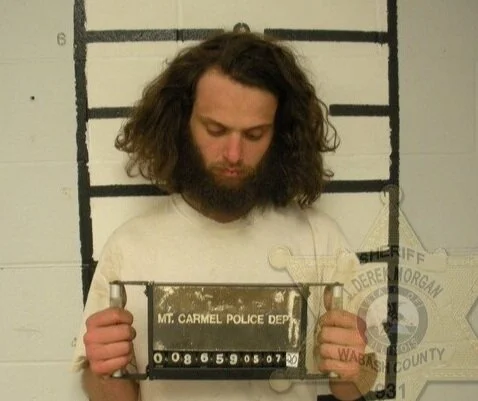
Traffic Stop Results In Multiple Charges For Evansville Man
On 7/20/2020, Mt. Carmel Police arrested Charles W. Brendel, age 54, of Evansville, Indiana, for Driving Under the Influence of Drugs, Driving While License Suspended, and Possession of Drug Paraphernalia following a traffic stop in the 1500 block of West 9th Street. While on the stop, the arresting officer observed actions indicative of drug use by Brendel, so a roadside sobriety check was conducted. During this time, clues to indicate impairment were observed, and Brendel was placed under arrest. Additionally, a glass light bulb converted into a smoking device was located inside Brendel’s vehicle. Converted light bulbs are commonly used to ingest narcotics. Brendel was transported to the Wabash County Jail where he was charged and later released on a Notice to Appear in court.
Several Picked Up For Driving While License Suspended
The following subjects were arrested for Driving While License Suspended by MCPD and released on Notice’s To Appear in court:
7/20/2020
Crystal R. McGillem, age 41, Mt. Carmel, Illinois (additional citation – Operating Vehicle When Registration Suspended for Non-Insurance)
7/21/2020
Matthew A. Wilkey, age 23, Evansville, Indiana
Daniel D. Poole, age 37, Mount Vernon, Indiana
7/23/2020
Luther H. McGill, age 61, Keensburg, Illinois (additional citation – Unlawful Display of Registration)