
Illinois now has a ban in place on smoking in vehicles with children present.
The measure, which takes effect June 1, prohibits lighting up with anyone under the age of 18 inside.
“Children are more sensitive to secondhand smoke because their lungs are smaller,” said Kristina Hamilton, director of advocacy for the American Lung Association in Illinois and Iowa. “And we know that secondhand smoke exposure is linked to a number of health issues in children like sudden infant death syndrome, asthma flare ups, wheezing, coughing, and other respiratory tract issues.”
Violating the ban will be punishable by fines of up to $100 for a first offense and up to $250 for subsequent violations. It’s not a primary offense, meaning drivers can’t be stopped simply for that reason. However, Hamilton believes it still will be effective in changing behavior.
“We don't expect a lot of fines and tickets to be issued for this law,” Hamilton said. “We anticipate that once the public is aware of this law, it will spur more social change. Tobacco users will see this law and reflect on using cigarettes around their young children. And that will in turn change behavior as longer term.”
The law makes no distinction between a vehicle at rest or moving and there’s no consideration as to whether or not the windows are rolled down.
“[Kids] don't often have the ability to change their environment or to remove themselves from an unhealthy environment,” Hamilton said. “Policies like prohibiting smoking in a small space, like a car, around children are really helpful to making sure that children’s health is protected.”
Eight other states have similar measures already on the books. The push for the law in Illinois came from school teachers who were helping students out of cars.
“We were hearing stories from preschool teachers that were helping small children out of their parents’ or guardians’ cars,” Hamilton said. “And there would be all of the smoke that would come out of the car and the teachers could notice pretty obviously that you know, that the kid was in a car with someone who was smoking.”
Using e-cigarettes with minors present is not illegal, but Hamilton says they’re pushing to include vaping in a future piece of legislation.
Extra Jobless Boost Causing Staff Shortages
Restaurants in Illinois are now able to offer outdoor dining, but some may find it difficult to coax wait staff back to work.
The New York Times estimates workers in more than half the states will receive more in unemployment benefits that they did from their normal salaries.
With restaurant workers receiving state benefits, a $600 weekly boost from the federal government, and assistance from sources like the Restaurant Employees Relief Fund, many are in no hurry to return.
Alexis Stuebis is a bartender at Hendricks BBQ in St. Charles, Missouri, a place frequented by Illinoisans eager for dine-in service. She says she wanted to come back to work but some of her coworkers would rather stay home.
"I was nervous because everybody is excited about unemployment. You’re getting $600 to $1,200 a [week], so no one wants to come back to work,” Stuebis said. “That’s what is hard is not being able to get days off.”
Joe Slane, general manager of Medici’s in Normal, says the new seating regulations may be the saving grace when it comes to staffing.
“Summertime is usually our busiest time of the year,” Slane said. “With the limited seating capacity inside and outside, we won’t require as many workers as we normally do.”
Illinois restaurants will be able to offer dine-in service beginning June 26, when more staff will be needed.
Bridge Overlay Scheduled for University Parkway Bridge Over SR 62
VANDERBURGH COUNTY, Ind. – The Indiana Department of Transportation announces lane closures for a bridge on University Parkway in Evansville.
Beginning on or around Thursday, June 11, contractors will close the bridge spanning State Road 62 on University Parkway to perform a thin deck overlay. This project requires workers to mill a later of surface off of the bridge, repair areas that require patching and overlay a new driving surface.
During the project, one lane of traffic will be maintained in each direction. Restrictions will be in place around the clock for the duration of the project.
INDOT urges drivers to slow down and stay alert near crews.
Sunday Night UTV Crash Injures Toledo Man
ISP TRAFFIC CRASH ALERT
The Following Preliminary Information is Being Released by Illinois State Police District 12
WHAT: Traffic Crash with Injury.
WHERE: County Road 300 N, just west of County Road 1125 E, Cumberland County.
WHEN: May 31, 2020 at 7:00 P.M.
VEHICLE: Unit 1 – 2013 Polaris Ranger
DRIVER: Unit 1 – Jimmie L. Cummins, a 60 year old male from Toledo, IL. – Transported by ambulance to an area hospital with non-life threatening injuries.
PRELIMINARY: Preliminary investigative details indicate the following occurred: Unit 1 was traveling west on County Road 300N, just west of County Road 1125E. Unit 1 ran off the roadway and overturned. The driver was ejected from the vehicle. The driver was transported by ambulance to an area hospital with non-life threatening injuries.
COVID-19 Related Layoffs/Closures Spike Jobless Rate To 23.5% In Wabash County
The first unemployment figures for southern Illinois reflecting the damage inflicted by the coronavirus have been released and they’re as bad, or worse, than analysts had projected. In April, Wabash County went from having the second to lowest jobless rate in southern Illinois to the second highest, going from 2.8% in March to 23.5% in April.
Sectors affected by the stay at home order were across the board as non-farm employment decreased by 1,250 over the year. Other areas hard hit included manufacturing, and leisure and hospitality. Gains were reported in only government and trade, transportation, and utilities.
Other local unemployment rates included 21.7% in Edwards County, 23.5% in Lawrence County, 19.4% in Wayne County, and Richland County at 15.4%. The highest April jobless rate was in Franklin County at 23.8% while the lowest was in Union County at 14%. Statewide, the rate jumped to 16.9%.
Plan Announced To Reopen Illinois Courts
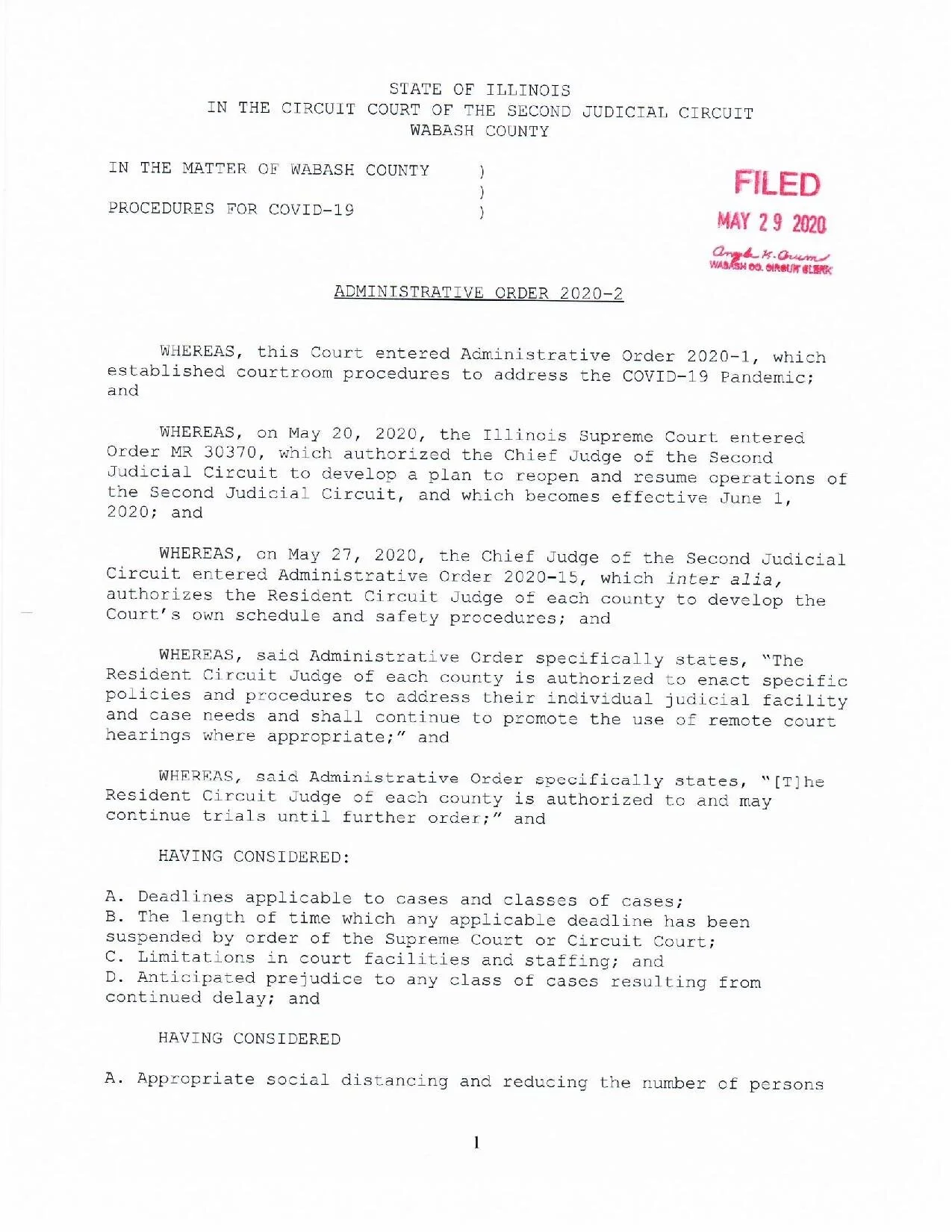
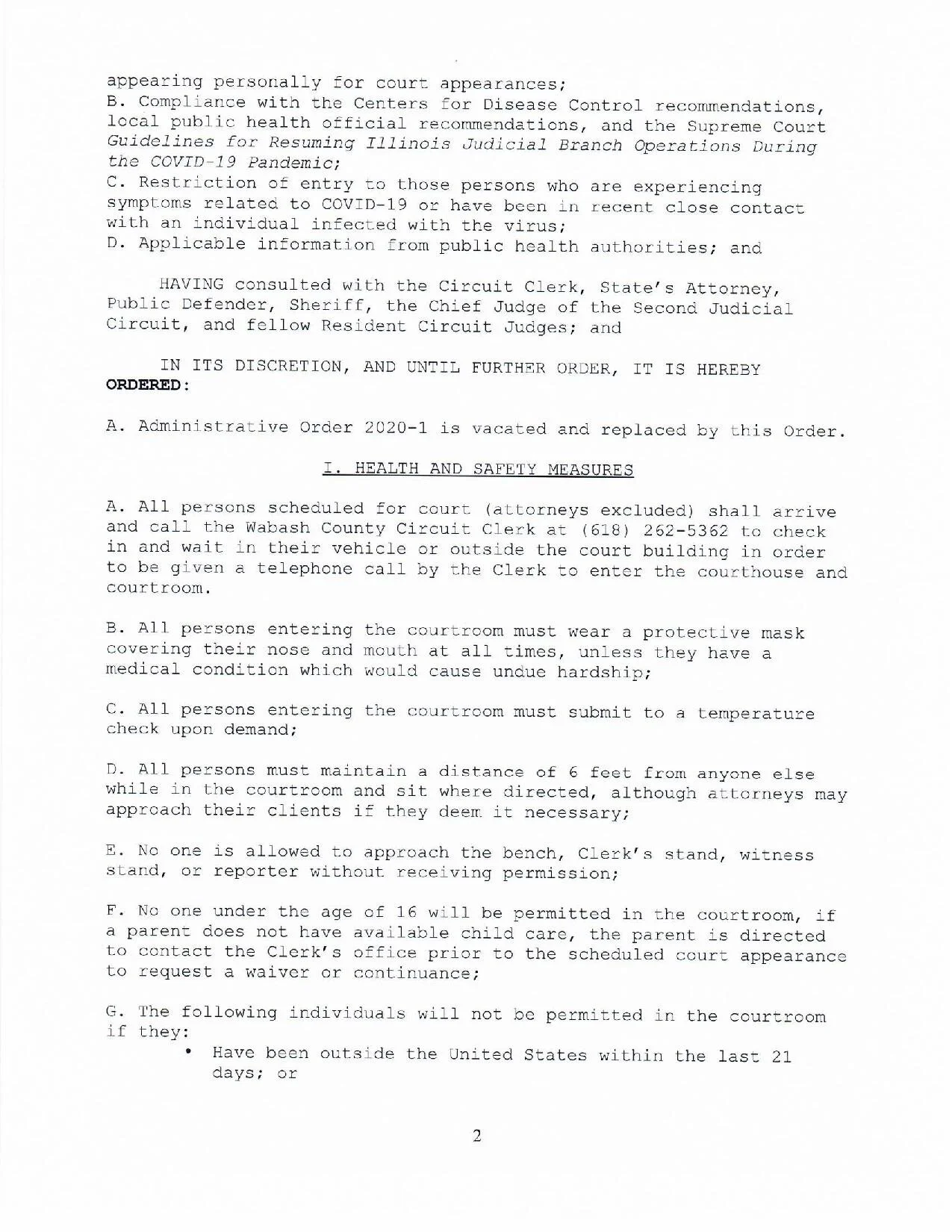
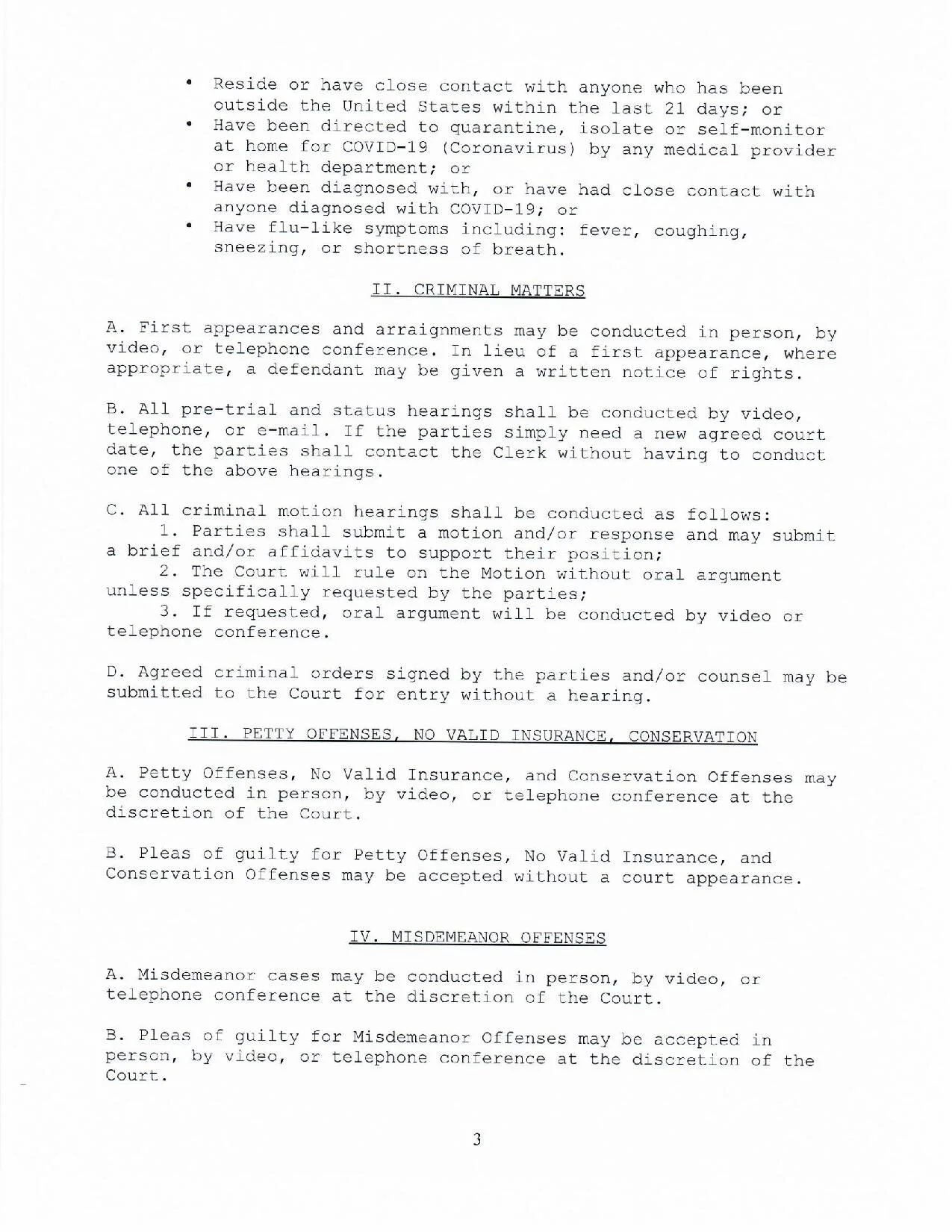
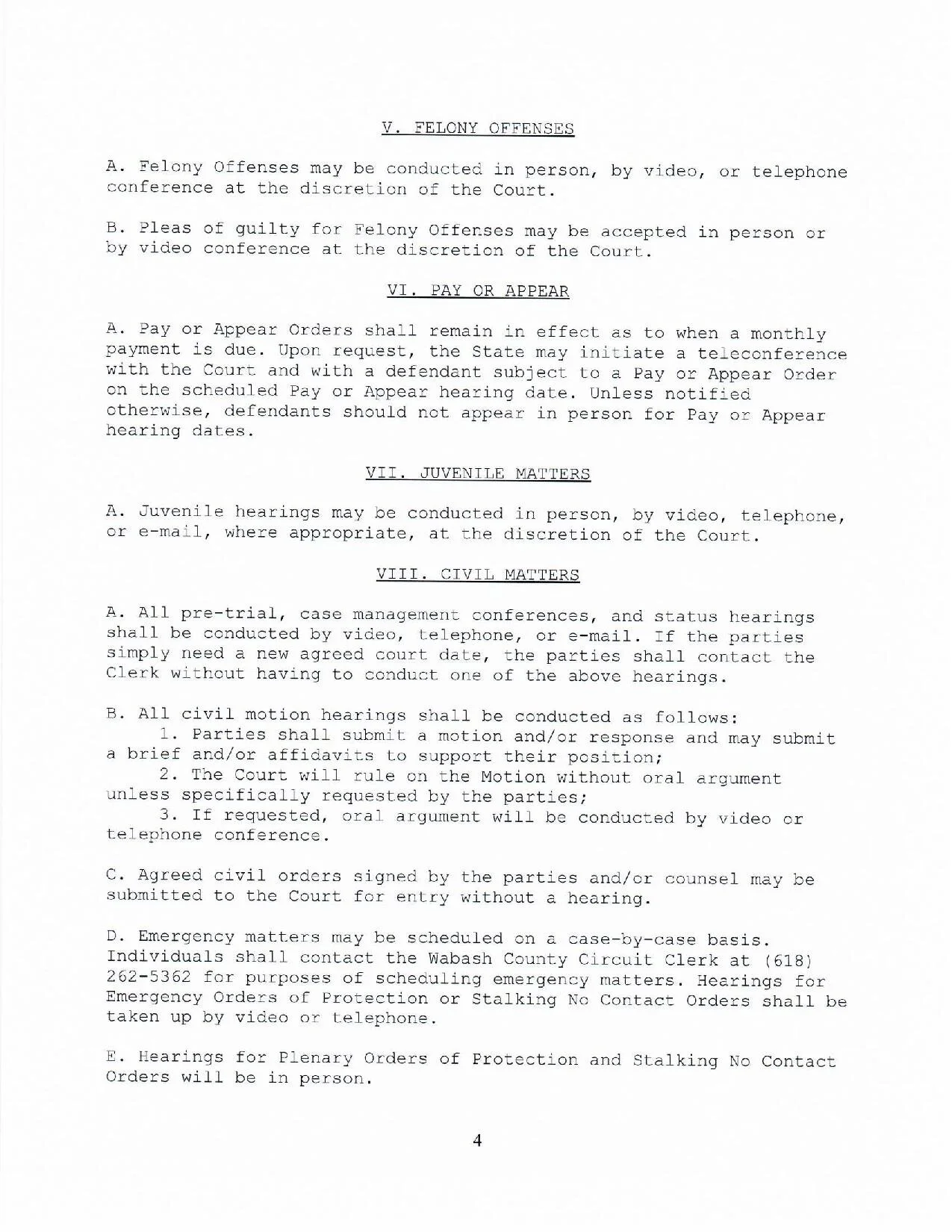
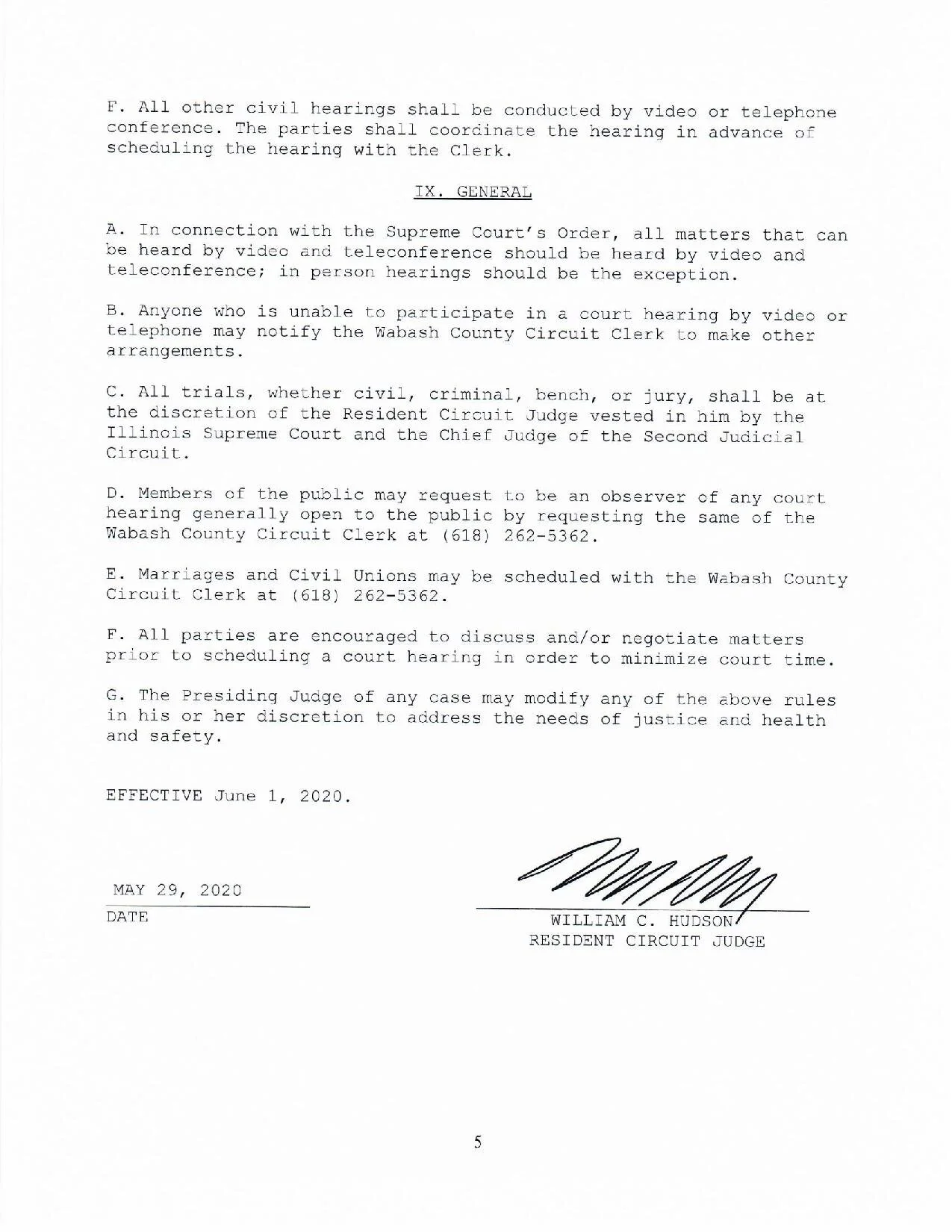
In connection with recent orders of the Illinois Supreme Court and the Chief Judge of the Second Judicial Circuit, Resident Circuit Judge William C. Hudson has entered an order to reopen the Wabash County Circuit Court effective June 1, 2020.
The main features are as follows:
• Persons will appear for court hearings by video or telephone in most cases.
• If an in person appearance is required, persons will wait in their vehicle or outside the courthouse until they are notified that their case is ready.
• All persons must wear a mask covering their nose and mouth at all times, unless they have a medical exemption.
• No children under the age of 16 will be allowed, unless prior arrangements have been made with the Court.
• No persons exhibiting symptoms of COVID-19 or having been diagnosed with COVID-19 within the past 21 days will be allowed.
Resident Circuit Judge developed the new order after consultation with the Chief Judge, fellow Circuit Judges, the Circuit Clerk, State's Attorney, and Sheriff and in consideration of the State of Illinois's Restore Illinois Plan.
The complete Order is attached and available to the public.
IDPH: COVID-19 Guidance for Places of Worship and Providers of Religious Services
From IDPH:
This document provides guidance for places of worship and providers of religious services to support the safest possible environment for faith leaders, employees, volunteers, scholars, and all other types of workers, as well as congregants, worshippers, and visitors.
This guidance does not obligate or encourage places of worship to resume in-person activity. Indeed, it is strongly recommended that places of worship continue to facilitate remote services, particularly for those who are vulnerable to COVID-19 including older adults and those with co-morbidities. Even with adherence to physical distancing, multiple different households convening in a congregational setting to worship carries a higher risk for widespread transmission of the virus that causes COVID-19, and may result in increased rates of infection, hospitalization, and death, especially among more vulnerable populations. In particular, the high risk associated with activities such as singing and group recitation can negate the risk-reducing behaviors such as six feet of physical distancing.
Recognizing the centrality of worship in many people’s lives and the spiritual and emotional value of prayer, community, and faith, this guidance provides recommendations for places of worship that choose to resume or expand in-person activities, and for those that do not.
The Safest Options: Remote Services and Drive-In Services
A common thread joining many faiths is a deep respect for human life and health, which prioritizes protecting our neighbors and the vulnerable among us. Places of worship may choose to express those values by practicing the safest forms of worship through remote services and drive-in services.
Remote services
Remote services can be streamed online, broadcast by radio, and/or conducted by telephone or dial-in. Remote services are the only way to guarantee that places of worship will not become sources of new infection.
Drive-in services
Drive-in services involve congregants driving to a common location and worshiping together from their household vehicle, while listening to either a remote service or one that is broadcast through speakers. If done correctly, these types of services pose a low risk of infection. Some best practices include:
Congregants who are living together travel together, without introducing new people to the vehicle.
Congregants remain in their vehicles at all times.
Maintain distance between cars so that there is more than six feet of distance between any group of congregants and another group of congregants – particularly if car windows are open.
Restrooms should be regularly sanitized and have sufficient soap and hand sanitizer.
Relatively Safe Options for In-Person Worship
Faith communities also cherish fellowship. The desire for the human connection of worshipping together, particularly during a time of crisis, is understandable. However, gatherings of any size pose a risk of COVID-19 transmission. For places of worship that choose to hold in-person activities, the safest course of action is to congregate outdoors and/or in small groups of less than 10 people
Congregate outdoors
Where weather and facilities permit, it is much safer for worship and other activity to occur outdoors rather than indoors. Some best practices include:
Congregants who are living together sit together, at least six feet apart from other congregants and groups.
Wear face coverings.
Refrain from singing and group recitation, which significantly increases the risk of transmission of the virus by projecting respiratory droplets. Consider pre-recorded music or other alternatives. If continuing with singing and group recitation, increase social distance to at least 10 feet between groups and ensure face coverings are worn.
Restrooms should be regularly sanitized and have sufficient soap and hand sanitizer.
Follow applicable guidance below for in-person activities.
Congregate in groups of less than ten people indoors. For in-person services that are indoors, the safest choice is to limit the number of people during a given service. Consider holding multiple services for multiple small groups, limiting 10-person in-person services to special events (weddings, funerals, baptisms, etc.), or limiting in-person activities to private prayer and worship. Some best practices include:
Congregants who are living together sit together, at least six feet apart from other groups.
Wear face coverings.
Especially indoors, refrain from singing and group recitation, which significantly increases the risk of transmission of the virus by projecting respiratory droplets. Consider pre-recorded music or other alternatives. If continuing with singing and group recitation, increase social distance to at least 10 feet between groups and ensure face coverings are worn.
Restrooms should be regularly sanitized and have sufficient soap and hand sanitizer.
Follow applicable guidance below for in-person activities.
Additional guidance for in-person activities
As places of worship navigate COVID-19, the guidelines below are designed to make in-person indoor worship and activities safer – recognizing that the safest and recommended options are those listed above, and that larger gatherings pose greater risk. Strict social distancing, wearing face coverings, and cleaning and disinfecting are paramount to reducing the risk of infection for in-person gatherings. Places of worship should develop a COVID-19 plan and be prepared to adapt to updated public health guidance and to restrict in-person activities if the incidence of COVID-19 within their communities increases. Places of worship should provide training to both staff and congregants on their COVID-19 plans and should share the new safety protocols and processes by email, video, mail, and posted signage – with frequent updates as new safety protocols are implemented.
Capacity limits
As gatherings grow in size, they pose a greater risk of becoming a source of COVID-19 transmission. The current Statewide guidelines recommend gatherings of no more than 10 people. Where the 10-person limit cannot be followed in places of worship, these guidelines are recommended:
Set a capacity limit for the place of worship that allows for extensive social distancing (six feet or more) between congregants. Consider limiting attendance to 25% of building capacity or a maximum of 100 attendees, whichever is lower.
Expand capacity limits gradually, rather than all at once, to allow the opportunity to test and improve safety protocols.
Conduct multiple small services as opposed to one large service.
Consider small, separate services for certain groups – such as those over 65 years or vulnerable, or those with small children who will have difficulty social distancing. During services for those over 65 or vulnerable, enforce strict safety protocols.
Consider a reservation system to limit capacity, assign seating to ensure social distancing, and to allow for contact tracing in the event of a confirmed COVID-19 case and the need to contact exposed individuals.
Develop and communicate a social distancing plan that includes where congregants will sit, how they will enter and exit seating areas (including staggered and scheduled arrival times and staggered exit times), and how social distancing can be maintained at all times given the physical layout of the place of worship. Use the social distancing plan to determine a safe capacity limit.
Avoid the riskiest activities
COVID-19 spreads primarily through respiratory droplets in person-to-person contact (within 6 feet); risk grows as exposure time increases. Some activities at places of worship pose a heightened risk that should be avoided:
Singing and group recitation
Strongly consider discontinuing singing (and post signage discouraging singing), group recitation, and other practices and performances where there is increased likelihood for transmission from contaminated exhaled droplets. Modify practices such as by calling for silent recitation, using prerecorded music, or having a single singer in a separate area with speaker transmission. If these practices cannot be discontinued, strictly limit the number people reciting or singing, ensure physical distancing significantly greater than six feet between people, and consider installing plexiglass to provide physical barriers between people, or opt to celebrate these practices outside with significant physical distancing and other precautions. Use microphones to discourage loud speaking and provide a barrier (plexiglass) for the speaker.
Food and beverages
Discontinue offering food and beverages. Do not hold potlucks or buffet-style meals or events that increase the risk of cross contamination. If food and beverages must be served, provide items in single-serve containers (disposable containers whenever possible), and ensure that congregants or others who are living together are seated together, and more than six feet apart from others. Employees or volunteers serving food should wash hands frequently and wear disposable gloves and face coverings.
Greetings and person-to-person contact
Discourage staff, congregants, and visitors from engaging in handshakes, hugs, and similar greetings that break physical distance. Take measures to remind people to wave or use other greetings.
Modify high risk religious practices
Consider modifying practices that are specific to particular faith traditions that might encourage the spread of COVID-19. Examples are discontinuing kissing of ritual objects, discontinuing bathing rites, allowing rites to be performed by fewer people, providing pre-packed communion items on chairs prior to service, avoiding the use of a common cup, and offering communion in the hand instead of on the tongue.
Individual control measures and screening
Ensure proper use of face coverings.
Congregants/visitors and staff should be screened for temperature and/or symptoms upon arrival to places of worship and asked to use hand sanitizer and to wear face coverings.
Encourage staff and congregants/visitors who are sick or exhibiting symptoms of COVID-19, or who have family members who are ill, to stay home.
Post signage in strategic and highly visible locations, to remind congregants/visitors that they should use face coverings and practice physical distancing whenever possible.
Use social media, website, texts, email, newsletters, etc., to communicate the steps being taken to protect congregants/visitors and staff so that they are familiar with the policies (including to stay home if experiencing symptoms or at an increased risk of becoming sick, face coverings, physical distancing, handwashing and/or sanitizing, and cough etiquette), before arriving at the facility. Staff and volunteers are strongly encouraged to remind congregants/visitors of these practices with announcements during services or on welcoming guests.
Consider reaching out separately to those who are ill but desire to be engaged in worship services; make a plan to include those participants by phone, video, or a safe alternative.
Monitor for staff illnesses, and have staff remain home if they are ill or have been exposed to a person who is ill.
Know and communicate where staff and congregants can get tested for COVID-19 if they develop symptoms.
Have a clear plan to facilitate contact tracing if an attendee later tests positive for COVID-19.
Recruit non-vulnerable volunteers to assist in all activities and particularly in those that may require close contact.
Limit offerings of classes or services for children to small groups (10 children or less) and devise an age-appropriate plan for children to practice social distancing and wear face coverings.
Cleaning and disinfecting protocols
Perform thorough cleaning of high traffic areas such as lobbies, halls, chapels, meeting rooms, offices, libraries, and study areas and areas of ingress and egress including stairways, stairwells, handrails, and elevator controls. Frequently disinfect commonly used surfaces including doorknobs, toilets, handwashing facilities, pulpits and podiums, donation boxes or plates, altars, and pews and seating areas.
Discourage sharing items used in worship and services (such as prayer books, cushions, prayer rugs, etc.) whenever possible and provide single use or digital copies or ask congregants/visitors to bring personal items instead.
Where such items must be shared, disinfect between uses.
Disinfect microphones and stands, music stands, instruments and other items on pulpits and podiums between each use.
Install hand sanitizer dispensers, touchless whenever possible, at entrances and contact areas such as meeting rooms, lobbies, and elevator landings.
Consider limiting the number of people that use the restroom at one time to allow for physical distancing. Consider placing a towel dispenser near the restroom exit with signage for using a towel to touch the door or having touchless exit.
Discontinue passing offering plates and similar items that move between people. Use alternative giving options such as secure drop boxes that do not require repeated opening/closing and can be cleaned and disinfected. Consider implementing digital systems that allow congregants/visitors to make touch-free offerings.
Mark walking paths between spaces designated for congregants/visitors to sit/kneel so that people do not walk where someone may be touching the floor.
During meetings and services, introduce fresh outside air, for example by opening doors/windows (weather permitting) and operating ventilation systems.
Physical distancing guidelines
Continue to provide services through alternative methods (such as via internet live and/or recorded streaming, telephone, and drive-in) whenever possible.
Implement measures to ensure physical distancing of at least six feet between workers, staff, congregants/visitors, etc. This can include use of physical partitions or visual cues (e.g., floor or pew markings or signs to indicate where people should sit and stand). Members of the same household may be seated together but should maintain at least six feet apart from other households.
Encourage congregants/visitors to meet with the same group, particularly when services meet frequently and/or require a certain number of people to be present. This can reduce the spread of transmission by minimizing the number of different individuals who come into close contact with each other.
Consider dedicating staff or volunteers to help people maintain distances during services or activities.
Take steps to ensure limited attendance at gatherings that encourage congregants/visitors to travel and break physical distances during activities, such as concerts, large holiday and life event celebrations and remembrances. Discontinue these activities whenever possible.
Children should remain in the care of those in their household unit and not interact with children of other parties at any time while visiting facilities. Close play areas and discontinue activities and services for children where physical distancing of at least six feet cannot be maintained.
Limiting touching for religious purposes, such as shaking hands or holding hands, to members of the same household.
Guidelines for re-configuring places of worship for social distancing
Reconfigure seating and standing areas to maintain physical distancing of six feet or more between congregants/visitors from different households. Consider both limiting seating to alternate rows and assigning seating in advance.
Shorten services to limit the length of time congregants/visitors spend at facilities whenever possible. This could include limiting speeches and asking congregants/visitors to put on garments at home before arrival.
Consider implementing a reservation system to limit the number of congregants/visitors attending facilities at a time. This can include the use of digital platforms or other types of tools.
Consider offering additional times for services or meetings (per day or per week) so that fewer guests attend at one time.
Dedicate staff to direct guests immediately to their seats upon entry to places of worship rather than congregating in lobbies or common areas. Consider using ushers to help people find places to sit and stand that are at least six feet apart from other guests/household groups.
Develop and communicate a plan to welcome and dismiss congregants/visitors from seating areas, altars, podiums, meeting rooms, etc. in an orderly way to maintain physical distancing and minimize crossflow of traffic.
Avoid assembly line type greetings at the beginning or conclusion of services.
Ask congregants/visitors to arrive and leave in a single household group to minimize crossflow of people. Consider assigning spaced household arrival times to minimize congregants arriving all at once.
Prop or hold doors open during peak periods when congregants/visitors are entering and exiting facilities, if possible and in accordance with security and safety protocols.
Close or restrict common areas, such as break rooms, kitchenettes, foyers, etc. where people are likely to congregate and interact. Consider installing barriers or increase physical distance between tables/seating when continued use of these areas cannot be avoided.
If possible, provide bottled water or touchless water fountains. For touch drinking fountains, discourage queueing and create markings to allow social distancing while waiting; have paper towels available to touch the fountain; and clean and disinfect frequently.
Remove from service or find low-community touch alternatives for communal/religious water containers such as fonts, sinks, and vessels. Empty and change water between services/uses. Where there is a possibility of contaminant splash, strongly encourage staff, congregants, visitors, and others to use equipment to protect their eyes, noses, and mouths using a combination of face coverings, protective glasses, and/or face shields. Reusable protective equipment such as shields and glasses should be properly disinfected between uses.
When washing is a required activity, modify practices whenever possible to limit splashing and the need to clean and disinfect washing facilities.
For further guidance
Places of worship may look to the additional guidance referenced below:
CDC Interim Guidance for Communities of Faith: https://www.cdc.gov/coronavirus/2019-ncov/php/faith-based.html
Sheriff's Association Files Suits Against Governor And DOC
ILLINOIS SHERIFFS’ ASSOCIATION STATEMENT 5/28/2020
Today, the Illinois Sheriffs’ Association (ISA) filed suit against Governor Jay Pritzker and the Illinois Department of Corrections for their refusal to accept transfers of parole violators or convicted individuals from jails across Illinois.
On March 26, Gov. Pritzker unilaterally suspended all admissions to IDOC facilities in response to the global COVID-19 pandemic. At the time, the leaders at IDOC said they needed time to prepare and install proper intake procedures to reduce the spread of the virus from inmates transferred out of County Jails. However, no such preparations have been made or implemented, despite repeated discussions between members of the ISA and IDOC.
Rather than working together with the Sheriffs to find ways to uphold the law while reducing the spread of COVID-19, IDOC has simply shut its doors. This has left the Sheriffs to bear not only the burden of protecting their detainees and county-sentenced inmates from the threat of the virus, but also those who rightfully should be in the custody of IDOC at a time when space and inmate population are critical components to battling the spread of the virus. Jails continue to accept new arrestees and manage the spread of the virus simultaneously.
Since March 26, IDOC officials have repeatedly denied requests from Sheriff’s Offices to transfer individuals to the agency’s custody. Currently there are 100’s of individuals being held in jails across Illinois instead of a state correctional facility simply because Gov. Pritzker and IDOC have decided to wall themselves off rather than work with their fellow law enforcement partners to address the issue.
The task of safely housing detainees amid this unprecedented pandemic is challenge enough for Illinois Sheriffs without having to also shoulder IDOC’s responsibilities as well.
Mt. Carmel 4th of July Parade Cancelled
Statement from The Arnold Family:
Due to the coronavirus, the Arnold family has decided not to organize the 4th of July parade this year. We are very sorry, but under the circumstances, and considering the safety of the spectators and entries, we feel this is best. Hope to see you next year.
The Arnolds.
ILLINOIS SUPREME COURT APPOINTS HARTRICH AS AT-LARGE CIRCUIT JUDGE IN 2ND JUDICIAL CIRCUIT
Justice Lloyd A. Karmeier and the Illinois Supreme Court have announced the appointment of Matthew Hartrich as an At-Large Circuit Judge in the Second Judicial Circuit.
Mr. Hartrich is being appointed to fill the vacancy created when Judge David Overstreet was elected to the Fifth District Appellate Court in 2018.
“Mr. Hartrich has devoted his career to serving his community and the law,” Justice Karmeier said. “His commitment to public service and his broad experience in criminal defense, criminal prosecution and civil litigation make him ideally suited for the office of circuit judge. As the Court’s unanimous approval of his nomination indicates, my colleagues and I have every confidence that he will do an outstanding job.”
The appointment takes effect on June 8, 2020, and will conclude on December 7, 2020, when the vacancy will be filled by the winner of the November 2020 general election. Mr. Hartrich won the Republic nomination in the primary and is unopposed in the general election.
"I am honored by this appointment and would like to thank Justice Karmeier and the Illinois Supreme Court for this opportunity,” Hartrich said. “I look forward to serving the people of the Second Circuit fairly and impartially."
Mr. Hartrich has served as State’s Attorney of Crawford County since 2012 and won reelection to that position in 2016. Prior to holding that office, he served as Crawford County Public Defender from 2005 to 2012, and has experience as an Assistant State’s Attorney and as a private attorney practicing primarily in the area of civil litigation.
He is a member and former president of the Crawford County Bar Association and a member of the Illinois State’s Attorney’s Association.
Mr. Hartrich earned his Bachelor of Arts degree from the University of Illinois at Urbana Champaign and he earned his Juris Doctor, magna cum laude, from the U. of I. College of Law.
The Second Judicial Circuit encompasses 12 counties: Crawford, Edwards, Franklin, Gallatin, Hamilton, Hardin, Jefferson, Lawrence, Richland, Wabash, Wayne, and White.
