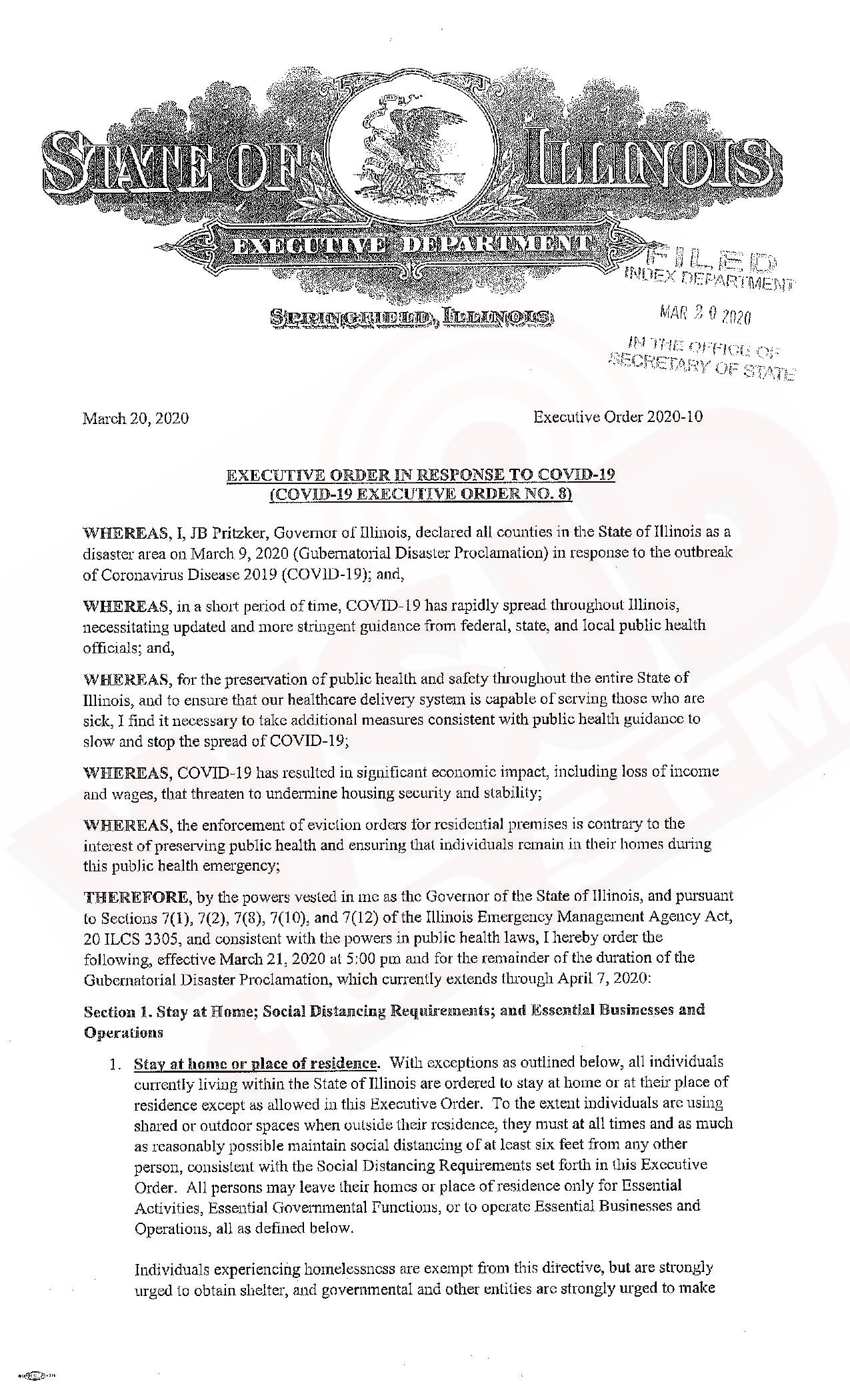
Chicago — Following the advice of leading public health experts around the globe, Governor JB Pritzker announced today has signed a statewide stay at home order, aiming to keep new cases of COVID-19 from rapidly increasing and ensure the state’s health care system remains fully operational to treat patients in need of urgent care.
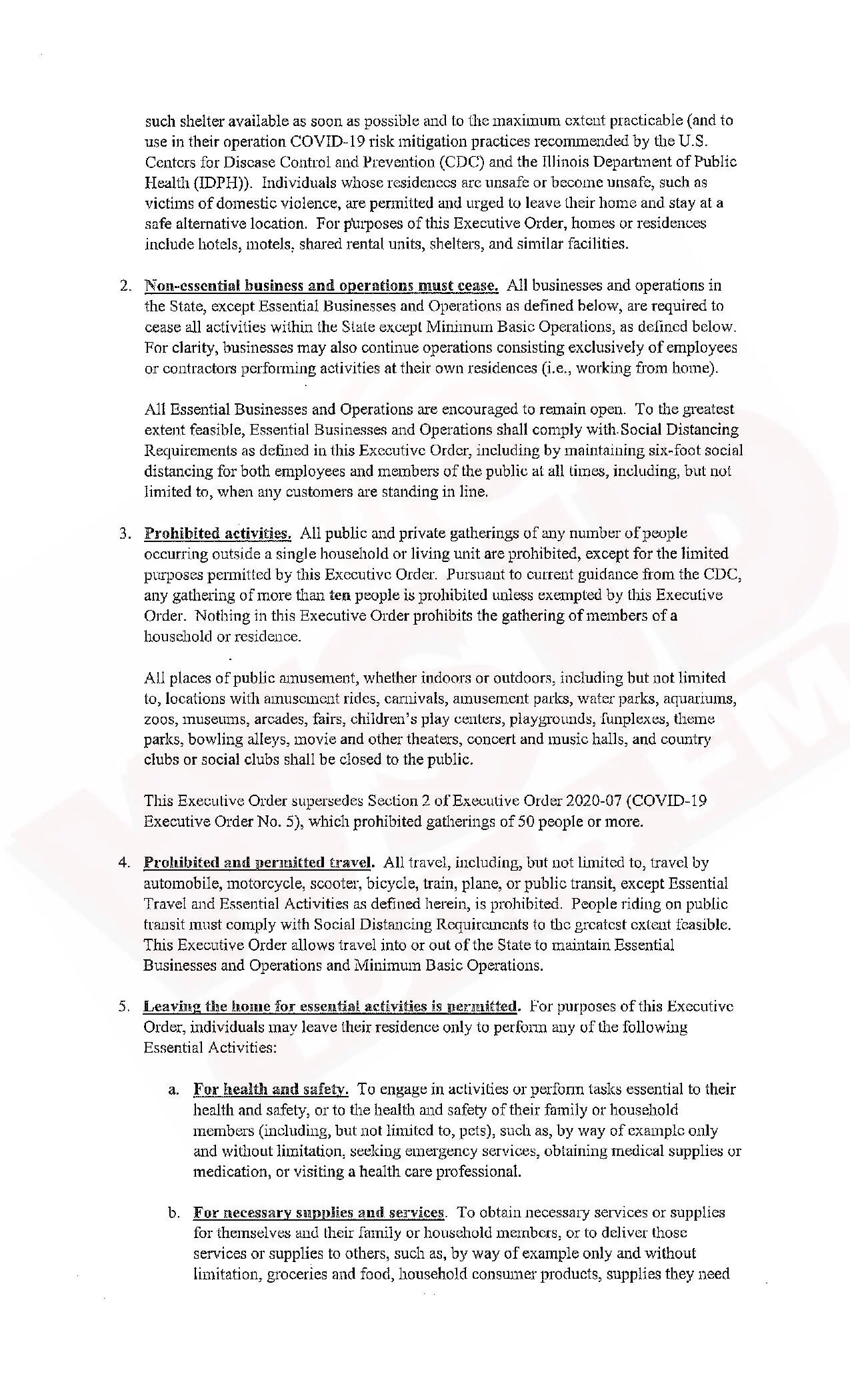
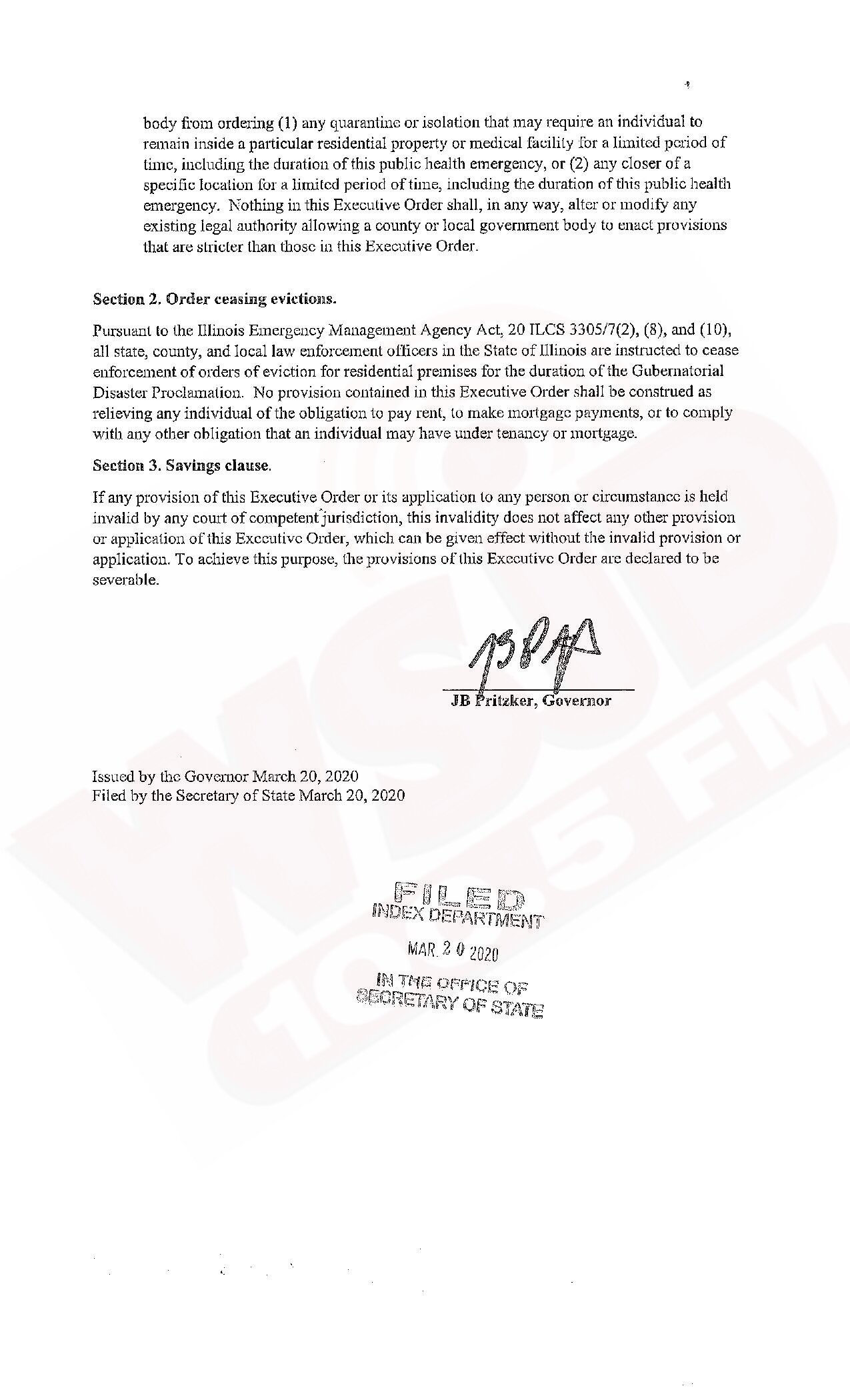
The order takes effect 5 p.m. Saturday, March 21, 2020. In addition to the stay at home provisions, it also orders all local government units across the state to halt all evictions and bans gatherings of more than 10 people.
“We are doing all that we can to maintain as much normalcy as possible while taking the steps we must to protect our residents,” said Governor JB Pritzker. “I fully recognize that in some cases I am choosing between saving people’s lives and saving their livelihoods. But ultimately, you can’t have a livelihood without a life. This will not last forever, but it's what we must do to support the people on the front lines of this fight, and the people most vulnerable to its consequences.”
“This action underscores the seriousness of the situation and reinforces what many people all across Illinois are already doing to protect themselves, their neighbors and the community at large,” said Senate President Don Harmon (D-Oak Park). “Please, take this seriously, stay inside, limit your travel and be responsible for not just your own health, but everyone else’s, too.”
“During these unprecedented times, it is important we do what we can to prevent the spread of this virus. Simply staying home and following these best practices will help ensure our families, our neighborhoods and our communities remain safe,” said Senate Republican Leader Bill Brady (R-Bloomington). “It is also important that we not panic. Essential businesses and services will remain open and available. We will get through this if we all work together.”
“I commend Governor Pritzker and Mayor Lightfoot’s leadership, and join them in urging people to adhere to this ‘stay at home’ order to help flatten the curve and ultimately save lives,” said House Speaker Michael J. Madigan (D-Chicago). “We should all rest assured that we will continue to have regular access to groceries, medication, gas and other essential services. We will get through this together by following the advice of experts and giving doctors, nurses and first responders a chance to fight this disease. I want to extend my full gratitude to the frontline medical personnel working hard to save lives. By adhering to this order and following best medical advice, we can stand with them in this fight.”
“This is a critical time for our state and our nation, and we must take any and all steps, including the governor's action today, to reduce the number of those affected by this virus so that we can return to our normal way of life as quickly as possible,” said House Republican Leader Jim Durkin (R- Western Springs)
“Every action we’ve taken so far is based on the latest science and data from health officials as we combat the dynamic spread of COVID-19, and this is no exception,” said Chicago Mayor Lori Lightfoot. “This decision was not an easy one, but Governor Pritzker’s order for Illinois residents to stay at home is the right thing to do to ensure we are protecting the health and wellbeing of our residents. We strongly encourage our residents to follow the guidelines and ensure the safety of their neighbors as we work to confront this crisis together.”
THE SCIENCE
Over the last several months, the Governor has consulted with medical experts, epidemiologists, mathematicians and modelers to understand the progression of COVID-19 and the measures needed to keep Illinoisans safe.
The administration has looked closely at the trajectory of coronavirus in countries like Italy and China. It is clear that left unchecked, cases in Illinois will rise rapidly and mirror the consequences experienced by other countries. Hospital systems would be overwhelmed, protective equipment would become scarce, and there would not be enough health care workers, hospital beds, or ventilators for the influx of sick patients.
In consulting with these experts, it is clear the most effective strategy available to Illinois is mitigation. That means limiting the increase in cases to ensure our healthcare system has capacity to treat those who become ill. The most aggressive form of this strategy is a stay at home order, which the administration is now implementing.
STAY AT HOME ORDER
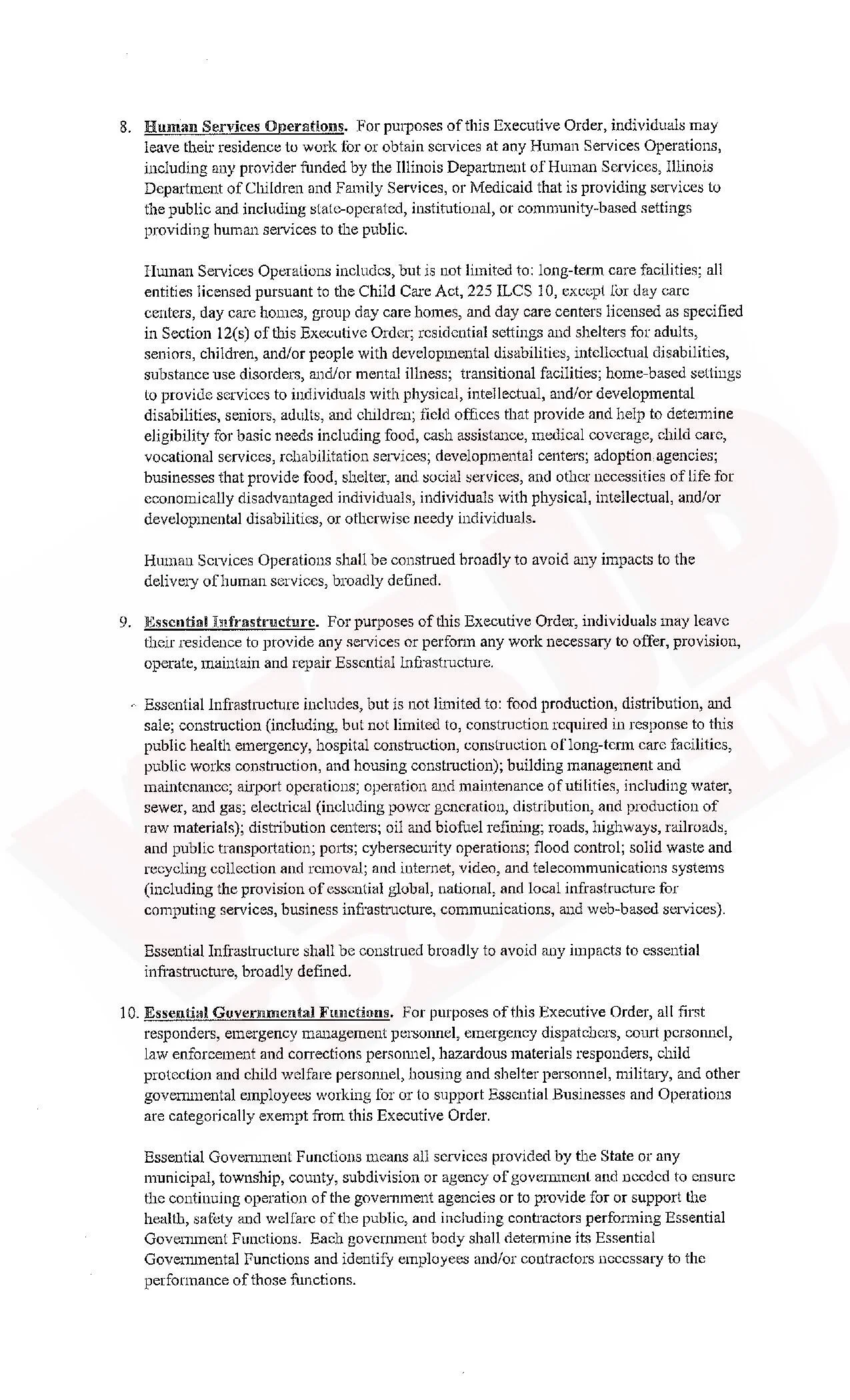
All first responders, emergency management personnel, law enforcement personnel, health care workers and others working to support Essential Businesses and Essential Government Functions like grocery stores and pharmacies are exempt from this stay at home order.
The governor’s action today formalizes his calls this week for Illinoisans to stay home as much as possible, aside from meeting their basic needs. In that regard, the stay at home order permits a range of activities that will allow Illinoisans to get their necessities while maintaining social distance from others, which include but are not limited to:
Essential Activities:
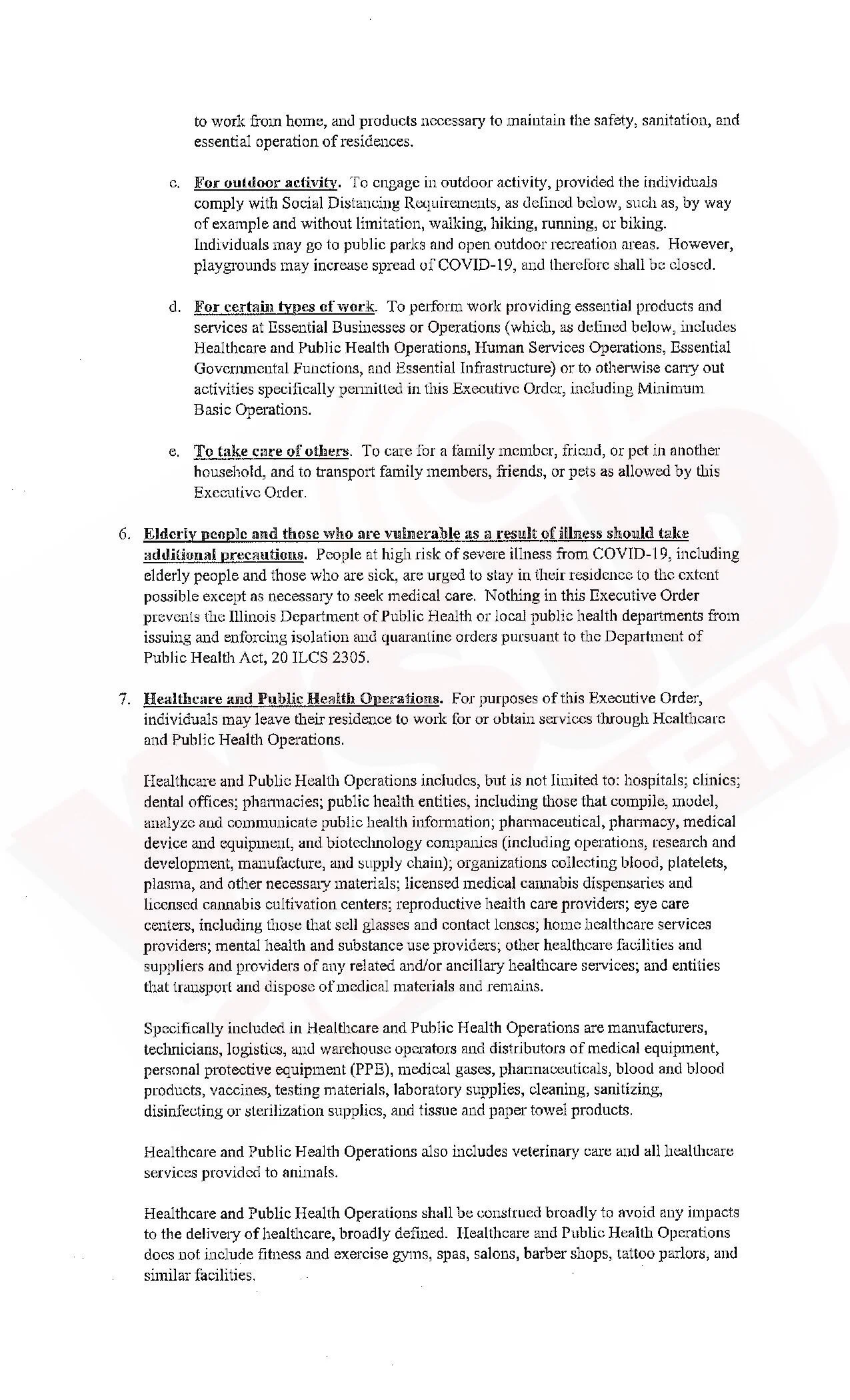
For health and safety: seeking emergency services, obtaining medical supplies or medication or visiting a health care professional
For necessary supplies and services: obtaining groceries and food, household consumer products, supplies they need to work from home, and products necessary to maintain the safety, sanitation and essential operation of residences
For outdoor activity: walking, hiking, running or biking – including going to public parks and open outdoor recreation areas, except for playgrounds
For certain types of work: Providing essential products and services at Essential Businesses or Operations or otherwise carrying out activities specifically permitted in the order, including Minimum Basic Operations
To take care of others: Caring for or transporting a family member, friend or pet in another household
Essential Government Functions:
All services provided by state and local governments needed to ensure the continuing operation of the government agencies and provide for the health, safety and welfare of the public
This Executive Order does not apply to the United States government
Essential Businesses and Operations:
Healthcare and Public Health Operations: Working at or obtaining services from hospitals; clinics; dental offices; pharmacies; public health entities; healthcare manufacturers and suppliers; blood banks; medical cannabis facilities; reproductive health care providers; eye care centers; home healthcare services providers; mental health and substance use providers; ancillary healthcare services — including veterinary care and excluding fitness and exercise gyms, spas, salons, barber shops, tattoo parlors, and similar facilities
Human Services Operations: any provider funded by DHS, DCFS or Medicaid; long-term care facilities; home-based and residential settings for adults, seniors, children, and/or people with disabilities or mental illness; transitional facilities; field offices for food, cash assistance, medical coverage, child care, vocational services or rehabilitation services; developmental centers; adoption agencies; businesses that provide food, shelter, and social services and other necessities of life for needy individuals — excluding day care centers, day care homes, group day care homes and day care centers licensed as specified in Section 12(s) of the order
Essential Infrastructure: Working in food production, distribution and sale; construction; building management and maintenance; airport operations; operation and maintenance of utilities, including water, sewer, and gas; electrical; distribution centers; oil and biofuel refining; roads, highways, railroads, and public transportation; ports; cybersecurity operations; flood control; solid waste and recycling collection and removal; and internet, video, and telecommunications systems
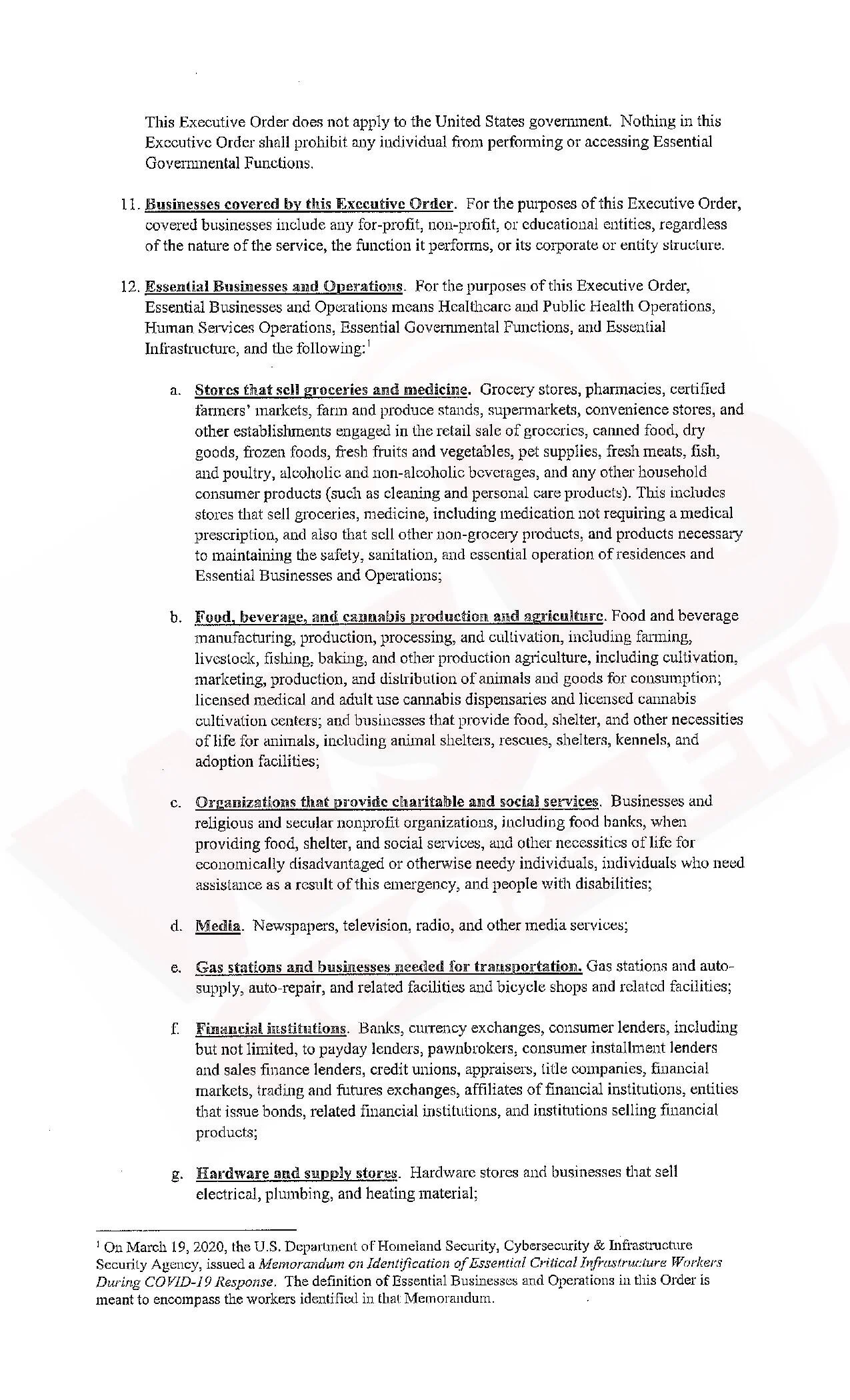
Stores that sell groceries and medicine
Food, beverage and cannabis production and agriculture
Organizations that provide charitable and social services
Media
Gas stations and businesses needed for transportation
Financial institutions
Hardware and supply stores
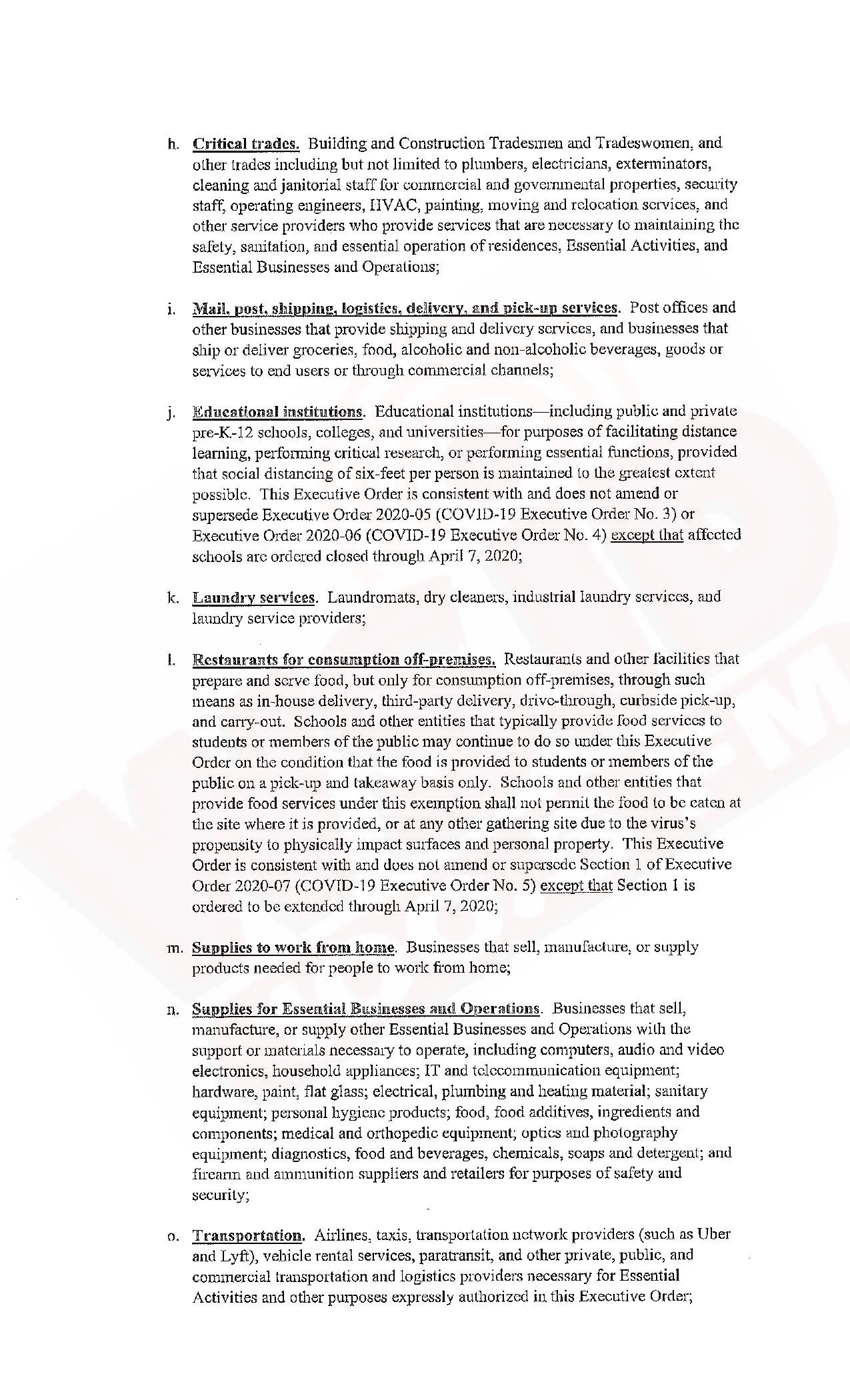
Critical trades, includingplumbers, electricians, exterminators, cleaning and janitorial staff for commercial and governmental properties, security staff, operating engineers, HVAC, painting, moving and relocation services, and other service providers that maintain the safety, sanitation and essential operation of residences, Essential Activities, and Essential Businesses and Operations
Mail, post, shipping, logistics, delivery and pick-up services
Educational institutions, for purposes of facilitating distance learning, performing critical research, or performing essential functions
Laundry services
Restaurants for consumption off-premises
Supplies to work from home
Supplies for Essential Businesses and Operations
Transportation, for purposes of Essential Travel
Home-based care and services
Residential facilities and shelters
Professional services
Day care centers for employees exempted by this Executive Order
Manufacture, distribution, and supply chain for critical products and industries
Critical labor union functions
Hotels and motels, to the extent used for lodging and delivery or carry-out food services
Funeral services
All non-essential business and operations must cease, aside from Minimum Basic Operations. Business can continue with employees working from home. Minimum Basic Operations includes the minimum necessary activities to maintain the value of inventory, preserve plant and equipment condition, ensure security, process payroll and employee benefits and facilitate employees working remotely.
The order also closes licensed child care centers and all childcare homes serving more than six children. The Pritzker administration is working to expand the availability of child care for essential workers, while protecting the health of the children and child care teachers and home providers. A new Emergency Child Care Center license is being created with more flexibility but much smaller group sizes to ensure social distancing for children in care.
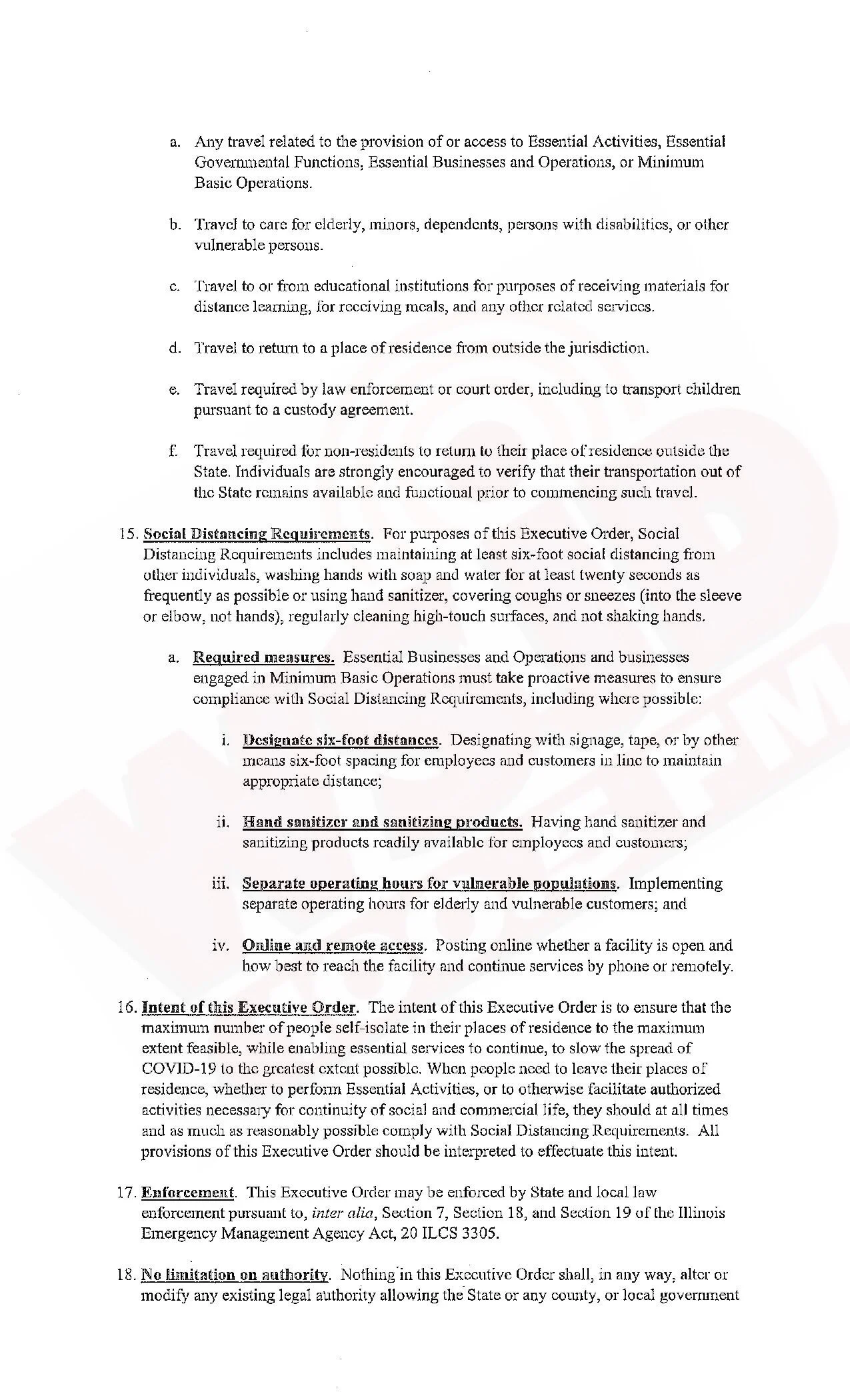
Only essential travel is permitted at this time and must be done in accordance with social distancing requirements. That includes travel related to:
Performing Essential Activities, Essential Governmental Functions, Essential Businesses and Operations or Minimum Basic Operations
Caring for elderly, minors, dependents, persons with disabilities or other vulnerable persons
Receiving materials for distance learning, for receiving meals, and any other related services from an educational institution
Returning to a place of residence from outside the jurisdiction
Following the direction of law enforcement or court order, including to transport children pursuant to a custody agreement
Returning to a place of residence outside the State for non-residents
In addition to halting evictions statewide, the Governor is directing additional resources to organizations across the state to serve those experiencing homelessness.
For those whose residence is or becomes an unsafe place, please call the Illinois Domestic Violence Hotline at 1-877-863-6338.
Finally, the Governor encourages Illinoisans to come together during this time of crisis and reminds the public that this is not a virus tied to a specific ethnic group or race. Suggesting otherwise – or engaging in acts of racism against a specific community – runs counter to our values.
WHAT TO DO IF YOU’RE SICK
Every Illinoisan plays a role in ensuring our health care system remains fully operational to treat patients in need of urgent care.
If you are experiencing symptoms of any illness, including COVID-19, the first thing you should do is:
Call a health care provider, like your primary care physician or a health clinic. But please, do not walk directly into an emergency room or a doctor’s office.
A health care provider will ask about your symptoms and potential exposures. If they think you need medical care, they will help arrange medical treatment without putting others at risk of exposure.
If you meet certain criteria, you may be tested for COVID-19, but as testing expands, those with severe illness and those at higher risk of complications are being prioritized.
People whose symptoms are mild — which will be most people — will be able to isolate at home during their illness, and they should follow the directives of their health care providers.
For health-related inquiries, contact the Illinois Department of Public Health by calling 1-800-889-3931 or visiting IDPH.illinois.gov.