Wabash General Hospital staff and the public gathered today to honor Jay Purvis as he retires at the end of the year after a long tenure as head of WGH. He’ll be replaced as CEO by Karissa Turner.
WGH Administrative Staff pose with Jay Purvis

Wabash General Hospital staff and the public gathered today to honor Jay Purvis as he retires at the end of the year after a long tenure as head of WGH. He’ll be replaced as CEO by Karissa Turner.

WGH Administrative Staff pose with Jay Purvis






Illinois criminal law has seen a major change this past year. The Bail Reform Act went into effect on January 1, 2018, and was a major departure from the old way of setting bail.
In the past, a judge was to consider a great number of factors before setting a cash bond, with input from the State’s Attorney. But once the Bail Reform Act went into effect, cash is no longer king.
The Act specifically states that conditions of bail shall be non-monetary in nature for a large number of non-violent or drug possession offenses. In other words, for those crimes, persons arrested should not have to post any money before they are released.
This is quite a shocking concept to most people. But the rationale behind the new law explains the drastic change. There are two purposes of bail: 1. To protect the public, and 2. To insure people show up for their court dates. Those are the only two reasons. The purpose of bail is absolutely not to pre-punish someone for a crime, because everyone charged with a crime is innocent until proven guilty.
As for protecting the public, posting money for bail is still required for violent offenses and Class 2 Felonies or greater. But what about those non-violent offenses?
Non-violent offenses include driving on a suspended license, theft, and drug possession, to name a few. The General Assembly, after conducting quite a bit of research, found that those people arrested for non-violent offenses and drug possession were increasingly likely to commit more and worse crimes in the future the longer they stayed in the county jail awaiting trial. Additionally, poorer citizens were being kept in jail simply because they could not afford to post any cash, not because they couldn’t remember to show up for court. And for those being kept in jail, they were losing their jobs and could not pay their bills or provide for their families. For the poorer citizens, life got disproportionately worse than for those who could post cash.
How does the new act work in practice? First, a judge looks at the offense charged. Offenses are placed into two categories: Category A. Violent offenses and Class 2 felonies or greater, and Category B. Non-violent offenses less than a Class 2 felony.
If a person is charged with a Category B offense, the judge is to consider a great number of factors, but most importantly, What will cause this person to show up on their court dates?
If the judge does require monetary bond and the person is not able to post the cash, the person is entitled to a bond reduction hearing within seven days. Also, for each day a person is held in jail on a Category B offense, the amount of their cash bond is reduced by $30 per day, until it reaches $0 and they are released.
For further information, the complete text of the statute can be found on the Illinois General Assembly’s website: http://www.ilga.gov.
William C. Hudson, Circuit Judge

Construction of a second housing complex on the Wabash Valley College campus is expected next year after action by the City Council Monday night. The council approved a TIF agreement with Kieffer Development to construct a 6,100 square foot building that would contain 7 to 9 units for up to 36 students. The plan also calls for construction of 36 new parking spaces. Commissioner Rod Rodriguez is also a former head of the WVC Foundation and he urged fellow commissioners to pass the agreement…
Rodriguez said the first housing unit known as Warrior Village that Kieffer constructed helped to increase college enrollment. He said the addition of womens’ soccer and volleyball is causing an even bigger need for student housing.


At their monthly meeting last night, the Wabash General Hospital Board of Directors saluted retiring CEO Jay Purvis. Board chairman Bill Easton presented Purvis with memento for his two decades of service that has seen Wabash General’s services expand at a phenomenal level that has elevated the hospital to the status of the county’s largest employer and a leading health care provider in the region. Easton said the hospital board is establishing a scholarship in the name of Purvis and his wife Shari. In remarks before the meeting, Purvis said his time at WGH has been the best thing ever for him personally and professionally…
Purvis made sure to thank the community for their support of he and his wife over the years. Karissa Turner will take over as CEO effective January 1st.





“Another amazing year made possible by our generous and caring community!” That’s what WADI’s Debbie Meyer had to say about this year’s Operation Share campaign in Wabash County.
Operation Share served the following families during the holidays:
Thanksgiving 337 families
Christmas 399 families
Christmas toys 399 children (170 families)
Meyer said while the food and toy distributions are over for the holidays, Operation Share is a year round endeavor.
A big chunk of funding for Operation Share comes from the Change To Spare For Operation Share bell ringing campaign at Borowiak’s IGA, Beuhler’s Buy-Low, and Shopko. Plenty of spots are still available to ring bells by calling Rev. Kevin McGinnis at 240-6243 .

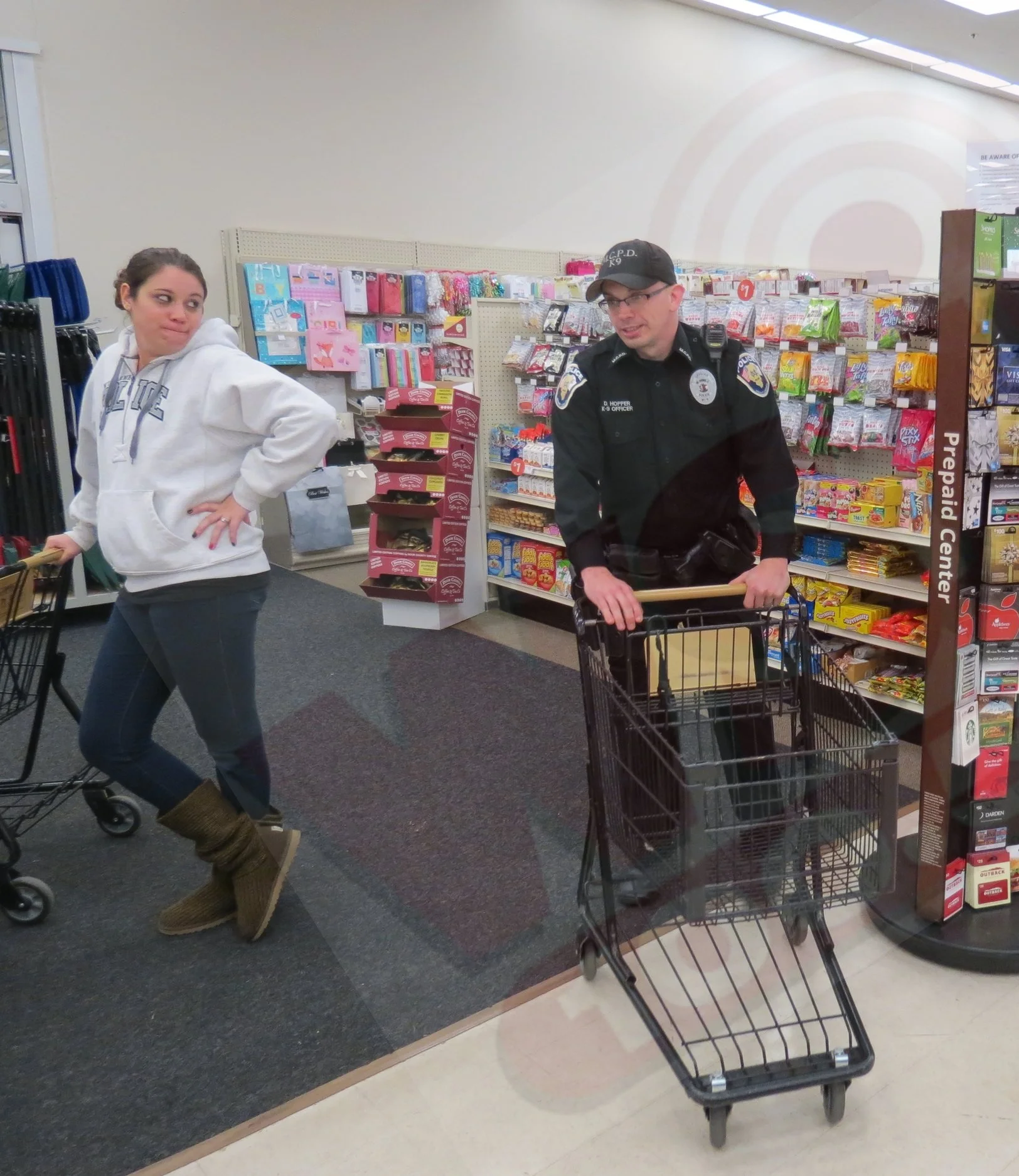
There were plenty of smiles last night at Shopko for the annual Shop with a Fireman and Cop Night. The shopping spree brings Christmas joy to local youngsters according to Fire Captain Mark Seaton who organizes the program…
Among those participating last night were MCFD, MCPD, WCSO, ISP, AFD, & WGAS.








Wabash Valley College will offer Yoga II classes, PEI 1135, in the Fall Semester. Yoga is the science and art that is universally beneficial for physical, psychological, and spiritual well-being. It is a systematic discipline to quiet the chatter of the turbulent mind and awaken the intuitive creative potential of a relaxed mind that results in better sleep and stress relief. Yoga releases a harmonious blend of spiritual vibrations in the mind-body complex that removes negative energies and tensions and, thus, promotes an inner sense of peace and tranquility. This course teaches the basics of a classical system of Yoga that includes important elements from Hatha Yoga (the most popular form of Yoga), as well as breathing techniques (pranayama) and meditation (dhyana) from the various other branches of Yoga’s vast tradition. The practice is open to anyone at any age and skill level.
Classes will meet on Mondays and Wednesdays, with one class meeting from 4:30 – 5:20 p.m. and the other class meeting from 6:00 – 6:50 p.m. in BAC 1 starting on January 7. Melissa Pray is the instructor.
In-District tuition may be discounted for students enrolled in four or less semester hours in the evening. There will be a $5 Technology fee per credit hour, a $12 Student Support fee per credit hour, and a $15 Maintenance fee per credit hour. Students may register at the first class session or at the College.

A Step Aerobics class, Aerobics II-PEI 1137, is being offered at Wabash Valley College for the Spring Semester. The class is designed so that individual attention is given to the students.
Step Aerobics uses step benches and upbeat music to help you get a good aerobic workout that can be tailored to your personal fitness level. Teresa Colbert will conduct this class from 5:40 – 6:30 p.m. on Tuesdays and Thursdays, beginning January 8. This class will meet in BAC 1.
In-District tuition may be discounted for students enrolled in four or less semester hours in the evening. There will be a $5 Technology Fee per credit hour, a $12 Student Support Fee per credit hour, and a $15 Maintenance fee. Students may register at the first class session or at the College.

Wabash Valley College will offer Topics/Issues in Computers, CIS-1298 during the Spring Semester. The class will meet on Wednesday evenings, 6:00 – 8:15 p.m. from January 7 – March 1 in Main Hall 205. This course is designed to introduce students to basic computer skills. Little or no prior computer knowledge is needed. On the first day of class, students will be able to suggest topics for discussion during the course. As many topics as time permits will be covered. If you would like to learn how to use your computer more effectively, enroll now. There is no textbook to purchase. Possible topics may include: Computer Basics and Hardware, Microsoft Office Programs, Other Application Software, Email, Internet Usage, Security, Computer Backups, Audio, Pictures, and Video. The instructor of the class is David Goodson.
In-District tuition may be discounted for students enrolled in four or less semester hours in the evening. There will be a $5 Technology Fee per credit hour, a $12 Student Support fee per credit hour, and a $15 Maintenance fee per credit hour. Students may register at the first class meeting or at the College. For more information, contact the Student Services Office at 618-262-8641.

To become more competitive with other area school districts, the Wabash District #348 school board Monday night voted to increase pay for substitutes. Superintendent Dr. Chuck Bleyer said the district was finding it increasingly difficult to fill positions because other districts paid more than #348.
The new pay schedule goes into effect with the start of the new year.
District Substitute Pay Effective January 1, 2019
Teacher $75 raise to $85
Parapro $62 raise to $71
Bus Driver $54 raise to $60
Custodian $62 raise to $68